Big corporations could continue to treat Australia’s oceans as a “dumping ground” for old equipment and leave taxpayers out of pocket unless the Albanese government closes a loophole, a Greens senator has warned.
By Tegan George
Mon 28 Sep 2026 15.04 AEST
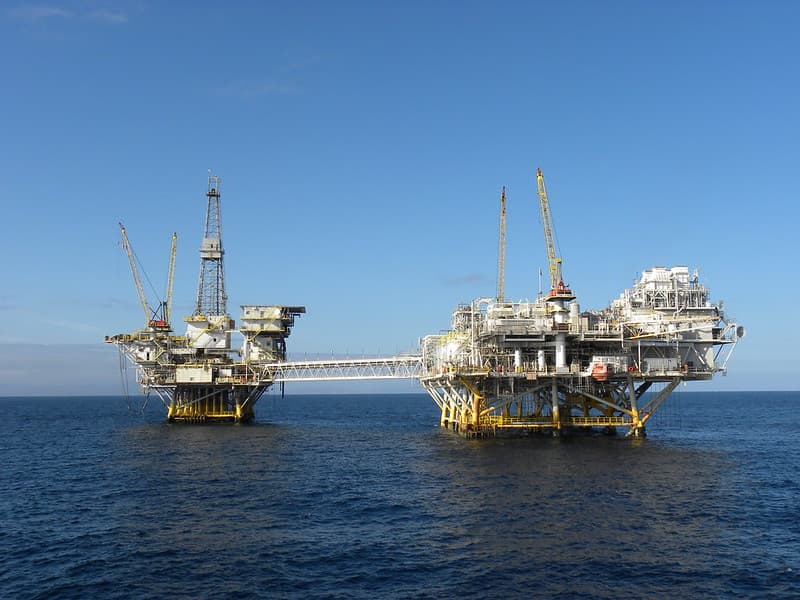
Photo: Creative Commons


Big corporations could continue to treat Australia’s oceans as a “dumping ground” for old equipment and leave taxpayers out of pocket unless the Albanese government closes a loophole, a Greens senator has warned.
Federal Resources Minister Madeleine King opened the public purse this month to keep the abandoned Cliff Head oil platform safe after the companies behind it went into voluntary administration in July.
A government spokesperson told the ABC it would be unacceptable to do nothing while the companies’ affairs are resolved, confirming that “all costs of government will be recovered, and the taxpayer will not foot the bill”.
The ageing platform sits about 20 kilometres south-southwest of Dongara, with locals concerned about its potential impact on nearby crayfishing grounds.
“Our oceans cannot wait any longer for this Labor government to end the free ride for the corporations that are polluting our oceans,” said Greens spokesperson for healthy oceans Senator Vanessa Bleyer.
“Renters have to pay a bond. So do onshore mining companies. Yet offshore oil and gas corporations do not.”
According to the Australian Government, oil and gas titleholders will spend an estimated $60 billion to decommission offshore infrastructure over the next 30–50 years.
A court case involving Santos earlier this year raised broader questions about when oil and gas companies must show they can pay to clean up their infrastructure.
At an April hearing, the Wilderness Society argued that Australia’s offshore oil and gas regulator should have checked whether Santos had the money to decommission its Reindeer gas field before approving a plan to preserve its infrastructure.
In August, the Federal Court rejected the argument, ruling the regulator only needed to assess whether Santos could cover the costs of its current plan, which didn’t include decommissioning.
Writing for The Point, Maritime Union of Australia decommissioning campaigner Angie Moore described it as “an important legal finding, and a serious policy problem”.
Triangle Energy, which previously held a majority stake in Cliff Head, had been transitioning the project to Pilot for a carbon capture and storage (CCS) proposal that failed to attract funding.
Quality research, analysis, explainers and factchecks from experts you can trust.
“This scenario is exactly why all oil and gas companies in Australia must be made to pre-fund their clean-up costs,” said Fern Cadman, the Wilderness Society’s fossil fuel campaign manager.
“The Albanese Government has reforms planned for next year. From what we’ve seen so far, the proposal is fundamentally flawed and will continue the special treatment where gas companies are simply trusted to clean up, when they have no commercial incentive to do so and their global history is littered with decommissioning defaults.”
Conservation Council of WA (CCWA) executive director Matt Roberts said his organisation had raised doubts about Pilot Energy’s ability to pay for the cleanup.
“We sounded the warning in January this year that Pilot Energy was unlikely to be in a position to progress its risky carbon dumping plans, let alone meet its decommissioning obligations for Cliff Head,” he said.
Mr Roberts questioned what assurances the government had sought before committing $6.5 million of taxpayers’ money to the exploratory CCS phase of the project.
“This now appears to have been nothing more than a cynical attempt to delay decommissioning obligations,” he said.
The Australian government was forced to take on the decommissioning of the Northern Endeavour in 2020, after offshore operator Northern Oil and Gas Australia (NOGA) entered administration in 2019.
The government signed a $325 million contract for the first phase of decommissioning in April 2022.
It also introduced a temporary levy on offshore oil and gas production to recover the project’s costs from the industry.
The Australia Institute supported the levy but warned it should be made permanent, arguing in a 2021 submission that “there is no reason to believe similar incidents will not happen again”.
“Indeed, the 60,000 unfunded, abandoned mine sites on the Australian mainland suggest that further abandonments are almost certain,” it said.
“Wherever possible, oil and gas companies will try to pass decommissioning costs onto other, smaller companies and eventually to governments.”

