

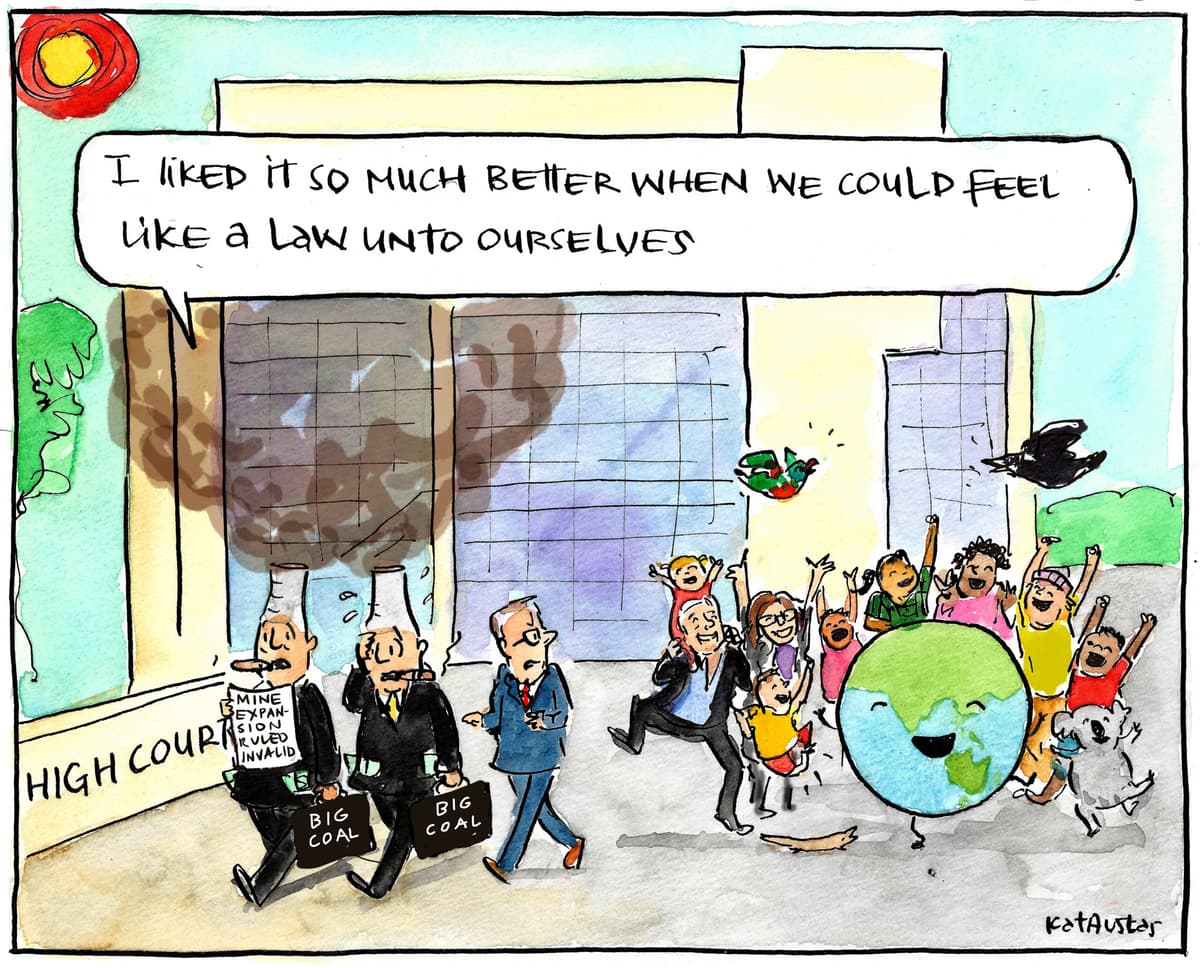
Port Phillip Council has unanimously passed a motion calling for the Federal Government to fund a National Climate Compensation Fund with a levy on gas and coal production. The inner-Melbourne local government area, which covers suburbs such as St Kilda, Elwood, South Melbourne and Port Melbourne, faces increased risk of flooding and coastal damage in the face of climate change.
Thu 8 Oct 2026 10.59 AEDT
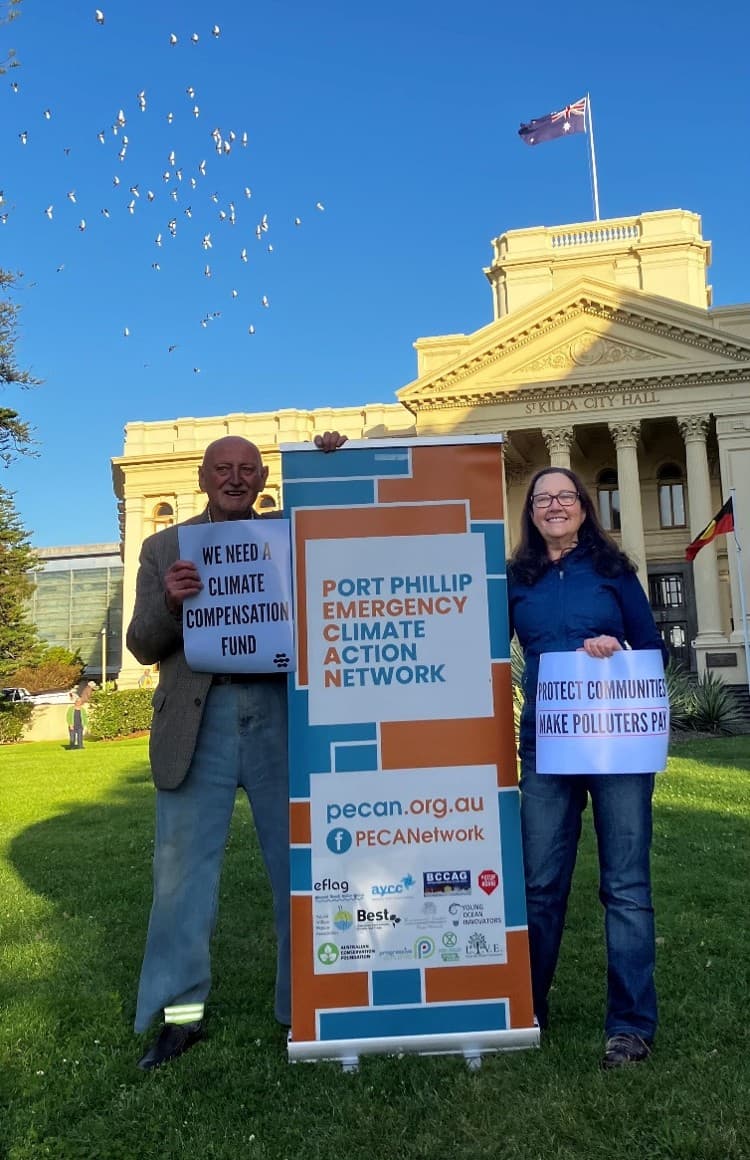
Photo: Members of Port Phillip Emergency Climate Action Network celebrate the council’s vote on a climate compensation fund.
The New South Wales Independent Planning Commission last week approved the largest coal mining project in the state’s history. The way it proposes to deal with the immense climate-harming emissions from burning the exported coal beggars belief.
Port Phillip Council has unanimously passed a motion calling for the Federal Government to fund a National Climate Compensation Fund with a levy on gas and coal production.
The inner-Melbourne local government area, which covers suburbs such as St Kilda, Elwood, South Melbourne and Port Melbourne, faces increased risk of flooding and coastal damage in the face of climate change.
“Local councils are on the front line of the climate crisis,” said Councillor Justin Halliday, who moved the “Climate compensation and protecting ratepayers” motion.
“Here in the City of Port Phillip, we’ve been lucky recently to avoid major flooding and storms. But our residents are paying for disaster preparation, drainage and infrastructure upgrades, and to pick up the pieces after extreme weather.
“That’s why we’re calling for a National Climate Compensation Fund to give councils dedicated sustainable funding to prepare for and recover from increasingly frequent disasters. This will make sure the cost of climate damage is shared fairly, instead of falling on residents while the giant fossil-fuel corporations pocket record profits.”
The Victorian Government’s Port Phillip Bay coastal hazard assessment found a quarter of the Port Phillip council area was at high risk of flooding as sea levels rise due to climate change.
The successful motion makes Port Phillip 14th in a growing number of councils backing the Communities for Climate Compensation campaign, building on earlier wins including City of Sydney, Darebin, and Bass Coast councils.
The motion was seconded by Port Phillip Mayor Alex Makin.
“This isn’t Port Phillip going it alone,” said Mayor Makin, “Councils right across the country are sending the same message to Canberra: communities need dedicated, long-term funding to prepare for and recover from climate impacts, and the companies that helped cause this crisis should help pay for it.
“That’s good governance. And the more councils that join this call, the harder it becomes for the Federal Government to keep ignoring it.”
Quality research, analysis, explainers and factchecks from experts you can trust.
Local residents described how climate change is affecting life in Port Phillip.
“During the 2011 floods, my daughter and I walked down towards Mitford Street to see how high the water was getting. Before long, we were waist-deep in filthy, swirling floodwater. We hurried home and spent the day trying to keep the water out,” said Louise Kyle, who lives in Elwood.
“Our neighbours closer to the Elwood canal weren’t so lucky, with many homes inundated and damaged. I worry about what future floods will bring, and the impact that increasingly extreme weather will have on our neighbourhood.
“Councils and ratepayers are already carrying an unfair share of the costs of climate damage. A national Climate Compensation Fund, paid for by the corporations that have profited from coal, oil and gas, is a way to make sure those responsible start paying their fair share,” she said.
The costs of climate-driven disasters are rising rapidly, while local government revenue is increasing slowly, according to Australia Institute research. The Institute’s Research Director, Rod Campbell, is a Port Phillip resident and spoke in favour of Cr Halliday’s resolution, along with members of the Port Phillip Emergency Climate Action Network (PECAN).
“It’s great to see my own local council joining others around the country in protecting the climate and the interests of ratepayers,” said Mr Campbell.
“If Port Phillip or any other town or suburb is battered by a storm or a bridge is washed away in a flood, the local council is left to pick up the tab. It’s happening more often and with greater severity.
“This damage is caused by fossil fuel companies, so ratepayers shouldn’t be expected to pay for the damage caused by coal, gas and oil companies.
“The federal government does have the power to tax the companies that are profiting from climate change. It is the coal and gas companies that should help pay for the disasters that they are making worse.”


