Despite being one of the world’s wealthiest countries, Australia still lacks an official national poverty measure, making it hard to track whether efforts to reduce disadvantage are working.
By Tegan George
Tue 10 Nov 2026 08.48 AEDT
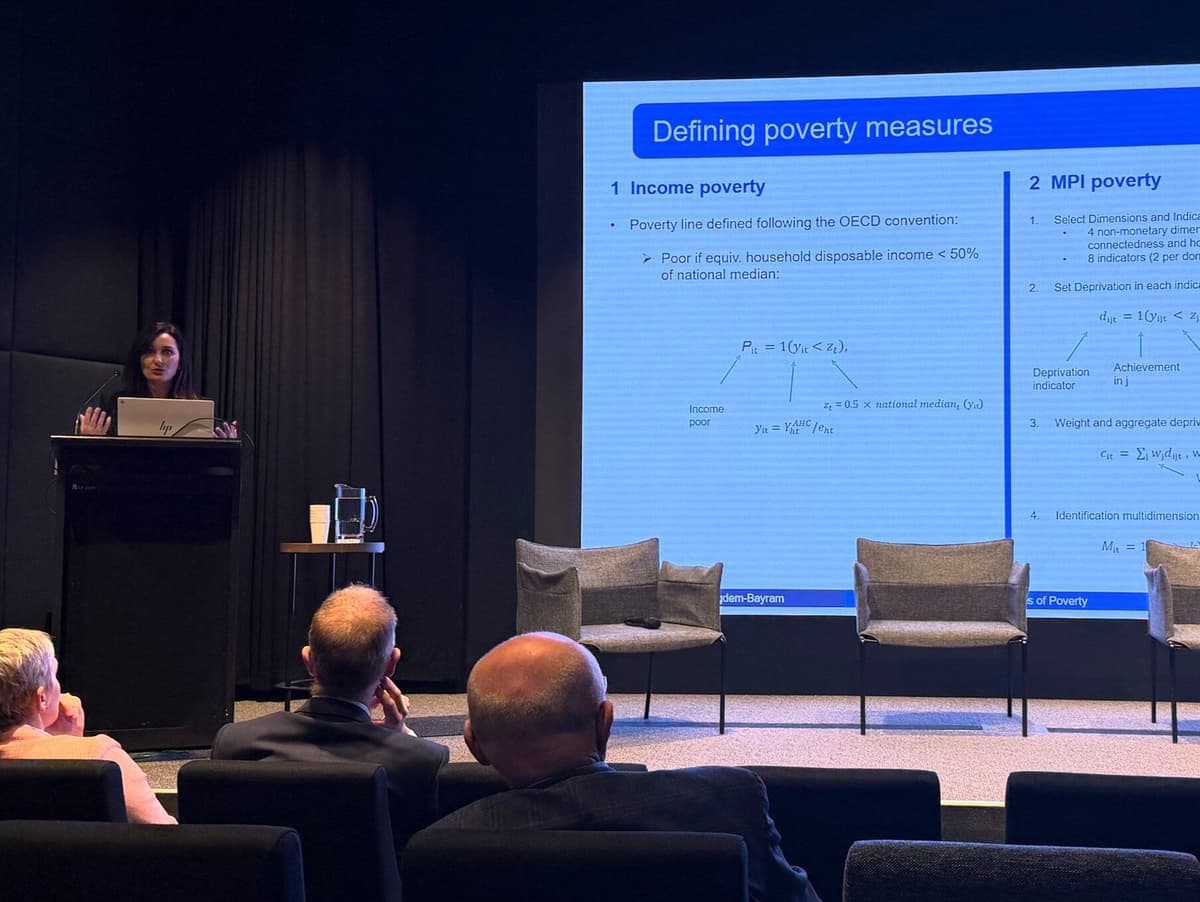
Photo: Supplied


“What gets measured, gets managed.”
It’s a familiar saying in government and business. But when it comes to poverty, Australia has a significant blind spot.
Despite being one of the world’s wealthiest countries, Australia still lacks an official national poverty measure, making it hard to track whether efforts to reduce disadvantage are working.
“Official measures are the critical first step in supporting governments and decision-makers to best address poverty in Australia,” said Travers McLeod, executive director of the Brotherhood of St. Laurence (BSL).
The renewed push to address this gap follows former High Court justice Michael Kirby’s warning that poverty is eroding Australia’s democracy.
Delivering the BSL’s recent Sambell Oration, Mr Kirby argued that poverty wasn’t simply an economic issue but a fundamental human rights matter that limited people’s ability to participate in democracy and have their voices heard.
“When institutions become more responsive to the powerful than to the vulnerable, public policies inevitably reflect that imbalance,” he said.
Mr Kirby called for Australia to adopt both official income-based and multidimensional poverty measures, arguing that financial hardship alone didn’t capture the full extent of a person’s disadvantage.
Unlike income-based measures, a multidimensional poverty index (MPI) considers other factors such as housing, health, education and social participation.
Quality research, analysis, explainers and factchecks from experts you can trust.
“Improving the lives of those who call Australia home begins with tracking and reporting on key metrics. By measuring poverty properly as part of Australia’s economic story, we can begin improving outcomes and seeing positive change,” said Mr McLeod.
He said by adopting an official MPI, governments would have a powerful tool to better target resources, tailor services to specific needs and develop more effective policy responses.
Leading Australian experts recently gathered in Melbourne to discuss the approaches at a panel event hosted by the Economic Society of Australia Victoria in partnership with the BSL.
The BSL has collaborated with the Melbourne Institute and the University of Oxford to develop Australia’s first comprehensive demonstration MPI.
Researchers analysed almost 20 years of data from the Household, Income and Labour Dynamics in Australia (HILDA) survey to examine how income poverty and broader forms of disadvantage changed over time.
They found that poverty often persists, with different forms of disadvantage helping predict who may experience poverty in the future.
The discussion also highlighted how official poverty measures could provide a “light on the hill” for governments working to reduce poverty.
“People in Australia don’t want others to be living in poverty. People should be able to eat healthily, have a secure roof over their heads, access to education and job opportunities. Unfortunately, despite Australia’s wealth, that simply isn’t the case,” said Mr McLeod.
According to the BSL, almost 160 countries have already adopted official poverty measures, whether monetary, multidimensional or both, while Australia has yet to adopt either type.

