As the year draws to a close, the Point team has compiled a list of our favourite essential reads of 2025.
Sat 20 Dec 2025 01.00


As the year draws to a close, the Point team has compiled a list of our favourite essential reads of 2025.
You can view previous editions of the Australia Institute’s essential reading list here.
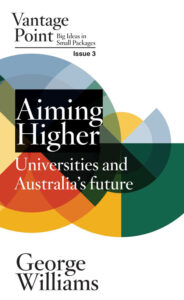 Aiming Higher: Universities and Australia’s future
by Professor George Williams
Decades of policy decisions have made access to higher education harder for those who need it most.
Public trust and community confidence in universities in Australia and overseas are at all-time lows.
Political sentiment has shifted. Our centres of higher learning have leapfrogged big business to become easy political targets. And it’s no surprise; the sector has scored its fair share of own goals over the handling of staff underpayment, Vice-Chancellor salaries, antisemitism, free speech and safety on campus.
Ad hoc and insufficient government funding has forced universities down the path of corporatisation, drifting away from their role as public institutions with the mission to serve the public good.
Professor George Williams, drawing on his expertise in Australian constitutional law and democracy, outlines necessary changes to Australian higher education. Universities need to claim agency, tackle the issues within their control, and replace self-interest with a genuine commitment to putting their students and communities first. Without a reset the future looks grim. Our universities need to guard against misinformation and foster the next generation; the nation requires critical thinkers, researchers and innovators more than ever.
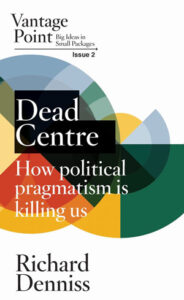
by Dr Richard Denniss
The sensible centre. Evidence-based policy. These are not the same. In fact, they are at odds with each other.
The scientific evidence tells us that building new gas, oil and coal mines will cause catastrophic climate damage this century. Yet politicians describe a call for the end of new mines as extreme. Likewise with online gambling, junk food advertising or incarcerating children: the evidence of harm is clear, but the sensible centre is defined not by evidence but by politics. Media reports on such issues presuppose that there are two sides and a centre to every debate, but evidence shows there is not. The political right thrives in such fear-fuelled, fact-free arenas, where traditional media and subject matter experts struggle to fight fear with facts.
In this essay, economist and Executive Director of The Australia Institute Richard Denniss, explores the contradiction between centrism and evidence that sits at the heart of democratic debate in Australia. He shows that when both major parties oppose reform then the position of the sensible centre becomes indistinguishable from blind support for keeping things as they are.
Dr Richard Denniss is a prominent Australian economist, Executive Director of The Australia Institute, author and public policy commentator, and has spent the last twenty years moving between policy-focused roles in academia, federal politics and think-tanks. He was also a Lecturer in Economics at the university of Newcastle and former Associate Professor in the Crawford School of Public Policy at ANU. He is a regular contributor to The Monthly and the author of several books including: Econobabble, Curing Affluenza and Dead Right: How Neoliberalism Ate Itself and What Comes Next?
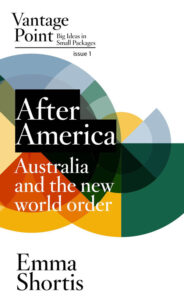 After America: Australia and the new world order
by Dr Emma Shortis
Australian political leaders have bent the knee at the altar of American global leadership for decades, placing the ANZUS treaty at the centre of the nation’s security. AUKUS has become the latest symbol of strategic solidarity. For Australia’s governments, of whatever political persuasion, America continues to define the global rules-based order. Now that the American people have elected Donald Trump as the forty-seventh president, how will his presidency affect Australia’s foreign policy, trade, climate action and approach to human rights? More importantly, will Australia be able to act in its own interests, or will it simply defer to Trump’s idea of America?
Dr Emma Shortis draws on her long-standing research on America’s place in the world, her discussions with some of Australia’s most prominent policy-makers and commentators and her experience in America in the final days of the election campaign, to develop a picture of how the world is changing with a second Trump presidency and what choices Australia has in determining its own future.
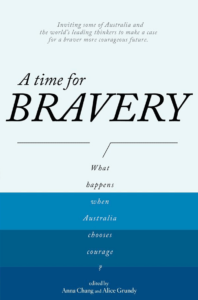 A Time for Bravery: What happens when Australians choose courage?
edited by Anna Chang and Alice Grundy
We are living at a critical point in history with the stubborn problems of rising inequality, rising fossil fuel production, and declining faith in democracy. This is a time for individuals, organisations, communities and our elected representatives to find the bravery we need to not just acknowledge, but address, the challenges we face.
There is bravery out there right now, in Australia and around the world. And Australian history is full of acts of individual and collective bravery ranging from the campaign to end apartheid in South Africa to the campaign for equal rights for same sex couples: from the green bans in Sydney’s Rocks to South Australia’s commitment to 100 per cent renewable energy. We have changed ourselves and the world before; if we are brave, we can do so again.
This book brings together advocates, politicians, campaigners, medical doctors, academics and a firefighter each with their answer to the question: what does bravery look like in Australia and how might it reshape our future for the better.
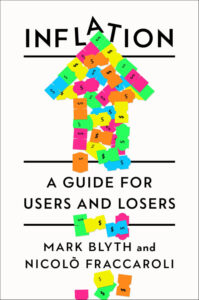
by Mark Blyth and Nicolò Fraccaroli
A fresh, revealing, and myth-busting guide to the ins and outs of inflation from two leading political economists.
Inflation is back, and its impact can be felt everywhere, from the grocery store to the mortgage market to the results of elections around the world. What’s more, tariffs and trade wars threaten to accelerate inflation again. Yet the conventional wisdom about inflation is stuck in the past. Since the 1970s, there has only really been one playbook for fighting inflation: raise interest rates, thereby creating unemployment and a recession, which will lower prices. But this simple story hides a multitude of beliefs about why prices go up and how policymakers can wrestle them back down, beliefs that are often wrong, damaging, and have little empirical basis.
Leading political economists Mark Blyth and Nicolò Fraccaroli reveal why inflation really happens, challenge how we think about it, and argue for fresh approaches to combat it. With accessible and engaging commentary, and a good dose of humor, Blyth and Fraccaroli bring the complexities of economic policy and inflation indices down to earth.
Policymakers around the world may have pulled off a so-called “soft landing,” but Inflation warns they must update their thinking. Now tariffs, climate shocks, demographic change, geopolitical tensions, and politicians promising to upend the global order are all combining to create a more inflationary future, making a new paradigm for understanding inflation urgently necessary. Astute, timely, and engaging, Inflation is a must-read for anyone seeking to understand the forces shaping our economy and politics.
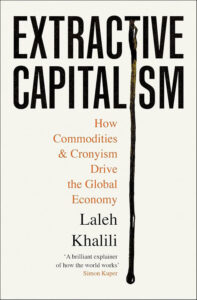 Extractive Capitalism: How Commodities and Cronyism Drive the Global Economy
by Professor Laleh Khalili
An eye-opening survey of how extractive industries power globalisation – and how to fight back
A Financial Times ‘What to read in 2025’ Book
‘Essential reading’ Françoise Vergès, author of A Decolonial Feminism
‘Profound and compelling … A book that I couldn’t put down’ Adam Hanieh, author of Crude Capitalism
Whether it’s pumping oil, mining resources or shipping commodities across oceans, the global economy runs on extraction. Promises of frictionless trade and lucrative speculation are the hallmarks of our era, but the backbone of globalisation is still low-cost labour and rapacious corporate control. Extractive capitalism is what made – and is still making – our unequal world.
Professor Laleh Khalili reflects on the hidden stories behind late capitalism, from seafarers abandoned on debt-ridden container ships to the nefarious reach of consultancy firms and the cronyism that drives record-breaking profits. Piercing, wry and constantly revealing, Extractive Capitalism brings vividly to light the dark truths behind the world’s most voracious industries.
 The World Under Capitalism: Observations on Economics, Politics, History, and Culture
by Branko Milanovic
Branko Milanovic is best known as one of the world’s leading experts on global inequality. But he is also an unusually wide-ranging and penetrating commentator on subjects across economics and beyond, in politics, history, and culture. This book brings together his most searching, provocative, and entertaining articles of recent years, providing an abundance of vital insights into the evolution and dynamics of the world under capitalism.
The volume features important ideas about the struggle to achieve a more equal and prosperous world against not only the predictable forces of deregulation and distraction but new ideas about shrinking the economy to protect the environment. Further from Milanovic’s speciality, readers will find an extraordinary array of reflections on subjects including migration, globalization, the politics and economics of Russia and China, the crisis of liberal democracy, economic and literary history, and the intellectual giants of economics. The pieces are united by Milanovic’s distinctive voice – humane, wry, and realistic – and by remarkable erudition worn lightly whether the topic is the fall of Constantinople, Jane Austen, or the mores of contemporary soccer.
No one can fail to learn from the book, while the sparkling prose, unexpected observations, and sheer importance of the subjects at hand make it a compelling read from start to finish.
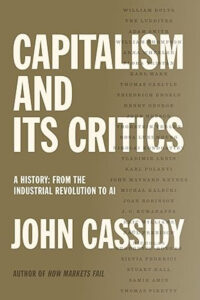 Capitalism and Its Critics: A Battle of Ideas in the Modern World
by John Cassidy
A sweeping, dramatic history of capitalism as seen through the eyes of its fiercest critics
At a time when we are faced with fundamental questions about the sustainability and morality of the economic system, Capitalism and Its Critics provides a kaleidoscopic history of global capitalism, from colonialism and the Industrial Revolution to the ecological crisis and artificial intelligence.
John Cassidy adopts a bold new approach: he tells the story through the eyes of the system’s critics. From eighteenth-century weavers who rebelled against early factory automation to Eric Williams’s paradigm-changing work on slavery and capitalism, to the Latin American dependistas, the international Wages for Housework campaign of the 1970s, and the modern degrowth movement, this absorbing narrative traverses the globe. It looks at familiar figures – Smith, Marx, Luxemburg, Keynes, Polanyi – from a fresh perspective, but also focuses on many less familiar, including William Thompson, the Irish proto-socialist whose work influenced Marx; Flora Tristan, the French proponent of a universal labour union; John Hobson, the original theorist of imperialism; and J. C. Kumarappa, the Indian exponent of Gandhian economics.
Blending biography, panoramic history, and lively exploration of economic theories, Capitalism and Its Critics illuminates the deep roots of many of the most urgent issues of our time.
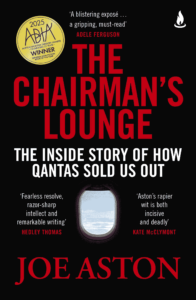 The Chairman’s Lounge: The inside Story of how Qantas sold us out
by Joe Aston
From the must-read journalist on how power, money and influence work in this country, the full story of how one of the nation’s favourite brands brought itself to ground.
Before Covid, both Qantas and its CEO Alan Joyce were flying high, the darlings of customers, staff and investors. After Covid hit, only money mattered – in particular, the company’s share price and extraordinary executive bonuses. Illegally redundant workers, unethical flight credits, abysmal customer service, antique aircraft: these became Qantas’ new brand.
How did things go so badly wrong? Why were customers at the end of the queue? And how did an increasingly autocratic Joyce constantly get his own way, with the Qantas board and with both Liberal and Labor governments, which handed over billions in subsidies and protected lucrative flight routes from foreign competition? For the first time, The Chairman’s Lounge tells the full story of how one company banked the nation’s loyalty and then cashed in on it.
In his celebrated column Rear Window for the Australian Financial Review, Joe Aston’s reporting of the ethical failings of Qantas spurred the early retirement of its CEO and the resignation of its chairman. With fresh interviews and revelations, written in Aston’s trademark swashbuckling style, The Chairman’s Lounge is the definitive account of how Qantas was brought to ground and who did it. It is a parable of our times.
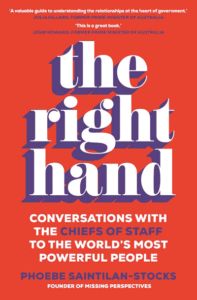 The Right Hand: Conversations with the chiefs of staff to the world’s most powerful people
by Phoebe Saintilan-Stocks
We all know the names: Jacinda Ardern, Kamala Harris, Tony Blair, Justin Trudeau, John Howard, Sanna Marin, Nelson Mandela and Julia Gillard. But what about the people standing just behind them?
In The Right Hand, Missing Perspectives founder Phoebe Saintilan-Stocks sits down with the chiefs of staff to some of the most defining presidents and prime ministers of our time.
The stories they share are nothing short of extraordinary:
– Supporting Nelson Mandela as he emerged from prison and stepped into power.
– Being sent home from Balmoral by the Queen.
– Fielding offers of help from Vladimir Putin on the day of the September 11 attacks.
– Being shown projected death tolls in the Covid briefing room.
– Boarding a blacked-out train into Kyiv under the cover of night at the start of Russia’s invasion of Ukraine.
– Aiding Kamala Harris during one of the most anticipated elections in history – and then navigating a devastating loss.
Also, Justin Trudeau doesn’t drink coffee.
In this book, some of the world’s most powerful chiefs of staff open up about leadership, loyalty, power and pressure.
If you’ve ever wondered what it’s like to be in the highest corridors of power, this is your all-access pass.
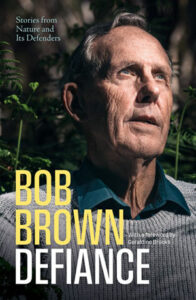 Defiance: Stories from Nature and Its Defenders
 by Bob Brown
Stories of courage and conviction from the environmental frontline
‘This book is a powerful reminder that the arc of the moral universe bends towards justice only if brave people make the effort to bend it.’ —Geraldine Brooks
For half a century, Bob Brown has been standing up to the powerful interests who would put profit before planet.
In Defiance, he draws on this experience to inspire a new generation of individual and collective action. He reflects on the people and places that have shaped him, celebrates the irreplaceable beauty and value of nature and shares what motivates him to keep fighting. He considers the challenges facing nature’s defenders – hostile corporate lobbyists, vilification in the press, the powerful pull of consumerism – and shows how courage, persistence and community can defeat them all.
Told with Brown’s trademark warmth and humour, these stories will galvanise, uplift and inspire.
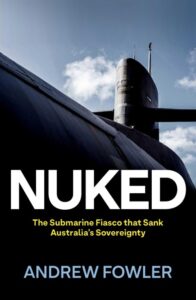 Nuked: The Submarine Fiasco that Sank Australia’s Sovereignty
by Andrew Fowler
The spectacular fallout from Australia’s duplicitous AUKUS deal
Like all military acquisition programs worth billions of dollars, Australia’s decision to buy a new submarine fleet was expected to be a torturous process. But no one could have predicted the trail of wreckage it left behind, from the boulevards of Paris to the dockyards of Adelaide, as deep inside the Australian Government a secret group conspired to overthrow the winning French bid. In this tale of treachery and intrigue, Andrew Fowler exposes the lies and deception that so outraged the President of France. Interviewing many of the main people involved and talking to sources in Paris, London, Washington and Canberra, Fowler pieces together the plot to sink the French and switch to a nuclear-powered US submarine – a botched operation that severely compromised Australia’s ability to defend itself.
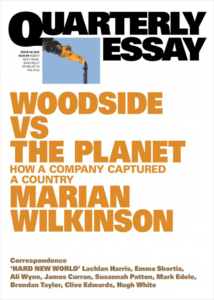 Woodside vs The Planet: How a Company Captured a Country
by Marian Wilkinson
Why is Australia doubling down on fossil fuels?
The world may have committed at Paris to hold back dangerous climate change, but Australia’s fossil-fuel giant Woodside is doubling down: it has bold new plans to keep producing gas out to 2070. Support from the major parties is locked in, so something has to give.
This is a story of power and influence, pollution and protest. How does one company capture a country? How convincing is Woodside’s argument that gas is a necessary transition fuel, as the world decarbonises? And what is the new “energy realism” narrative being pushed by Trump’s White House?
In this engrossing essay, Marian Wilkinson reveals the ways of corporate power and investigates the new face of resistance and disruption. The stakes could not be higher.
“The gas companies and the Labor governments in WA and Canberra had refined their defence: the gas industry was helping the world decarbonise, curbing its emissions and providing energy security. It sounded like the planet could hardly have a better friend than Australia’s LNG industry and companies like Woodside.” —Marian Wilkinson, Woodside vs the Planet
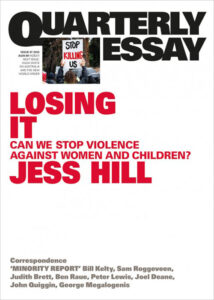 Losing It: Can We Stop Violence Against Women and Children?
by Jess Hill
What will it take to stop gendered violence?
What went wrong? Australian governments promised to end violence against women and children in a single generation. Instead, it is escalating: men have been murdering women at an increased rate, coercive control and sexual violence are becoming more complex and severe, and we see a marked rise in youth-on-youth sexual assault. Why?
In Losing It, Jess Hill investigates Australia’s National Plan to End Violence Against Women and Children to find out what’s working and what’s not – and what we can do to turn things around. This compassionate, groundbreaking essay lifts the lid on a national crisis.
“Each time a woman or child was murdered, I felt a gnawing sense of urgency. If it’s everybody’s responsibility to prevent violence, where does the buck stop?” – Jess Hill, Losing It
 Human/Nature: On life in a wild world
by Jane Rawson
Several years ago, Jane Rawson packed up her beloved inner-city home and moved to the bush. Scared about what climate change would do to the big city, and keen to meet more animals, she found a new home in a cottage in the Huon Valley. But in a place where nature never really leaves you alone, she had to confront her uncomfortable relationship with the outdoors.
A lyrical work of creative nonfiction, Human/Nature is an exploration of how and why we think about the natural world the way we do. If you’ve ever asked yourself whether humans are ruining nature, whether there’s a better way for us to belong, or whether it’s possible to love both the environment and your cat, you’re not alone. This exquisite, contemplative book is for anyone who has ever wondered where they fit in the natural world.
‘In this funny, provocative and profoundly moving book, Jane Rawson brilliantly unravels the myths about the boundaries of the human and the non-human, the natural and the unnatural, and love and death that shape our thinking about not just the environment, but our history and the future that is already overtaking us. Read it: it’s utterly marvellous.’ – James Bradley, author of Deep Water
 Nature’s Last Dance: Tales of wonder in an age of extinction
by Natalie Kyriacou
Amidst the tragedy of wild species extinction lies a hidden world of survival and wonder. Conservationists are locked in a high-stakes battle with the ghost of a drug lord and his herd of hippos. Scientists are fighting to save a flightless bird that romances rocks. Unconventional animals are upending 21st century beauty standards, and financiers are betting on whale poo to make its debut on Wall Street.
This is a story of survival and extinction, of life and death, of curiosity and perversion, of unimaginable joy and harrowing sorrow.
Set against the backdrop of a rapidly unfolding mass extinction event, Nature’s Last Dance takes readers across hunting grounds, through jungles and oceans, inside communities, through courtrooms, and into the heart of battles to survive against all odds.
Award-winning environmentalist Natalie Kyriacou confronts the extinction crisis with courage and curiosity, charting a new course for nature and showing us why it is so worth fighting for.
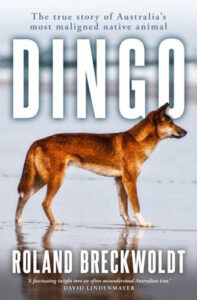 Dingo: The true story of Australia’s most maligned native animal
by Roland Breckwoldt
Australia’s dingoes are increasingly under threat of extinction after two centuries of mythmaking, bounties and poisoning. This is the real story of the dingo.
Dingoes have been the scapegoat for sheep farmers’ financial struggles since the early colonial years. Governments have responded with bounties for killing dingoes, baiting programs, and thousands of kilometres of fences. The livestock industry claims dingoes are not genuine native animals, just feral domestic dogs. Dangerous interactions with tourists at campsites keep negative stories about dingoes in the news.
But the tide is turning. Science shows there’s little interbreeding with domestic dogs, and that dingoes play an integral role in maintaining ecological balance, including by keeping kangaroos and wild pigs and goats in check. Now dingo numbers are perilously low in many areas. Will Australia be willing to protect the dingo before it’s too late?
Roland Breckwoldt unravels the myths and prejudices to tell the true story of an Australian icon.
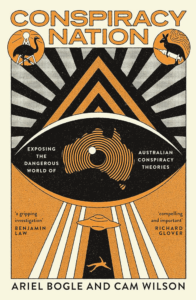 Conspiracy Nation: Exposing the dangerous world of Australian conspiracy theories
 by Ariel Bogle and Cam Wilson
Through new investigations and first-hand accounts, Conspiracy Nation takes readers to the rallies, homes, courtrooms, secret chat rooms and $2000 Byron Bay luxury retreats where Australia’s conspiracy theories spread.
‘There are microchips in vaccines’; ‘5G spreads COVID-19’; ‘the Australian government is hiding a list of powerful predators’ – Conspiracy Nation exposes the world of Australian conspiracy theories, their history, appeal and political influence. It’s easy to dismiss these as fringe concerns or imported concepts, but conspiratorial ideas are gaining traction with everyday Australians, and being wielded by those in power.
In this boots-on-the-ground report, journalists Ariel Bogle and Cam Wilson meet the people dedicated to living and spreading these ideas, those who have been left reeling by their impact, and the ones who are fighting back.
From Port Arthur and QAnon, to the rise of ‘wellness’ influencers and ‘sovereign citizen’ gurus, to the delusions that inspired the Wieambilla murders, Bogle and Wilson show the devastating consequences of unchecked lies and radicalisation, and make a compelling case that by ignoring the looming threat of conspiratorial thinking, we put our community at risk.
 We Have Never Been Woke: The Cultural Contradictions of a New Elite
 by Musa al-Gharbi
Society has never been more egalitarian—in theory. Prejudice is taboo, and diversity is strongly valued. At the same time, social and economic inequality have exploded. In We Have Never Been Woke, Musa al-Gharbi argues that these trends are closely related, each tied to the rise of a new elite—the symbolic capitalists. In education, media, nonprofits, and beyond, members of this elite work primarily with words, ideas, images, and data, and are very likely to identify as allies of antiracist, feminist, LGBTQ, and other progressive causes. Their dominant ideology is “wokeness” and, while their commitment to equality is sincere, they actively benefit from and perpetuate the inequalities they decry. Indeed, their egalitarian credentials help them gain more power and status, often at the expense of the marginalized and disadvantaged.
We Have Never Been Woke details how the language of social justice is increasingly used to justify this elite—and to portray the losers in the knowledge economy as deserving their lot because they think or say the “wrong” things about race, gender, and sexuality. Al-Gharbi’s point is not to accuse symbolic capitalists of hypocrisy or cynicism. Rather, he examines how their genuine beliefs prevent them from recognizing how they contribute to social problems—or how their actions regularly provoke backlash against the social justice causes they champion.
A powerful critique, We Have Never Been Woke reveals that only by challenging this elite’s self-serving narratives can we hope to address social and economic inequality effectively.
 Equality: What It Means and Why It Matters
by Thomas Piketty and Michael Sandel
In this compelling dialogue, two of the world’s most influential thinkers reflect on the value of equality and debate what citizens and governments should do to narrow the gaps that separate us. Ranging across economics, philosophy, history, and current affairs, Thomas Piketty and Michael Sandel consider how far we have come in achieving greater equality. At the same time, they confront head-on the extreme divides that remain in wealth, income, power, and status nationally and globally.
What can be done at a time of deep political instability and environmental crisis? Piketty and Sandel agree on much: more inclusive investment in health and education, higher progressive taxation, curbing the political power of the rich and the overreach of markets. But how far and how fast can we push? Should we prioritize material or social change? What are the prospects for any change at all with nationalist forces resurgent? How should the left relate to values like patriotism and local solidarity where they collide with the challenges of mass migration and global climate change?
To see Piketty and Sandel grapple with these and other problems is to glimpse new possibilities for change and justice but also the stubborn truth that progress towards greater equality never comes quickly or without deep social conflict and political struggle.
 The Origins of Inequality, and Policies to Contain It
by Joseph E. Stiglitz
Joseph E. Stiglitz has had a remarkable career. He is a brilliant academic, capped by sharing the Nobel Memorial Prize in Economics and the Nobel Peace Prize, and honorary degrees from Harvard, Cambridge, Oxford and more than fifty other universities, and elected not only to the National Academy of Sciences and the American Academy of Arts and Letters but the Royal Society and the British Academy; a public servant, who served as Chair of President Clinton’s Council of Economic Advisors and Chief Economist and Senior Vice President of the World Bank, headed international commissions for the UN and France, and was awarded the French Legion of Honor and Australia’s Sydney Peace Prize; a public intellectual whose numerous books on vital topics have been best sellers.
What brought him to economics were his concerns about the inequality and discrimination he saw growing up. Wanting to understand what drives it and what can be done about it has been his lifelong passion. This book gathers together and extends to new frontiers this lifelong work, drawing upon the challenges and insights of each of these phases of his career.
In a still very widely cited paper written fifty years ago, Stiglitz set forth the fundamental framework for analyzing intergenerational transfer of wealth and advantage, which plays a central role in persistent inequality. That and subsequent work, developed most fully here for the first time, described today’s inequality as a result of centrifugal forces increasing inequality and centripetal forces reducing it. In recent decades, the centrifugal forces have strengthened, the centripetal forces weakened. His general theory provides a framework for understanding the marked growth in inequality in recent decades, and for devising policies to reduce it.
A central message is that ever-increasing inequality is not inevitable. Inequality is, in a fundamental sense, a choice. Stiglitz explains that inequality does not largely arise from differences in savings rates between capitalists and others, though that may play a role (as Piketty, Marx, and Kaldor suggest); but rather, it originates importantly from the rules of the game, which have weakened the bargaining power of workers as they have increased the market power of corporations. He also explains how monetary authorities have contributed to increasing wealth inequality, and how, unless something is done about it, likely changes in technology such as AI and robotization will make matters worse. He describes policies that can simultaneously reduce inequality and improve economic performance.
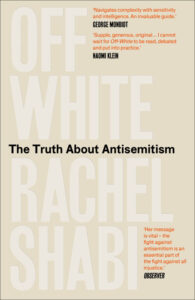 Off-White: The Truth about Antisemitism
by Rachel Shabi
Why can’t we talk about antisemitism?
‘I cannot wait for Off-White to be read, debated and put into practice.’ Naomi Klein, author of Doppelganger
As claims of antisemitism continue to distort our politics at home and abroad, it has become almost impossible to talk about constructively, even in private. Instead, we find ourselves in a storm of misinformation, political mudslinging and bad-faith accusations.
There is, however, a way to deliberate more honestly. Looking beyond our polarising headlines and interrogating the reasons racism takes hold, Off-White offers urgent analysis of one of the most divisive issues of our time. Taking in the contingency of whiteness, Judeo-Christian mythmaking, pro-Israel antisemitism, and the Palestinian struggle against colonialism, Rachel Shabi lights a hopeful way forward.
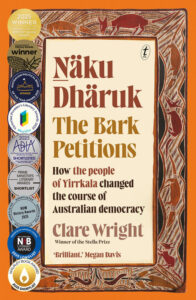 Näku Dhäruk The Bark Petitions: How the people of Yirrkala changed the course of Australian democracy
by Clare Wright
Winner, The Australian Political Book of the Year, 2025
In this engaging narrative, Wright follows the story of petitions on bark created by the Yirrkala community in Arnhem Land in 1963, protesting bauxite mining on traditional lands.
In 1963-a year of race riots in the United States and explosive agitation for civil rights worldwide-the Indigenous people of the Northern Territory were yet to be recognised as full adults. Almost to a person, they were classed as wards of the state, unacknowledged as having any ownership over the land on which they had lived for tens of thousands of years.
In 1975 Gough Whitlam poured a handful of sand into the palm of Gurindji Elder Vincent Lingiari to symbolise the granting of deeds to his ancestral country-and the land rights movement was unstoppable. That journey towards legal recognition of native title started in 1963 with the Yirrkala Bark Petitions- Naku Dharuk.
The background was a four-cornered contest for mastery of the land and its resources between the Menzies government, the mining industry, the Methodist Church and the Yolngu peopleof northeast Arnhem Land, under whose country was discovered a blanket of bauxite.
Throughout the tumultuous year of 1963, leaders of the Yolngu clans worked with white allies on the unprecedented political strategy that culminated in the presentation of four Bark Petitions to Federal Parliament. It was a key moment in the formation of a uniquely Indigenous engagement with Australian politics.
This is the story of a founding document in Australian democracy and the people who made it. It paints a vibrant picture of the profound and ancient culture of Australia’s first peoples, in all its continuing vigour.
Clare Wright’s groundbreaking Democracy Trilogy began with The Forgotten Rebels of Eureka (workers’ rights) and continued with You Daughters of Freedom (women’s rights). After a decade of research and community consultation, it concludes, fittingly, with a fascinating and compulsively readable account of a momentous but little-known episode in our shared political history.
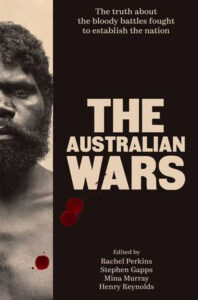 The Australian Wars: The truth about the bloody battles fought to establish the nation
edited by Rachel Perkins, Stephen Gapps, Mina Murray and Henry Reynolds
For the first time, The Australian Wars brings what for too long has been considered the historical past into connection with its reverberations in the present.
It is estimated up to 100,000 people died in the frontier wars that raged across Australia for more than 150 years. This is equivalent to the combined total of all Australians killed in foreign battles to date. But there are few memorials marking these first, domestic wars.
The Australian Wars was conceived by Rachel Perkins following her award-winning documentary series produced by Blackfella Films for SBS and edited along with Stephen Gapps, Mina Murray and Henry Reynolds. This is the first book to tell the story of the continental sweep of massacres, guerilla warfare, resistance and the contests of firearms and traditional Aboriginal weaponry as Indigenous nations resisted colonial occupation of their lands, territory by territory. At stake was the sovereignty of an entire country.
Black and white writers tell the stories of these battles across three crucial time periods, and all the states and territories. It notes the lands that were unconquered, as well as the role of disease, weapons and tactics, and the story of women on the frontier.
This history is still alive in those descendants who carry the stories of their ancestors. The Australian Wars brings what for too long has been considered the historical past into the present so that we might know the truth of the origins of this nation.
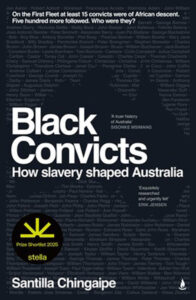 Black Convicts: How Slavery Shaped Australia
by Santilla Chingaipe
The story of Australia’s Black convicts has been all but erased from our history. In recovering their lives, Santilla Chingaipe offers a fresh understanding of this fatal shore, showing how empire, slavery, race and memory have shaped our nation.
‘The defining read of the decade. This is a work of global significance.’ Meanjin
On the First Fleet of 1788, at least 15 convicts were of African descent. By 1840 the number had risen to almost 500. Among them were David Stuurman, a revered South African chief transported for anti-colonial insurrection; John Caesar, who became Australia’s first bushranger; Billy Blue, the stylishly dressed ferryman who gave his name to Sydney’s Blues Point; and William Cuffay, a prominent London Chartist who led the development of Australia’s labour movement. Two of the youngest were cousins from Mauritius—girls aged just 9 and 12—sentenced over a failed attempt to poison their mistress.
But although some of these lives were documented and their likenesses hang in places like the National Portrait Gallery, even their descendants are often unaware of their existence.
By uncovering lives whitewashed out of our history, in stories spanning Africa, the Americas and Europe, Black Convicts also traces Australia’s hidden links to slavery, which both powered the British Empire and inspired the convict system itself. Situating European settlement in its global context, Chingaipe shows that the injustice of dispossession was driven by the engine of labour exploitation. Black Convicts will change the way we think about who we are.
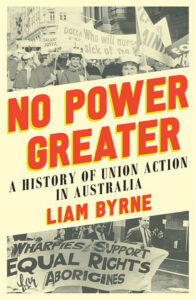 No Power Greater: A History of Union Action in Australia
by Liam Byrne
How Australian unions shaped modern Australian society
Unions are making a comeback. Labour disputes around the world have hit the headlines as unions take action to challenge inequality. But while media coverage has increased, understanding of unions has not.
In this lively history of Australian unionism Liam Byrne seeks to illuminate what unionism means, exploring why successive generations of working people organised unions and nurtured them for future generations. Foregrounding the pioneering efforts of women workers, Aboriginal and Torres Strait Islander workers, culturally and linguistically diverse workers, and LGBTIQA+ workers as central to the union story today, Byrne uses case studies of worker action and struggle to better understand the lived reality of unionism, its challenges, and its contribution to Australian life.
No Power Greater is the compelling story of the acts of rebellion and solidarity that have shaped Australia’s past and shows that unions are far from history.
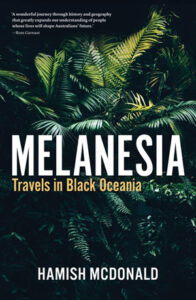 Melanesia: Travels in Black Oceania
by Hamish McDonald
An immersive journey through the tumultuous past and fascinating present of Australia’s nearest neighbours
“We are the original people of the region … This is a black region, it’s not a white region.”—Ralph Regenvanu, Ni-Vanuatu anthropologist and politician
Stretching from Fiji in the east to New Guinea in the west, Melanesia is astonishingly diverse. Its islands are home to some 1200 language groups, many of them still isolated from the outside world. In Australia, this complex region tends to make the news only in times of crisis: military coups in Fiji, Kanak unrest in New Caledonia, rioting in Solomon Islands. Melanesia offers readers a deeper insight into the people and places behind these headlines, combining travelogue, history and astute political analysis.
By land and sea, Hamish McDonald travels from one end of Melanesia to the other. Speaking with locals from all walks of life, he uncovers the histories, values, aspirations and tensions that have shaped their communities. He examines the impact of outsiders: the Indians recruited to work in Fiji; the white “blackbirders” who kidnapped Islanders for the Australian cane fields; the Americans during World War II; the Indonesians in New Guinea. And he considers the big changes unfolding today, as shifting demographics and the growing influence of China produce a new balance of power across the region.
Vividly written, Melanesia is essential reading for anyone looking to understand this fascinating part of the world and its growing international significance.
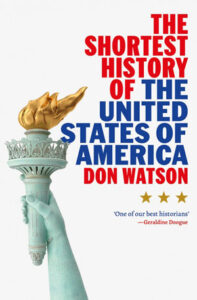 The Shortest History of the United States of America
by Don Watson
From revolution to civil rights, Hollywood and the Gilded Age.
The extraordinary story of the United States, a nation that contains multitudes.
When Britain’s thirteen American colonies declared their independence on 4 July 1776, the United States of America was born. But it was hardly united.
In this superbly written book, Don Watson traces how the central conflicts of the United States – those over freedom, race, frontiers, enterprise, religion and violence – play out throughits history: a country at war with itself in the 1860s, the leader of the free world less than a hundred years later, and a nation beset by wild division and turmoil in the twenty-first century.
This is a story full of character and humour, told with great learning and insight – a perfect introduction to America, past and present.
‘These were indeed strange times. Yet the forces at work in them were not new. Men like Donald Trump are embedded in US history, mythology and popular culture. Rank populists, hucksters, fakers, grifters, rent-seekers, blowhards, tycoons, kleptocrats, narcissists, psychopaths and delinquents – or, from the other point of view, rugged individualists, entrepreneurs, men of vision, men of destiny, instruments of God. No diorama of mainstream American life in any era could be without them.’—Don Watson, The Shortest History of the United States of America
 The Right of the People: Democracy and the Case for a New American Founding
by Osita Nwanevu
Frustrated with our political dysfunction, wearied by the thinness of contemporary political discourse, and troubled by the rise of anti-democratic attitudes across the political spectrum, journalist Osita Nwanevu has spent the Trump era examining the very meaning of democracy in search of answers to questions many have asked in the wake of the 2024 election: Are our institutions fundamentally broken? How can a country so divided govern itself? Does democracy even work as well as we believe?
The Right of the People offers us challenging answers: while democracy remains vital, American democracy is an illusion we must make real by transforming not only our political institutions but the American economy. In a text that spans democratic theory, the American Founding, our aging political system, and the dizzying inequalities of our new Gilded Age, Nwanevu makes a visionary case for a political and economic agenda to fulfill the promise of American democracy and revive faith in the American project.
“Nearly two hundred fifty years ago, the men who founded America made a fundamental break not just from their old country but from the past—casting off an order that had subjugated them with worn and weak ideas for the promise of true self-governance and greater prosperity in a new republic,” Nwanevu writes. “With exactly their sense of purpose and even higher, more righteous ambitions for America than they themselves had, we should do the same now—work as hard as we can in the decades ahead to ‘institute new Government’ for the benefit of all and not just the few.”
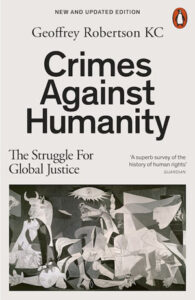 Crimes Against Humanity: The Struggle For Global Justice
by Geoffrey Robertson KC
A freshly updated version of the definitive book on human rights law, now with a new chapter on war crimes in Ukraine and the continuing war in Gaza.
In a newly updated edition of Crimes Against Humanity, Geoffrey Robertson QC explains why we must hold political and military leaders accountable for genocide, torture and mass murder. He shows how human rights standards can be enforced against cruel governments, armies and multi-national corporations. This seminal work contains a critical perspective on events such as the invasion of Iraq, the abuses at Abu Ghraib, the killings in Darfur, the death of Milosevic and the trial of Saddam Hussein.
Cautiously optimistic about ending impunity, but unsparingly critical of diplomats, politicians, Bush lawyers and others who evade international rules, this book will provide further guidance to a movement which aims to make justice predominant in world affairs.
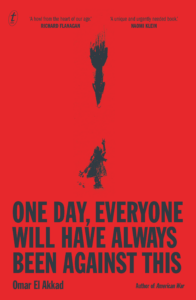 One Day, Everyone Will Have Always Been Against This
by Omar El Akkad
From award-winning novelist and journalist Omar El Akkad, an urgent and necessary reckoning with what it means to live in the West today.
As an immigrant, Omar El Akkad believed the West would be a place of freedom and justice for all. But in the past twenty years, reporting on the various Wars on Terror, climate change, Black Lives Matter protests, and more, and watching the unmitigated slaughter in Gaza, he has come to the conclusion that much of what the West promises is a lie. One Day, Everyone Will Have Always Been Against This is a chronicle of that painful realisation, a moral grappling with what it means – as a citizen of the US, as a father – to carve out some sense of possibility during these devastating times.
This is El Akkad’s nonfiction debut, his most raw and vulnerable work to date. It’s a heartfelt breakup letter with the West, a brilliant articulation of the same breakup we are watching all over the world, in family rooms, on university campuses, on city streets. This book is for everyone who wants something better than what the West has served up. This is the book for our time.
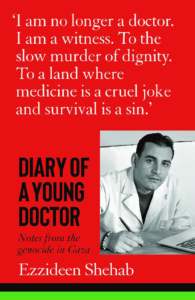 Diary of a Young Doctor: Notes from the genocide in Gaza
by Dr Ezzideen Shehab
A powerful eyewitness account of the genocide in Gaza by an extraordinary young writer and general physician.
Five days before 7 October 2023 a young Palestinian doctor returns to Gaza, having completed his medical studies abroad. His family gathers to celebrate his achievements and welcome him home. On 11 October forty-two members of his extended family are killed in an airstrike, and thus begins his incredible story of survival and service to his people.
Throughout it all, Dr Shehab posts regular updates on the situation for his patients and for his people. His clarity and humanity shine bright as he describes those he treats, and his incomprehension at the unfolding genocide and the silence of the world in the face of the ongoing atrocities.
‘Diary of a Young Doctor’ is an unforgettable testimony of one of the most shameful periods in recent history.
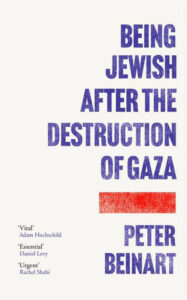 Being Jewish After the Destruction of Gaza
by Peter Beinart
A bold, urgent appeal from the acclaimed columnist and political commentator, addressing one of the most pressing issues of our time
In Peter Beinart’s view, one story dominates Jewish communal life: that of persecution and victimhood. It is a story that erases much of the nuance of Jewish religious tradition and warps our understanding of Israel and Palestine. After Gaza, where Jewish texts, history and language have been deployed to justify mass slaughter and starvation, Beinart argues, Jews must tell a new story. After this war, whose horror will echo for generations, they must do nothing less than offer a new answer to the question: What does it mean to be a Jew?
Beinart imagines an alternate narrative, which would draw on other nations’ efforts at moral reconstruction and a different reading of Jewish tradition. A story in which Israeli Jews have the right to equality, not supremacy, and in which Jewish and Palestinian safety are not mutually exclusive but intertwined. One that recognizes the danger of venerating states at the expense of human life.
Being Jewish After the Destruction of Gaza is a provocative argument that will expand and inform one of the defining conversations of our time. It is a book that only Peter Beinart could write: a passionate yet measured work that brings together his personal experience, his commanding grasp of history, his keen understanding of political and moral dilemmas, and a clear vision for the future.
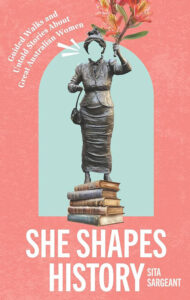 She Shapes History: Guided Walks and Stories About Great Australian Women
by Sita Sargeant
She Shapes History is a series of walking tours and vignettes that celebrate the accomplishments of women who made an impact on the small towns and big cities of Australia. Author Sita Sargeant has travelled the country to uncover tales of women who have so often been left out of the history books, to reframe well-known stories and let readers see the amazing histories around every corner of their own hometown or city.
The book features 30 cities and towns from across the country; from Coober Pedy to Hobart, Hahndorf to Rockhampton, and all of the major cities in between, each place has its own indelible identity, and a myriad women who left their mark there. Whether it’s the underworld queens who ran Kings Cross, the businesswoman of African heritage and single mother of four who became the first recorded woman to vote in an Australian election, or the pioneering activist who founded Meals on Wheels (and just happened to be in a wheelchair), there are countless funny, heartbreaking, inspiring, and eye-opening stories of women who lived and thrived in these disparate and often challenging landscapes. There are 18 city walks included, one for each of the major cities, with easy-to-follow maps with stops that relay stories of women who affected change there. The book will have a fun and engaging scrapbook feel, with breakouts and vignettes that highlight amazing women that have helped to shape history.
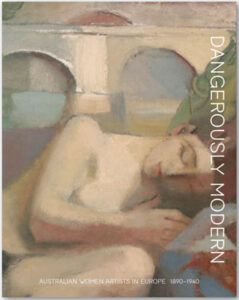 Dangerously Modern: Australian Women Artists in Europe 1890–1940
edited by Elle Freak, Tracey Lock and Wayne Tunnicliffe
This book charts the vital role of Australian women artists in the development of international modernism. Belonging to an unprecedented wave of women who travelled to Europe at the turn of the twentieth century, they prevailed against centuries of social constraints – often making great sacrifices and experiencing prejudice – to pursue professional careers on an international stage.
Lavish colour illustrations enrich a collection of long and short-form essays that offer detailed insights into the works of art. Also discussed are the many obstacles these women overcame, including their exclusion from key exhibiting and training opportunities, while highlighting the extensive women’s networks they built and their connections to the women’s suffrage movement. New and expanded understandings of modern art movements are revealed and encompass the role of long overlooked themes such as faith, feeling and emotion.
Featuring both celebrated and recently rediscovered paintings, sculpture, prints and ceramics, this is the first book to comprehensively reclaim the international contributions of Australian women. No longer regarded as mere ‘messenger girls,’ these travelling artists are recognised as pivotal figures in the transmission of new ideas back to Australia and beyond during a time of rapid social and cultural change.
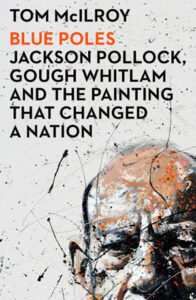 Blue Poles: Jackson Pollock, Gough Whitlam and the Painting That Changed a Nation
by Tom McIlroy
An iconic American painting. An Australian controversy. Where art and politics, myth-making and modernism intersect, there is Blue Poles by Jackson Pollock. Now in the eye-opening Blue Poles book, journalist Tom McIlroy uncovers the fascinating story of the painter, the politics, and the national scandal that followed.
The captivating story behind the iconic Blue Poles – the painter, the process, the patronage, the politics and the national scandal.
In 1973, Blue Poles, the iconic painting by America’s great abstract expressionist Jackson Pollock, was acquired by the Australian government for A$1.4 million. This record-setting price for an artwork sparked a media sensation and controversy both in Australia and the United States.
Blue Poles: Jackson Pollock, Gough Whitlam and the painting that changed a nation details how Jackson Pollock rose to fame, the negotiations that led to the artwork’s move to the National Gallery of Australia, and the many successes and turbulent turns in between.
This story covers Pollock’s entree into an art circle which included renowned patron Peggy Guggenheim, as well as his relationship with artist Lee Krasner, and the larger-than-life accounts that surrounded his artistic practice – including questions around the creation of Blue Poles.
It was Gough Whitlam’s commitment to the arts and cultural capital that would see the painting move to another continent, where the media feasted on stories of its cost and brows were raised over its merit. The value of Blue Poles to the Australian art and museum landscape was yet to be foreseen.
 The Best Australian Science Writing 2025
Edited by Zoe Kean and Tegan Taylor, foreword by Veena Sahajwalla
Why do we like robots that act like humans? What kind of inner life does an insect have? And can exoplanets offer us a better home?
The best science writing doesn’t just answer questions, it cracks them open. It dissects them, probes them and solves their mysteries. It takes you on a journey of discovery. Science is a deeply human endeavour and the stories we tell about it can be powerful, life-changing forces for good. They can show us the windblown work of Antarctic researchers as they drill into floating ice shelves, examine the possibility of language in whales, educate us on how to understand data and its limitations, and describe the fervour that accompanies the opening of a corpse flower.
This much-loved anthology – now in its fifteenth year – selects the most riveting, entertaining, poignant and fascinating stories from Australian writers, poets and scientists. With a foreword by materials scientist, engineer and inventor Scientia Professor Veena Sahajwalla, The Best Australian Science Writing 2025 covers another momentous year in science.
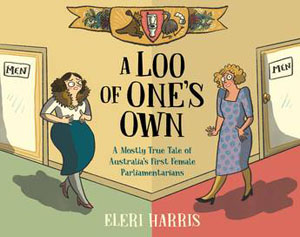 A Loo of One’s Own: A Mostly True Tale of Australia’s First Female Parliamentarians
The fascinating (and sometimes hilarious) story of the first women elected to federal parliament and the rather pressing issue they discovered on their first day on the job: there were no women’s loos in Parliament House!
In 1943, the first two women were elected to the Australian parliament. Enid Lyons and Dorothy Tangney had very different political views, but they soon discovered they had at least one problem in common: none of the loos for elected officials in Parliament House were marked ‘Ladies’.
Award-winning cartoonist Eleri Harris tackles an important moment in Australian history in a humorous and lighthearted way, illuminating themes of equality and accessibility for readers of all ages.
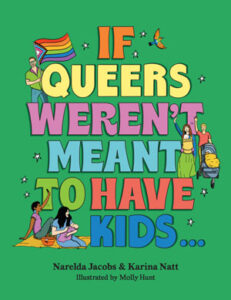 If Queers Weren’t Meant to Have Kids…
by Narelda Jacobs and Karina Natt, illustrated by Molly Hunt
If Queers Weren’t Meant to Have Kids … is both a satirical picture book for adults and a love letter to rainbow families. In this age of growing censorship and manufactured moral panics, this book cheekily pokes fun at the conservative cultural warriors by asking questions such as: if queers weren’t meant to have kids, why do lesbians nest after one week? Why are hot gays called daddy? Why are drag queens so maternal?
Written by renowned Indigenous journalist Narelda Jacobs and her communications specialist wife Karina Natt, and illustrated by award-winning First Nations artist Molly Hunt, this beautiful picture book is a loud and proud celebration of chosen family, guncles, the gaybourhood and more. If Queers Weren’t Meant to Have Kids … is the perfect gift for everyone: those who see themselves and their values reflected in its pages; and, especially, those who don’t!
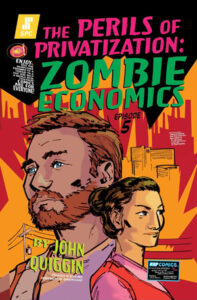 The perils of privatisation: Zombie Economics
by John Quiggins
When John Quiggins was approached by Sequential Comics with the idea of doing a comic book presentation of a chapter from my book Zombie Economics, he jumped at it.
The comic traces the experience of a young Australian couple from the beginnings of privatisation in the 1980s to an optimistic version of the near future when this zombie idea has finally been laid to rest. They are initially receptive to the promise of private sector efficiency but soon learn that the only people who benefit are the financiers.
 The Rot
by Evelyn Araluen
The Rot is a recalcitrant study of the decaying romances, expired hopes and abject injustices of the world. A liturgy for girlhood in the dying days of late-stage capitalism, these poems expose fraying nerves and tendons of a speaker refusing to avert their gaze from the death of Country, death on Country, and the bloody violence of settler colonies here and afar. Across sleepless nights, fractured alliances and self-destructive coping strategies, The Rot is what happens when poetry swallows more rage than it can console, quiet or ironise – this book demands you ready yourself for a better world.
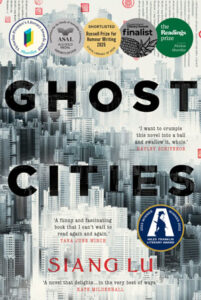 Ghost Cities
by Siang Liu
Ghost Cities – inspired by the vacant, uninhabited megacities of China – follows multiple narratives, including one in which a young man named Xiang is fired from his job as a translator at Sydney’s Chinese Consulate after it is discovered he doesn’t speak a word of Chinese and has been relying entirely on Google Translate for his work.
How is his relocation to one such ghost city connected to a parallel odyssey in which an ancient Emperor creates a thousand doubles of Himself? Or where a horny mountain gains sentience? Where a chess-playing automaton hides a deadly secret? Or a tale in which every book in the known Empire is destroyed – then re-created, page by page and book by book, all in the name of love and art?
Allegorical and imaginative, Ghost Cities will appeal to readers of Haruki Murakami and Italo Calvino.
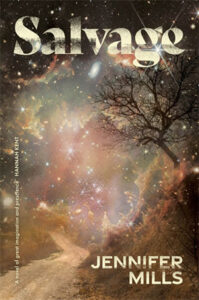 Salvage
by Jennifer Mills
Two estranged sisters reconnect in the aftermath of ecological and social collapse, in this work of suspenseful, deeply human literary speculative fiction.
They drift in their sleep, waiting for something. The end of the world, or another escape. But the world is still here. There’s no escaping it.
Jude’s life has been about survival. She works on rebuilding – fixes roofs, trucks supplies, transports refugees. Tries to stay free from attachments and obligations.
But Jude won’t talk about her past. Or her sister Celeste, lost in the tragic failure of a space station that was supposed to save her, and the other ultra-rich, from the wreckage of a dying world.
When an escape pod falls from the sky, its passenger near death, Jude knows her anonymous existence can’t continue. As the fragile peace of her community is put at risk, Jude must re-examine the terms of her survival – and her exile.
Salvage is a gripping novel of literary speculative fiction that asks: what does it mean to care for each other, after the end of the world?
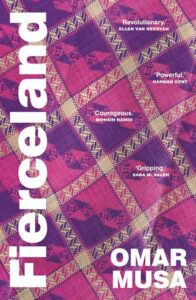 Fierceland
by Omar Musa
The globe-spanning epic of power and family secrets from the Miles Franklin listed author.
‘An impressive, urgent novel by a talented and courageous writer.’ – Mohsin Hamid, author of Exit West
How do you mourn your father when you know his secrets?
After many years abroad, Roz and Harun return to Malaysian Borneo for the funeral of their father Yusuf – and to reckon with their inheritance. A renowned palm-oil baron during Malaysia’s economic rise, Yusuf built the family’s immense wealth by destroying huge tracts of rainforest. What his children know is that he was also responsible for the violent disappearance of a man who stood in his way.
Harun has become a successful tech entrepreneur in Los Angeles, Roz is an artist struggling to stay afloat in Sydney. Now they want to return something their father stole from the forests of their homeland. In their quest for redemption they grapple with the legacy of power and corruption, dreamers and exiles, thugs and zealots. Most dangerous of all, they are haunted – by the ghosts of colonialism, the ghosts of family, the ghosts of language, and the ghosts of the forest itself.
A trailblazing journey across the globe, Fierceland weaves the past and the present into an emotionally powerful family saga that plays out at a mythical scale.
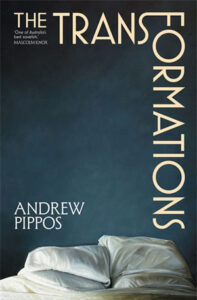 The Transformations
by Andrew Pippos
A portrait of a vanishing world, and a love story for the ages – from the award-winning author of Lucky’s.
In the fading glow of Australia’s print journalism era, The National is more than a newspaper: it’s an institution, and the only place that George Desoulis has ever felt at home. A world-weary subeditor with a bookish sensibility and a painful past, George is one of nature’s loners.
But a late-night encounter with an unorthodox and self-assured reporter, Cassandra Gwan, begins to unravel both of their carefully managed worlds. As the decline of the newspaper enters a desperate stage, George and Cassandra struggle to balance their turbulent relationship with their responsibilities to family, and the compromises each has built their life upon.
With a deft wit and a sharp eye for emotional complexity, Pippos examines the stories we tell ourselves, and the ways people handle grief, guilt and generational change. The Transformations is a novel about endings – of dreams, relationships, institutions- and the chance of new beginnings.
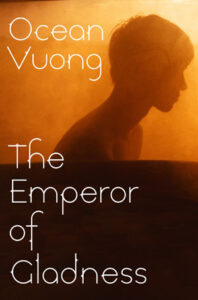 The Emperor of Gladness
by Ocean Vuong
A masterful story of friendship and how much we’re willing to risk to possess one of life’s most treasured mercies: a second chance.
Ocean Vuong returns with an achingly beautiful novel about chosen family, unexpected friendship, and the stories we tell ourselves in order to survive
One summer evening in the town of East Gladness, Connecticut, nineteen-year-old Hai stands on a bridge, ready to jump, when he hears someone shout across the river. The voice belongs to Grazina, an elderly widow succumbing to dementia. Over the course of the year, the unlikely pair develops a life-altering bond.
The Emperor of Gladness shows the profound ways in which our lives are changed by the most unexpected of people. When Hai takes a job at a diner to support himself and Grazina, his fellow workers become the family he didn’t expect to find. United by desperation and circumstance, and existing on the fringes of society, together they bear witness to each other’s survival.
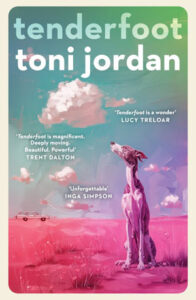 Tenderfoot
by Toni Jordan
By the bestselling, award-winning author of Addition, an exhilarating novel about coming of age in 1970s Australia.
Wait for the boxes to open, wait for the race to begin. Wait, and your greyhound will cease to be the dog you know and become an entirely different kind of animal.
Brisbane, 1975: Andie Tanner’s world is small but whole. Her mum is complicated, but she adores her dad and the kennel of racing greyhounds that live under their house. Andie is a serious girl with plans: finish school with her friends, then apprentice to her father until she can become a greyhound trainer, with dogs of her very own.
But real life rarely goes to plan, and the world is bigger and more complicated than Andie could imagine. When she loses everything she cares about – her family, her friends, the dogs – it’s up to Andie to reclaim her future. She will need all her wits to survive this new reality of secrets and half-truths, addictions and crime.
With luminous, aching prose, Tenderfoot will move you like no other story this year.
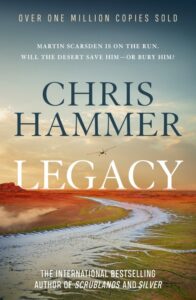 Legacy
by Chris Hammer
The blast hits them, a shock wave … glass smashing … Somewhere a woman screams. A second explosion, and Martin looks towards the hall, what’s left of it, flames roaring and smoke pouring skywards.
Someone is targeting Martin Scarsden. They bomb his book launch and shoot up his hometown.
Fleeing for his life, he learns that nowhere is safe, not even the outback. The killers are closing in, and it’s all he can do to survive.
But who wants to kill him and why? Can he discover their deadly motives and turn the tables?
In a dramatic finale, Martin finds his fate linked to the disgraced ex-wife of a football icon, a fugitive wanted for a decades-old murder, and two nineteenth-century explorers from a legendary expedition.
Martin Scarsden’s most perilous, challenging and intriguing assignment yet.
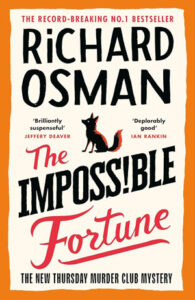 The Impossible Fortune
by Richard Osman
The unmissable new mystery in the bestselling, record-breaking Thursday Murder Club series by Richard Osman
Who’s got time to think about murder when there’s a wedding to plan?
It’s been a quiet year for the Thursday Murder Club. Joyce is busy with table plans and first dances. Elizabeth is grieving. Ron is dealing with family troubles, and Ibrahim is still providing therapy to his favourite criminal.
But when Elizabeth meets a wedding guest who fears for their life, the thrill of the chase is ignited once again. A villain wants access to an uncrackable code and will stop at nothing to get it. Plunged back into their most explosive investigation yet, can the gang solve the puzzle and a murder in time?
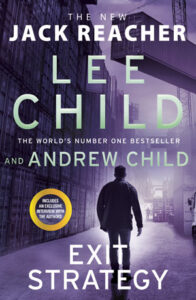 Exit Strategy
by Lee Child and Andrew Child
‘If there is a more iconic character in modern fiction than Jack Reacher, I’d like to meet them.’ DAILY MIRROR
Jack Reacher will make three stops today. Not all of them were planned for.
First – a Baltimore coffee shop. A seat in the corner, facing the door. Black coffee, two refills, no messing about. A minor interruption from two of the customers, but nothing he can’t deal with swiftly. As he leaves, a young guy brushes against him in the doorway. Instinctively Reacher checks the pocket holding his cash and passport. There’s no problem. Nothing is missing.
Second – a store to buy a coat. Nothing fancy. Something he can ditch when he heads to warmer climes. Large enough to fit a man the size of a bank vault. As he pulls out his cash, he finds something new in his pocket. A handwritten note. A desperate plea for help.
Third – wherever this bend in the road takes him. Impressed by the guy’s technique and intrigued by the message, Reacher makes it his mission to find out more . . .
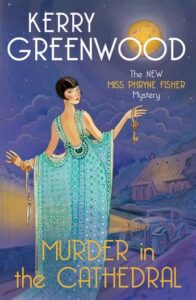 Murder in the Cathedral
by Kerry Greenwood
The indefatigable Miss Phryne Fisher returns to solve what may be her most puzzling murder.
When Phryne Fisher is invited to Bendigo to witness the investiture of her old friend Lionel, who is being made a Bishop, her expectations of the solemn and dignified ceremony do not include a murder.
Phryne quickly involves herself with perspicacious local Constable Watson and eagle-eyed Detective Inspector Mick Kelly as they identify the murder victim – an overzealous deacon with a nose for trouble.
Applying her quick wits and magnetic charm, Phryne and her expanding team of sleuths discover murky layers of church politics, social scandals and business scams and blackmail. Soon, various suspects begin to populate a long list, each with excellent motives to kill.
Meanwhile the clock is ticking … Will Phryne be able to bring to light the proof she needs before the murderer strikes again or disappears completely?
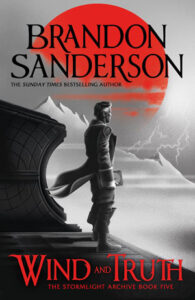 Wind and Truth
by Brandon Sanderson
The epic fantasy series The Stormlight Archive, by international bestseller Brandon Sanderson, continues in this beautiful deluxe hardback edition. This edition of Wind and Truth features foil stamping on the front and back of the book, striking digitally sprayed edges, coloured endpapers, and a ribbon — exclusive to the Gollancz Emporium.
Dalinar Kholin challenged the evil god Odium to a contest of champions with the future of Roshar on the line. The Knights Radiant have only ten days to prepare-and the sudden ascension of the crafty and ruthless Taravangian to take Odium’s place has thrown everything into disarray.
Desperate fighting continues simultaneously worldwide-Adolin in Azimir, Sigzil and Venli at the Shattered Plains, and Jasnah at Thaylen City. The former assassin, Szeth, must cleanse his homeland of Shinovar from the dark influence of the Unmade. He is accompanied by Kaladin, who faces a new battle helping Szeth fight his own demons . . . and who must do the same for the insane Herald of the Almighty, Ishar.
At the same time, Shallan, Renarin, and Rlain work to unravel the mystery behind the Unmade Ba-Ado-Mishram and her involvement in the enslavement of the singer race and in the ancient Knights Radiants killing their spren. And Dalinar and Navani seek an edge against Odium’s champion that can be found only in the Spiritual Realm, where memory and possibility combine in chaos. The fate of the entire Cosmere hangs in the balance.
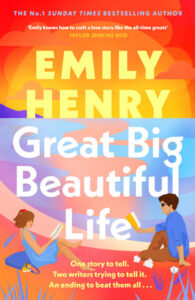 Great Big Beautiful Life
by Emily Henry
A dazzling and sweeping new novel from #1 Sunday Times bestselling author Emily Henry!
When Margaret Ives, the famously reclusive heiress, invites eternal optimist Alice Scott to the balmy Little Crescent Island, Alice knows this is it: her big break. And even more rare: a chance to impress her family with a Serious Publication.
The catch? Pulitzer-prize winning human thundercloud, Hayden Anderson, is sure of the same thing.
The proposal? A one-month trial period to unearth the truth behind one of the most scandalous families of the 20th Century, after which she’ll choose who’ll tell her story.
The problem? Margaret is only giving each of them tantalising pieces. Pieces they can’t put together because of an ironclad NDA and an inconvenient yearning pulsing between them every time they’re in the same room.
And it’s becoming abundantly clear that their story – just like the tale Margaret’s spinning – could be a mystery, tragedy, or love ballad … depending on who’s telling it.
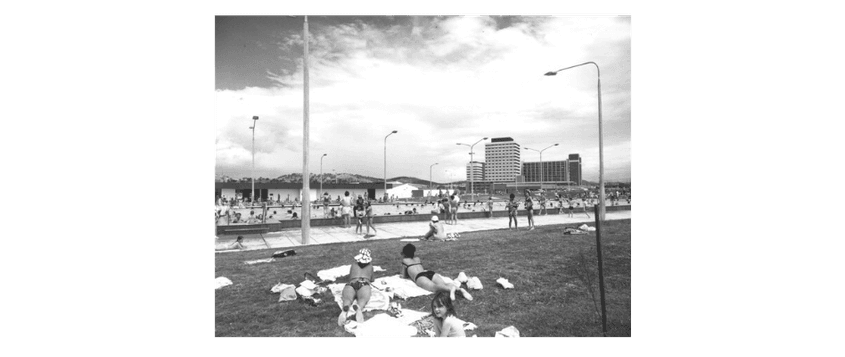
The longer days of summer offer desk jockeys like me a seasonal opportunity for direct sunlight. After work, I like to go swimming. But my local pool, like too many others across Australia, has fallen into a dire state of disrepair.
In 1968, coronary heart disease caused close to half of all premature deaths in Australia among both men and women under 70 years. But this year, for the first time, coronary heart disease is not the leading cause of death in the country.