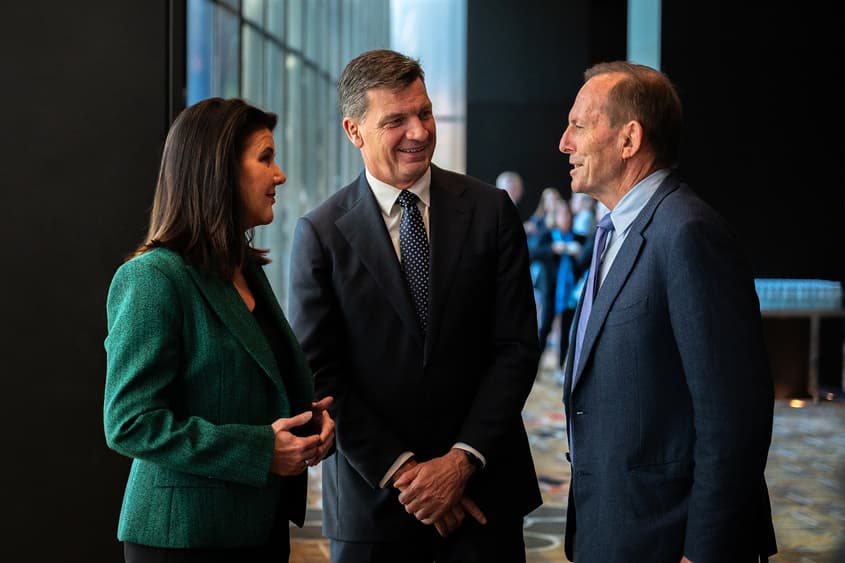
This week, former Canberra Liberals leader Leanne Castley left the party and will now sit as an independent in the Legislative Assembly.
Castley blamed the Liberal Party’s “toxic culture” as the reason for her move, saying “everyone deserves a safe workplace free from bullying, intimidation and threats of violence.”
This follows the Liberal party pushing out their first female leader in February, and with this move, the Coalition now has just 98 women elected across Australia’s state, territory and federal parliaments – compared to over 200 men.
That’s a far cry from Labor or the Greens, with women making up a majority of those parties’ MPs, and it’s only marginally ahead of One Nation, where three quarters of MPs are men.
There’s a clear solution to the problem: gender quotas.
In 2015, the Liberal and Labor parties set the same target for women’s representation: 50%.
Labor implemented gender quotas and reached its target early. The Liberals didn’t, and they’ve barely made progress.
In 2015, just over one in five Liberal parliamentarians (22%) nationwide were women. Now that’s at one in three (34%). But that hasn’t come from any significant increase in the number of elected Liberal women.
In fact, the main reason the Liberals have moved closer to gender parity is that they’ve lost so many male MPs, going from 274 in 2015 to 157 today. Over the same time, they’ve gone from 79 women to 81 – an increase of just two.
The Liberals recently published an internal discussion paper prepared by Senator James McGrath, which commented on the dire state of the party’s gender representation:
It is increasingly clear that if serious progress is to be made in delivering greater gender balance in our parliamentary team, additional measures will be required. None of them would be easy or without complication or resistance from some. However, if we want a different outcome, we need to be prepared to do things differently.
To take on this challenge, the Liberals now have a former Minister for Women taking over the party’s presidency: Tony Abbott.
When Abbott was Prime Minister, he doubled the number of women in his cabinet… from one to two. For comparison, Scott Morrison had eight women in his final cabinet, and Anthony Albanese now has twelve (a majority).
Time will tell if Abbott’s presidency of the Liberal Party will finally see the party make real progress towards gender parity.