

What is the Digital Duty of Care, and will it work?
Under the Digital Duty of Care, online platforms would have a duty to ensure Australians have a safe online environment, where they are “protected from seriously harmful material and conduct”.

One Nation’s rise is only half the picture. Hanson’s party, The Greens, minor parties and independents could collectively receive a majority of the vote.
Thu 19 Nov 2026 01.00 AEDT
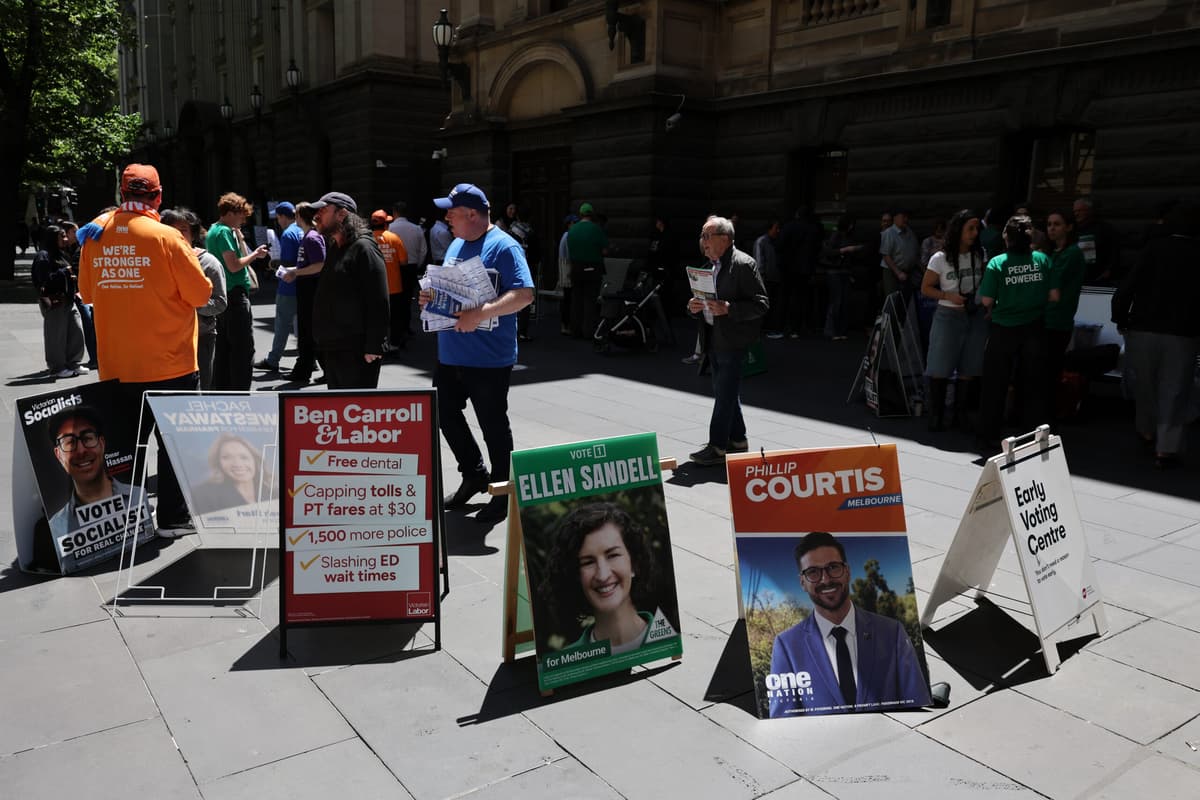
Photo: AAP Image/Con Chronis


Under the Digital Duty of Care, online platforms would have a duty to ensure Australians have a safe online environment, where they are “protected from seriously harmful material and conduct”.
The scandals plaguing Australian cricket and those plaguing KPMG may seem unrelated at first glance. But they have in common acts of wrongdoing, botched investigations, senior officials determined to look the other way, unconvincing denials, blame games and, above all, the loss of public trust.
Just over 40 years ago, in 1985, Victorian voters headed to the polls to elect a new state parliament – but it looked very different to today.
Of the 88 seats, only 15 – less than one in five – were contested by independents and minor parties. Most voters were faced with a ballot with only two options: Labor and Liberal.
In that election, over 99% of people voted for either Labor or the Liberal–National Coalition – Labor won a majority of seats with just over 50% of the primary vote, while the Liberals and Nationals took a combined 49%. Less than 20,000 Victorians voted for independents and minor parties.
Compare that to the 2022 state election, when the incumbent Labor party won a majority of seats with just 37% of the vote, followed by the Liberal-National Coalition on 34%. In that election, just over a million Victorians (29%) voted for someone other than the major parties – a record that will likely be broken later this month.
The 2025 federal election was the first where a major party received fewer votes than independents and minor parties. The upcoming Victorian election could be the first time the major parties get less than 50% of the vote combined.
Current polling puts the Liberal-National Coalition on 31% of the vote, followed by Labor on 22% – a slim majority of 53% voting for the major parties. If the polls are off by just 3%, or the trend away from the major parties grows, they could tip below 50%.
Much of the recent rise in non-major party vote shares can be attributed to One Nation. In the last Victorian election, they won just one seat in the upper house, thanks to a statewide vote of just 2%. Now they’re polling at 22%, are likely to finish in the top two in many races and could receive more first preference votes than Labor.
But One Nation’s rise is only half the picture.
Quality research, analysis, explainers and factchecks from experts you can trust.
Third parties are not a new feature of Victorian politics. The state was once the home of the Democratic Labor Party (DLP), a Catholic and anti-communist offshoot of the Labor party that kept Labor out of office for decades.
It was also the home state of Don Chipp, who founded the Australian Democrats in 1977. The Democrats were Australia’s most successful third party until the rise of the Greens in the 2000s.
Though the Greens did not form a Victorian party until the 1990s, it became one of their most successful branches within a decade. In 2014, the Greens became the first non-major party to win a lower house seat in Victoria since the DLP in 1955. The Greens are now polling at 15%, which would be a new record for the party and places them within reach of gaining several more seats in both houses.
In fact, One Nation has been largely unsuccessful in Victoria until recently. The party has only contested two state elections until now, winning nothing in 1999, and a single seat in the upper house in 2022. Federally, Victoria has never elected a One Nation Senator, and the party has never recorded more than 5% of the vote in the state.
2026 is different.
Discontent with the major parties in Victoria has been rising for decades, with the minor party and independent share of the vote growing in every election since 1996.
By 2022, that was up to 29% and, outside of the Greens, those voters struggled to coalesce around a single alternative – the right-wing vote was split between parties like Family First, Freedom, the Liberal Democrats and Angry Victorians. One Nation’s national surge has united a previously fractured coalition of disaffected voters, hoovering up support from a host of smaller parties.
Victoria’s political culture is being forced to adapt to this new reality, and this week’s election debate was the first to feature four leaders, with the Greens’ Ellen Sandell and One Nation’s Warren Pickering joining Labor’s Ben Carroll and the Liberals’ Jess Wilson.
If federal polling is anything to go by, it’s unlikely to be the last.