Has the point of COP vanished too?

Fri 20 Nov 2026 09.14 AEDT
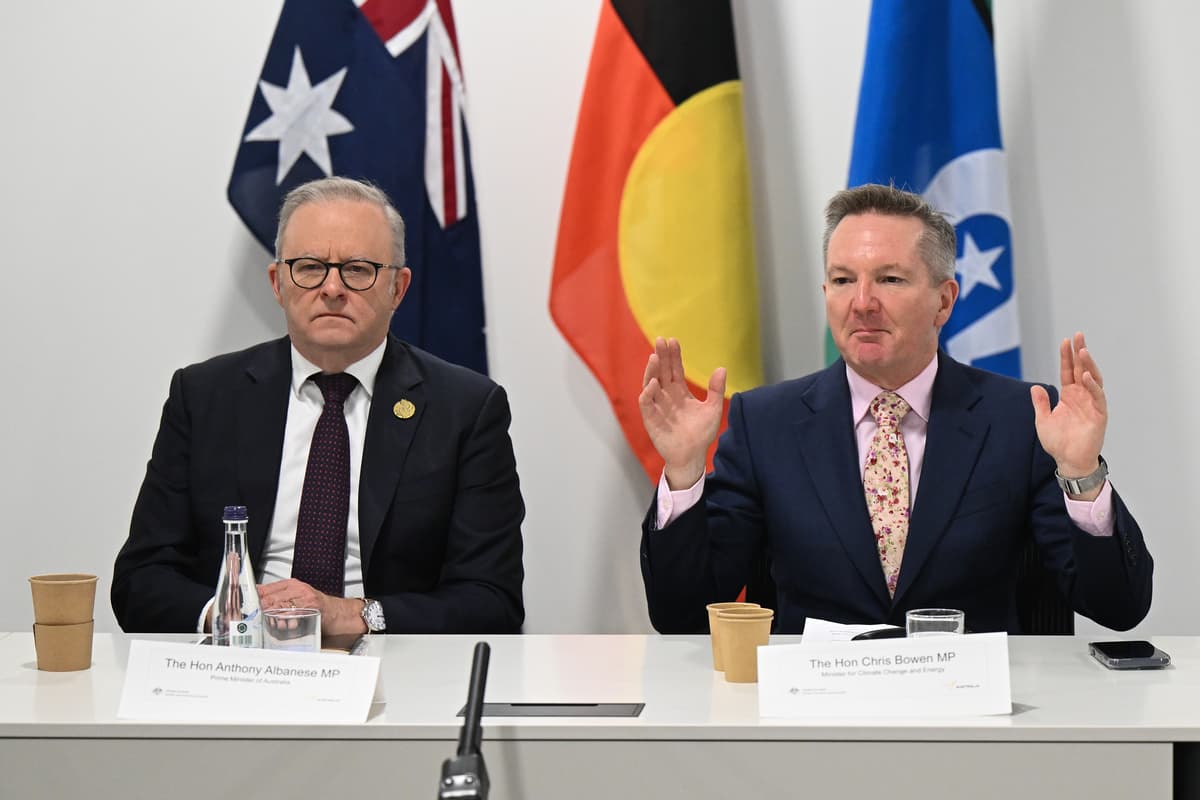
Image: AAP/Lukas Coch


This week Australia, as President of Negotiations, released a draft Cover Decision before a single negotiating session had started.
This is not normal. It named fossil fuels. It talked about a transition away from them.
Questions were asked straight away. Was this a PR move? Cover for a Presidency that could say it tried to keep fossil fuels in the text but was overwhelmed by fellow petrostates? Or was it an honest attempt to force the cause of the problem (fossil fuels), finally be in the to do list?
Three days later we got an answer of sorts. The Presidency’s revised nine-page Cover Draft runs to 80 paragraphs. Vanished are the words fossil fuels
This text has the fingerprints of fossil fuel interest all over it. Almost everything that would signal countries are serious about phasing out fossil fuels has been removed. The draft insists the global transition is irreversible and calls for it to be accelerated. It never says what we are transitioning away from.
What’s left?
There is language on 1.5°C and overshoot, including a high-level dialogue on overshoot. Let’s face it, that is restating well-known science.
The text also leans on what was agreed in Belém last year for adaptation finance and national plans. But the Transition Away from Fossil Fuels (TAFF) process created there, the that names the problem and is developing a fossil fuel phase out action plan, gets no mention at all.
The bright spots are dim. There is attention to oceans -remember this was promoted as the Blue COP, with a new multi-year plan for the Ocean and Climate Change Dialogue, and recognition of the Intergovernmental Panel on Climate Change (IPCC). Adaptation finance gets a reaffirmed call to triple it by 2035. That is not a new commitment, and even the baseline is parked in a technical report for later.
If recognising the IPCC is what I can point to as good news, it tells you everything about the lack of ambition in the closing hours of COP31.
Carbon capture is the real danger
The most worrying part of the draft is the carbon capture language. The text says carbon dioxide removal should complement, and not substitute for or delay, deep emission reductions. That is a safeguard of sorts. Then it welcomes scaling up carbon dumping via capture, utilisation and storage (CCUS/CCS) technologies in the same breath, and CCUS/CCS gets no such safeguard.
These are fundamentally different approaches. Removal deals with emissions we cannot avoid. CCUS/CCS is mostly a way to keep fossil fuel projects approved and running, and feeding the global carbon offset trading market. Yet the draft puts these targets in brackets of at least 500 million tonnes a year by 2035, and working towards between 1.3 and 2.5 billion.
Quality research, analysis, explainers and factchecks from experts you can trust.
The Australia Institute has documented for over a decade the failures of predominantly CCS and documented how offsets and CCS are used to wave through new coal and gas. Writing a CCUS and CCS target into a COP cover decision is a fossil fuel executive’s dream come true. That paragraph giving the green light to false solutions should be rejected outright at COP as it has been rejected as a false solution in the TAFF processes started in Santa Marta, and to be followed in in Tuvalu next year.
Electrification without a phase-out
The ‘35 by 2035’ electrification target survives. In principle that is welcome. But the target itself is not tied to renewable energy generation. It sits alongside efforts to triple renewables, not conditional on them. That leaves the door open to more fossil gas plants being built to generate that electricity and offset with CCS.
Money and the missing roadmaps
There is hot air about improving access to climate finance, with the actual public money nowhere to be found. The draft notes the gap between finance flows and needs, and that requests to the Loss and Damage Fund total about US$2.8 billion against allocations of about US$342 million. It does not close either gap.
This is where Australia’s role as President of Negotiations matters. Australia’s fossil fuel subsidies dwarf its overall aid to the Pacific, and its climate-specific aid is smaller still. Between 2020 and 2025, fossil fuel subsidies exceeded $62 billion.
Total aid to the Pacific was $11 billion. The Australian Government provided only $1.3 billion in climate-related finance to the Pacific and Papua New Guinea, and Commonwealth data shows Pacific countries received only 42% of what was pledged, or $543 million. In effect, for every $1 Pacific countries received in climate finance, Australia spent more than $110 making fossil fuel production and export cheaper.
Given the scale of climate-related losses the Pacific already faces, it is remarkable that the Australian government still chooses to support the fossil fuel industry. A President that wants real public finance in the text should start by showing it at home.
Is COP delivering?
That is the question at the heart of one of the final COP31 sessions, and this draft makes it more urgent. Is COP delivering, or has it lost its purpose?
Consensus is supposed to be how we move together. The draft’s answer to a process in trouble is a dialogue on strengthening the “consensus based” process, with a report due at COP34 – that’s 3 years away. The planet cannot wait that long. The TAFF process, which Australia has signed up to, and the Fossil Fuel Non-Proliferation Treaty exist because countries that want action will not wait for the slowest ship in the convoy.
Australia holds a particular responsibility. As President of Negotiations, it put fossil fuels on the table. It is also the world’s third-largest fossil fuel exporter, with 38 new approvals under this government. If Canberra wants anyone to believe Monday’s draft was more than a press release, it should fight to get those words back in, and back them with an honest transition roadmap at home that starts with no new approvals.

