
Thu 30 Oct 2025 22.40 AEDT
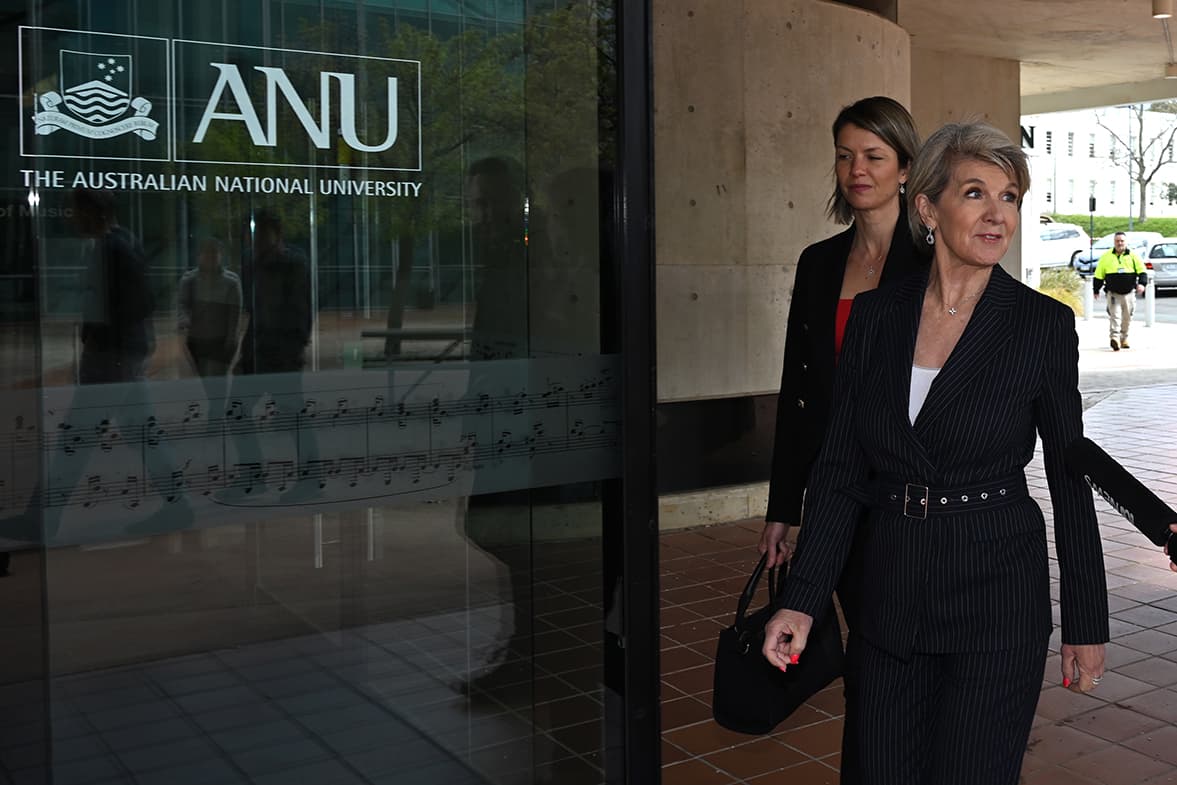
Photo: AAP Image/Lukas Coch


Once upon a time most Australian families could buy a house with only one partner working, but once upon a time is dead. The reality for young couples with HECS debts is that even with two incomes many couples struggle just to pay the rent.
But while millions of Australians live below the poverty line, and millions of full-time workers struggle to pay their bills, the data shows Australia is one of the world’s richest countries. Indeed, the Albanese Government thinks we are so rich that they are happy to give billions in subsidies to gas companies.
But while our generosity to foreign gas companies knows no bounds, there’s no such spirit when it comes to university education. Bizarrely, the same governments that proudly give tens of billions of dollars worth of our gas away for free have convinced generations of Australians that it’s not only fair, but essential, that the principle of ‘user pays’ is applied to citizens acquiring knowledge even though it’s not applied to foreign companies acquiring our resources. HECS repayments contribute more to the Commonwealth Budget than the Petroleum Resource Rent tax.
Crying poor is an easy way to conceal wealth. Like the friend who can never afford their round of drinks but always afford a new outfit, Australian governments pretend they can’t afford to lift unemployment benefits or make child-care free while splashing out on new submarines.
But it’s not just our governments that cry poor — some of our overpriced publicly owned universities are pulling the same stunt. Not only are we charging students tens of thousands of dollars for their degrees, some universities are faking up financial crises to justify cutting back on the quality of their offerings.
The Australian National University (ANU), for example, has been telling its students and staff that it has no choice but to cut spending on a wide range of subjects and services. But their own audited accounts make clear the university is rolling in it.
Advertisement
According to the audited accounts of the ANU not only was it sitting on $3.8 billion in net assets at the end of 2024, $1.8 billion of that was sitting in the form of cash and shares. Hardly broke, but that’s not the half of it. The same audited accounts show the ANU spent far less than it received in revenue, resulting in an audited operating result of $90 million. The audited accounts also show that since 2014 its net assets increased by $163 million. Some crisis huh? But according to the former ANU Vice Chancellor, Professor Genevieve Bell, the ANU was ‘living beyond its means’.
Newcastle University is pulling the same trick, telling its students that times are tough even when their auditor says otherwise. According to their audited accounts in 2024 they made a surplus of $61.3 million and their net assets continued their decade long rise from $1.3 billion to $1.8 billion. I wish I had a financial crisis that big.
Crying poor has done a great job of lowering the expectations of Australians in recent decades. No one thinks that the quality of university education ration has risen since fees were reintroduced in 1998, but even though today’s students pay far more than their parents to get far less, no one seems to think things will ever actually improve but they easily could. In Norway they tax their gas industry heavily and give their kids free degrees. It’s not complicated.
Just as magicians like to work with tigers and flames to distract your eye from what their hands are doing, Australian leaders like to distract us with talk of crises while distracting us from the decisions they are making. The trick is to ignore what they say and focus on what they do.
If the Albanese Government really felt it couldn’t afford to spend more on health, education or childcare then why is it giving so much gas away for free?
If the Albanese Government really believed it couldn’t afford to invest more heavily in renewable energy or public transport then why is it spending $14 billion per year on fossil fuel subsidies?
And if ANU or the University of Newcastle were really living beyond their means, then how have they accumulated such huge stockpiles of cash and shares?
Australia is a rich country, and as a nation we are richer now than we have ever been. The reason so many people are experiencing poverty and financial stress has nothing to do with the size of Australia’s national income, but who is getting that income. Rising house prices are a source of stress for many, but for the few who own two or more properties, rising house prices are a major source of their rising wealth and happiness. Likewise, the free gas is great for the profits off the gas companies and terrible for the Federal Budget.
Advertisement

