

The final months of 2025 saw Prime Minister Albanese undertake a series of embarrassingly underwhelming visits to Vanuatu and Papua New Guinea. The focus of the visits was enhanced security arrangements designed more to constrain China’s attempts to strengthen its own security relationships with the Pacific and less to build a sustainable security culture among the nations of the Pacific.

Wed 28 Jan 2026 01.00
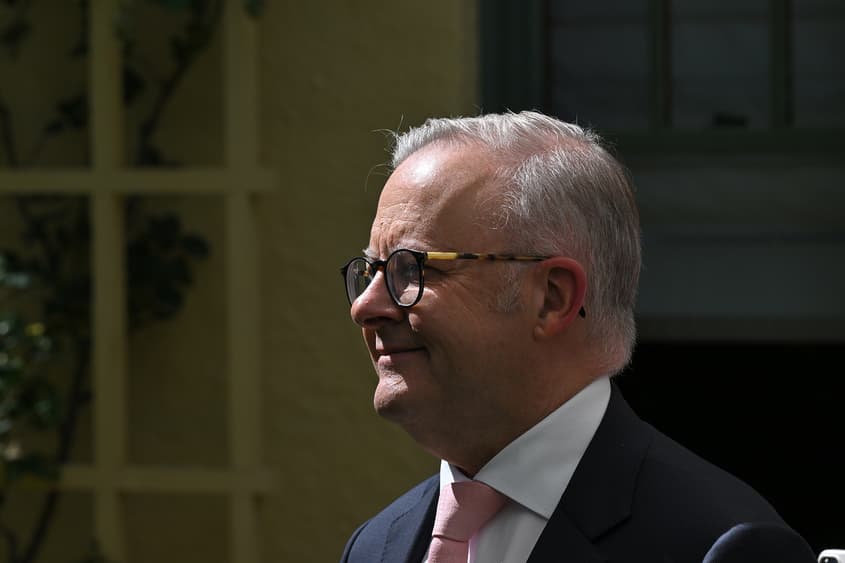
Photo: AAP Image/Mick Tsikas


The final months of 2025 saw Prime Minister Albanese undertake a series of embarrassingly underwhelming visits to Vanuatu and Papua New Guinea. The focus of the visits was enhanced security arrangements designed more to constrain China’s attempts to strengthen its own security relationships with the Pacific and less to build a sustainable security culture among the nations of the Pacific.
Vanuatu’s rebuff to a $500m economic and security deal was a failure of diplomacy. The PNG-Australia defence deal was the triumph of symbolism over substance. The integration of the two defence forces will never happen.
If the “lessons learned” from the 2025 expeditions have any bearing on the forthcoming visit to Timor Leste, Albanese would do well to put any bilateral security agreement on the backburner, and devote his two days to listening rather than talking.
A few facts might help to explain why. Fiercely proud of its hard-won independence, Timor Leste remains a desperately poor country, still grappling with the aftermath of centuries of Portuguese colonisation. It has a population of about 1.4 million – around two and a half times the population of Tasmania and four times the population of the Illawarra. It has a GDP of about USD 7billion – about one third of Tasmania’s Gross State Product and about the same as the Illawarra’s Gross Regional Product.
Australia trumpets its aid program, which, at approximately $136 million, delivers a bit less than $100 per head of population. For all the excellent coffee Timor Leste produces, that’s not quite two cups per head per week. Given Australia’s massively generous aid program directed to the US and Britain – the $9 billion non-refundable donation to naval shipbuilding facilities under the AUKUS agreement – a tenfold increase for Timor Leste would not seem overly generous.
Timor Leste does have substantial natural gas reserves, but needs massive foreign investment if it is to exploit them in an overheated global environment that needs to reduce its commitment to hydrocarbons rather than expand production. And, of course, Timor Leste’s leaders remember only too well Australia’s efforts to deny them their gas wealth by stealing it.
Oh, and they remember our efforts to bug their Cabinet Room too.
The key to Albanese’s visit to Dili should be Australia’s celebration of and congratulations on Timor Leste’s admission to ASEAN in October last year, and the prospects of cooperation within the ASEAN umbrella to build Timor Leste’s economy. That is a significant development in Timor Leste’s maturation as a regional player, and a significant achievement on the part of President Ramos Horta and Prime Minister Xanana Gusmao.
Yet another attempt at a bilateral security agreement would be worse than nugatory. It would demonstrate that Australia has absolutely no idea how ASEAN works, and that an Australian security initiative at this stage would be impertinent.
With the establishment of the UN Transitional Administration in East Timor in 1999, some consideration was given in Australian policy circles to a trilateral security understanding between Australia, Indonesia and Timor Leste as a confidence-building measure. But it was deemed preferable to let the Reception, Truth and Reconciliation Commission take its course. That was no doubt seen as an easy way of not engaging with an Indonesia still smarting from its loss of Timor Timur, as they called the province. One can but wonder what might have been had Australia had the courage or the imagination to pursue such an initiative.
For Albanese’s visit to be more than tokenistic, the outcome needs to enhance the people-to-people relations between the two countries, noting that there is already a sizeable East Timorese population living in the Northern Territory. That in turn means a clear emphasis on education and health as the main avenues for assisting the people of Timor Leste directly. It remains a matter for concern – a matter for shame even – that so many people living in what we like to refer to condescendingly as “our backyard” have no access to advanced medical services for the treatment of cardiac illnesses and cancer, for example. Maybe that would be a good place to start.
Allan Behm is an advisor in the International and Security Affairs Program at The Australia Institute, Canberra
Advertisement
It isn’t always easy to keep up with what’s happening in the US. “Shorter America” is a series where Dr Emma Shortis loops you in on what’s going on in America and shares news and analysis that you can trust.
While the initial Israeli and US air strikes on Iran are legally very dubious, the pace with which the war has escalated will result in those significant legal issues being set aside – for the time being at least.
Former Greek finance minister and economist Yanis Varoufakis has warned that fascism is re-surging in global politics, with extremist ideas gaining influence even in countries where the far-right is not in power.

Australia’s AUKUS agreement has dragged the country into the Trump administration’s war on Iran with Prime Minister Anthony Albanese accused of obfuscating the country’s involvement.
