

ANZUS is focused on the security of the state, but it can and should be about the welfare of the people.

Thu 29 Jan 2026 01.00
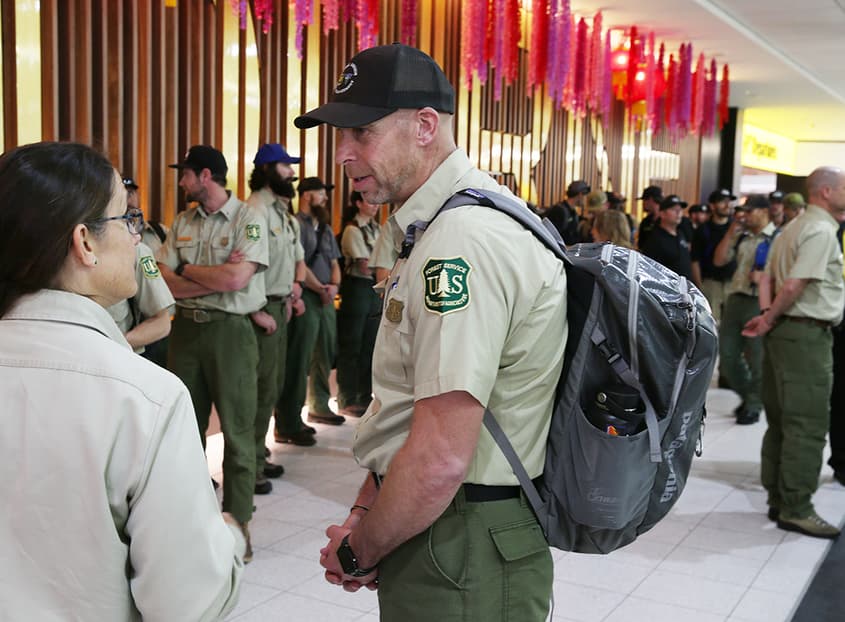
US firefighters arrive at Melbourne International Airport on Friday (Photo: AAP Image/David Crosling)


For more than 70 years, the “Australia-US alliance” has meant only one thing: an intimate military relationship. That is, lots of spending on US defence equipment, “strategic interoperability” (which is code for follow the leader), and protestations of eternal affection and mateship.
It got us into Vietnam, Iraq and Afghanistan – wars now seen as strategic catastrophes for the US and poor decisions by Australia. The idea that the alliance might cover things that truly matter, or things that are truly threatening like global warming, is dismissed as fanciful and hyper-imaginative.
The reason for this is clear: ANZUS is all about the security of the state. It is totally uninterested in the security or the welfare of the people.
Yet, as our experience with bushfires and pandemics amply demonstrates, a state cannot be secure unless its people are secure.
So, where are we right now?
After a harrowing few weeks, Victoria continues to fight catastrophic bushfires that have already burnt more than 400,000 hectares and claimed at least one life. Communities across the state remain under threat.
At press conferences in mid-January, both the Australian Prime Minister Anthony Albanese and Victoria’s Chief Fire Officer Chris Hardman noted that Victoria may be receiving additional help to fight these fires from “our friends” in Canada and the United States.
As the Prime Minister noted, “…at times like this we receive support”. And as fires continue to burn weeks later, around 1,300 interstate and international firefighters have come to Victoria.
Australia, New Zealand, Canada and the United States have supported each other by exchanging firefighting personnel, knowledge and equipment for several decades.
During the catastrophic Black Summer bushfires of 2019-20, for example, around 270 Americans came to Australia, along with four aircraft. The year before, 140 Australian and New Zealand firefighters went to the west coast of the US to support firefighting efforts there.
This kind of cooperation isn’t generally considered in conversations about our alliance with the United States.
But when it comes to the security and well-being of the population, it’s one of the elements of our security relationship where public safety is front and centre.
In the political discourse and the public imagination, Australia’s relationship with the US is mostly framed around hardcore military security issues – it’s about AUKUS, ANZUS, armed conflict and war.
But as Victorians and Californians know all too well, bushfires threaten our personal security, our homes and our livelihoods. Working together to address that security threat, here and in North America, makes us all safer. And it deepens the relationships between people and places.
It’s the “shared values” that we hear so much about brought to life.
A year ago, as Donald Trump was being sworn in as the 47th president, California was on fire. It was January – winter in the United States. But California was experiencing some of the worst fires in its history. 29 people died.
But Australia was unable to send aerial firefighting assistance to California, as is our usual practice, because the fleet was on standby here. It was summer in Australia, and the very real risk of catastrophic fires like the ones we’re experiencing now meant we couldn’t afford to send our equipment and people to support our friends.
As California Governor Gavin Newsom has said, climate change means that there are no fire seasons anymore.
The traditional fire seasons of the northern and southern hemispheres are merging. That’s making it more and more difficult to help each other in our times of greatest need. Increasingly, we can’t exchange personnel or equipment because we need it at home.
That doesn’t mean cooperation isn’t happening – in June last year, Australia sent personnel to Canada for the third year in a row.
But the Trump administration, and the Australian federal government’s support of that version of America, is actively threatening that cooperation. It is threatening our security.
Trump is ideologically committed to accelerating climate change. He has withdrawn the United States from all global climate cooperation initiatives and organisations. He is increasing the extraction and use of fossil fuels.
As the fire threat was escalating in Victoria, the Trump administration was busy kidnapping the president of Venezuela – primarily, as Trump would have it, to access Venezuelan oil.
Together, Australian and American federal governments have led the way on failing to act on climate change.
The relationship that is supposed to make us safer is, in reality, actively and deliberately making our world more dangerous.
But as the cooperation between our firefighting efforts shows, it doesn’t have to be this way. We can prioritise and elevate the aspects of our relationship that bolster the lives of our citizens, like cooperation on firefighting and prevention.
That means rethinking our idea of “security” and reprioritising accordingly.
Dr Emma Shortis is the director of the international & security affairs program at the Australia Institute
Advertisement
It isn’t always easy to keep up with what’s happening in the US. “Shorter America” is a series where Dr Emma Shortis loops you in on what’s going on in America and shares news and analysis that you can trust.
While the initial Israeli and US air strikes on Iran are legally very dubious, the pace with which the war has escalated will result in those significant legal issues being set aside – for the time being at least.
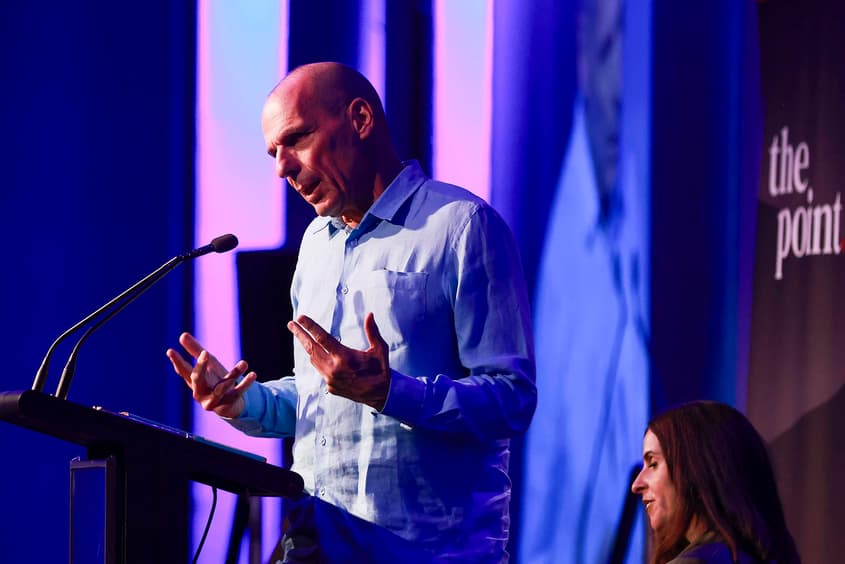
Former Greek finance minister and economist Yanis Varoufakis has warned that fascism is re-surging in global politics, with extremist ideas gaining influence even in countries where the far-right is not in power.
Australia’s AUKUS agreement has dragged the country into the Trump administration’s war on Iran with Prime Minister Anthony Albanese accused of obfuscating the country’s involvement.
