

NATO is in its death throes, with US President Donald Trump smashing the trust that underpins it. But while NATO members have the ability to go their own way, things are not so clear-cut for ANZUS

Thu 29 Jan 2026 01.00
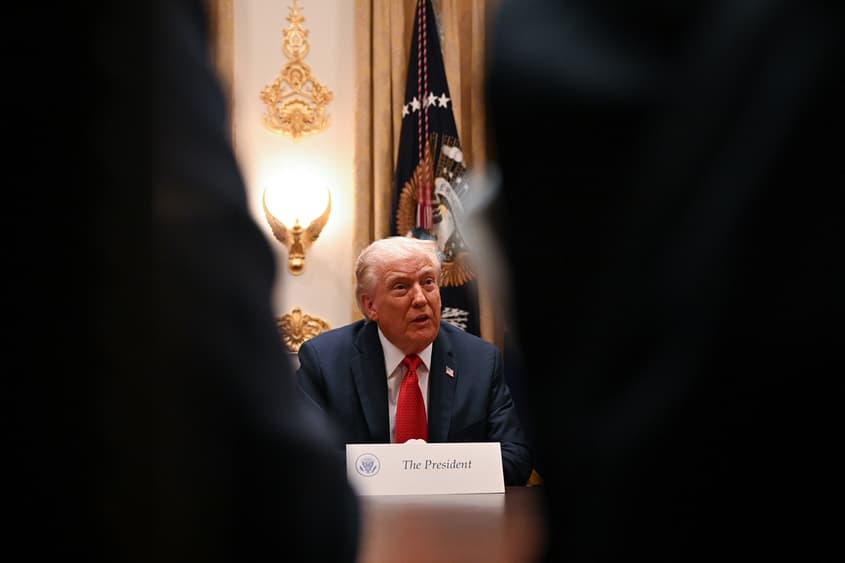
Photo: AAP Image/Lukas Coch


Alliances are built on shared interests and trust. When interests are no longer shared, alliances wither. A breach of trust is fatal.
On both counts, NATO is in its death throes. America no longer shares Europe’s interest in its defence and security against Russia, while US President Donald Trump’s threat to annex Greenland has smashed trust.
We have seen this before. The ink had scarcely dried on the Molotov-Ribbentrop Pact before Germany invaded the Soviet Union in 1941. The Pact was an exercise in duplicity and mala fides by both parties, as Germany sought a free hand in western Europe and Stalin sought something similar in eastern Europe.
NATO, however, was different. The nuclear age and the Cold War confronted western Europe and north America with the threat of military domination. Collective security in the face of possible nuclear blackmail represented a shared interest, where a treaty among the affected parties offered the best response to nuclear aggression by imposing disproportionate costs on the Soviet Union.
The collapse of the Soviet Union was viewed opportunistically by the US and a number of other NATO partners. Shared strategic interests and trust in the durability, efficacy and reliability of the Truman Doctrine had kept NATO together – sort of. But it began to expand rapidly as newly democratic former members of the Warsaw Pact sought security from their former occupier. Its expansion attenuated the focus of the original partnership as its interests became less convergent.
NATO’s evolving relevance was evidenced by its steady growth from 11 members in 1949 to 32 in 2024. But its expansion was also overreach, at least to the extent that Russia felt compelled to embark on adventurist actions on its western borders. The strategic rationale for NATO – the defence of Europe – diluted to include military intervention “out-of-area”.
The extension of NATO’s military interest beyond the Russian nuclear threat to the Balkans – and even further afield to Afghanistan and Iraq, the Gulf of Aden and Libya – broadened its focus and dissipated its energies. But more significantly, as it did with so many other treaties and agreements, the US refashioned the security of its allies into an instrument for the assertion of its own power on its own terms.
So, in a way with which Australia is quite familiar, shared security interests morphed into support for American global intervention. Along with this attenuation of strategic focus, President Trump’s complete disregard for the proprieties of alliance management, together with his repudiation of a partner’s sovereignty over its territory, have combined to destroy mutual trust.
NATO operates on the basis of the rule of law. Its democratic leaders are subject to the law, and are legally as well as politically accountable for their actions and decisions. But the power of the US President is, according to a 2025 decision of the US Supreme Court, unconstrained when the President exercises his official duties, whatever they might be. In short, unlike other NATO leaders, the US President is unaccountable. Without accountability, there can be no trust. As President Ronald Regan said, trust then verify.
Once lost, trust cannot be regained. While a refashioned association constructed around its European members and their shared interests may be an option, one that is dependent on US power and leadership is now impossible, the fawning insistence of current NATO Secretary-General Mark Rutte notwithstanding. As French President Emmanuel Macron said with considerable prescience in 2019, NATO is braindead.
The demise of NATO is not good news for ANZUS. NATO obliges a collective response to an attack on any one member. ANZUS has never had such oomph: it simply requires its parties to consult when threatened and for each to act “in accordance with its constitutional processes”. Just what those constitutional processes might be in Trump’s America is moot.
So ANZUS has slipped from being an opportunity for a chat to a continuing display of Australian subservience and servile support for US military power. Australia has always been a willing bit-player on the Asia-Pacific stage. But what little dignity was associated with the role of “deputy-sheriff” is long gone.
This demands some deep soul searching by those tasked with writing Australia’s next strategic update. The military “interchangeability” so confidently advocated by Deputy Prime Minister Richard Marles, with its assumptions of lock-in to American strategic policy, needs serious reconsideration, as Professor James Curran has advocated. General Sir John Monash went to great lengths to preserve the independence and sovereignty of Australian decision-making and command during WW1. That independence is even more important in a world distinguished by “rupture”, as Canadian Prime Minister Mark Carney put it at the World Economic Forum in Davos.
ANZUS has little continuing value. The same is not true of the many agreements and arrangements that have been negotiated under the ANZUS umbrella. From the UKUSA agreement – which predated ANZUS and was subsequently further operationalised by means of understandings relating to the operation of Pine Gap – to the AUKUS agreement, every one of them needs to be reviewed and renegotiated to ensure that Australia’s interests are respected and protected.
Such review will raise conundrums that may well defy resolution. Consider, for example, the Five Eyes agreement in which Australia’s role at Pine Gap is central: what would be Australia’s role, responsibilities and accountabilities if the US sought to annex the territory of another state, especially an ally? Would Australia automatically contribute targeting information that supported the US use of armed force against an allied third party? Would Australia, in any legal or political sense, be engaged in an act of war against an innocent third party? What arrangements, managerial and technological, could be introduced to guarantee political and strategic separation, or is our loss of sovereignty in such situations already effectively total?
Given the complexity of modern communications technology, would it even be possible to segregate Australia from American command and control systems that operate within the space-based communications and intelligence architecture? Again, is it possible to insulate Australia within the system? Can Australian sovereignty be protected?
These questions raise critical moral considerations, as well as fundamental strategic ones. NATO members must address similar issues. As President Macron has indicated, NATO members have the ability to go their own way and to form alternative arrangements if they wish. NATO may be braindead, but its members are not – they do have options.
This is perhaps not the case for Britain or Australia, given the criticality of British and Australian communications facilities within the US global communications infrastructure. With President Trump’s breach of trust, our National Security Committee of Cabinet has some serious work to do.
Advertisement
It isn’t always easy to keep up with what’s happening in the US. “Shorter America” is a series where Dr Emma Shortis loops you in on what’s going on in America and shares news and analysis that you can trust.
While the initial Israeli and US air strikes on Iran are legally very dubious, the pace with which the war has escalated will result in those significant legal issues being set aside – for the time being at least.
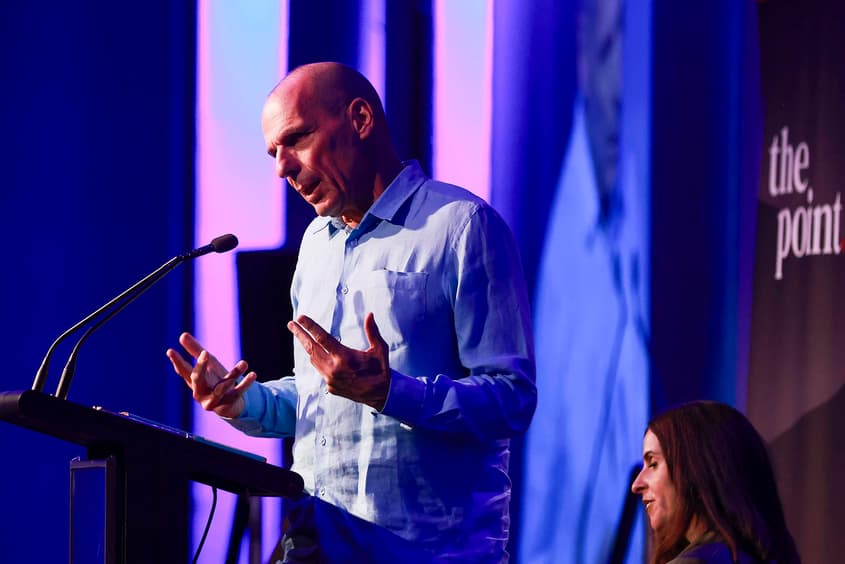
Former Greek finance minister and economist Yanis Varoufakis has warned that fascism is re-surging in global politics, with extremist ideas gaining influence even in countries where the far-right is not in power.
Australia’s AUKUS agreement has dragged the country into the Trump administration’s war on Iran with Prime Minister Anthony Albanese accused of obfuscating the country’s involvement.
