Who pays to clean up aging oil and gas infrastructure?
Nothing in this world is certain but death, taxes, and the decommissioning of aging oil and gas infrastructure. An accelerated energy transition will accelerate asset retirements, but field decline is occurring regardless.

Thu 26 Feb 2026 01.00

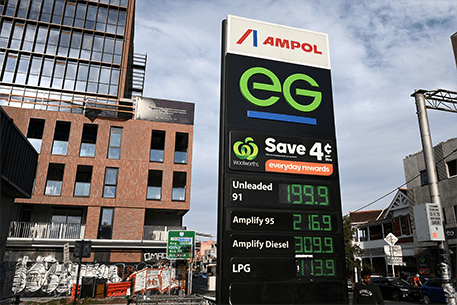
Photo: AAP Image/Tony McDonough


Nothing in this world is certain but death, taxes, and the decommissioning of aging oil and gas infrastructure. An accelerated energy transition will accelerate asset retirements, but field decline is occurring regardless.
When fields reach their economic limit, wells must be plugged, decades-old equipment removed, and sites remediated and reclaimed. This is a legal obligation, not a moral or ethical one, part of the bargain struck with operators when they drill for a nation’s resources.
Yet few jurisdictions force companies to save for this inevitable bill. Most rely instead on financial tests and corporate guarantees alone. In North America, the lack of pre-funding of decommissioning is a function of history. Drilling was permitted long before its environmental consequences were understood. The lack of funding was sustained by operator interests. Most regulators were mandated to act as stewards of resource development rather than ensure that the industry met its obligations to the public. An industry promise was good enough for government (even if private lenders would never accept such vague assurances).
The results are now visible: aging oilfields and an accumulation of low-producing, marginal assets in need of retirement, creating public health and safety risks. Old wells leak, contaminating agricultural and marine environments with radioactive and toxic waste. For operators, decommissioning outflows are costs with no benefit–the only way to create value is to defer them as long as possible. Regulation is required to address this negative externality.
Consider Alberta, Canada’s oilpatch, it has roughly 240,000 unplugged wells and more than 80% of them are either “marginal” wells (less than 10 boe/d) or do not produce oil or gas. Alberta manages the problem through an orphan well program, funded by industry levies. Even then, the levies do not cover the full costs of existing orphaned wells, much less those held by insolvent firms but not yet admitted to the program.
Australia could follow a similar path by simply doing nothing. A recent Xodus report indicated that the bulk of total decommissioning spend in the Bass, Bonaparte, Gippsland, Otway and Perth basin will be spent in the 2020s and 2030s, with an estimated $25 billion being spent before 2040 – this is a looming problem.
For most companies, decommissioning will have to be funded from cash flows–a difficult proposition for assets that are no longer producing. Although decommissioning costs are typically just a fraction of a percentage of total lifetime revenues from a project, they dwarf the end-of-life cash flows. Companies therefore prefer to dump, divest or delay clean-up costs.
What’s needed, in Australia and, to varying degrees, in other jurisdictions, is financial assurance–mechanisms that ensure decommissioning will be funded when the bill comes due. Generally speaking, there are three types:
(1) pledges and guarantees (often backed by financial assessments and tests)
(2) third party assurances (i.e. surety bonds, letters of credit), and
(3) pre-funding mechanisms (i.e. cash set aside, sinking funds, and trusts).
Pledges and guarantees include promises to fund decommissioning when it comes due. Guarantees are often made by the operator’s corporate parent–this reduces the risk that the parent will ignore the obligations of a corporate subsidiary.
Third party assurances, offered by banks (via letters of credit) or insurers (via surety bonds), essentially obligate the issuer to cover costs, up to a fixed amount, if the operator defaults. Of course, as Colorado regulators have discovered, neither banks nor regulators are in the business of covering risky companies at prices that such operators can afford.
Pre-funding is the best option; it requires that operators place funds in restricted accounts or trusts dedicated to settling decommissioning costs. It forces companies to save early while the asset is making money and ensures that at least some funds will be available at retirement. Unlike third party assurances, it does not become harder to obtain or expensive to fund as the operator’s well inventory ages. Pre-funding also limits the financial impact on the company as clean up costs can be incorporated into project planning from the outset. Finally, if kept in a low-risk interest-bearing account, it grows with time – reducing the required investment. And if attached to particular assets, it can be transferred with them, simplifying the transfer process for both operators, and regulators seeking to prevent another “Northern Endeavour” debacle.
Australia currently receives a lot of pledges and guarantees (#1), but needs to move to pre-funding (#3).
Pre-funding is not a novel idea, it is a requirement having a renaissance. Pre-funding is standard practice in the nuclear industry, where clean-up risks have been an issue of popular concern. In the United States, pre-funding has re-emerged as a solution for wind and solar projects. Just as we all save for retirement, industry should also be forced to set money aside for responsible clean-up.
But perhaps the greatest endorsement is that in private transactions, selling operators have imposed pre-funding requirements on buyers. In one Gulf of Mexico offshore sale, a major operator required the buyer to fund a decommissioning account over time, rising to up to 125% of the expected costs.
Governments should not settle for less than what is demanded in market transactions.
Rob Schuwerk is Head of Research at Redwater Insights, the research arm of the Polluter Pays Project. He led Carbon Tracker Initiative’s presence in the United States for a decade.
Advertisement

Related Articles
An economist’s advice on why EV ‘range anxiety’ is overrated
If you are thinking about buying an EV, the faster you can abandon the ‘rational’ way of thinking about ‘filling up’ with petrol, the more relaxed you will be, and the less you will spend, ‘topping up’ with electrons.
Japanese climate coalition joins growing push for 25% gas export tax
Calls for Australia to impose a 25 per cent gas export tax have gained international backing, with a coalition of Japanese climate and advocacy groups urging the Albanese government to act.