Wed 11 Mar 2026 01.00
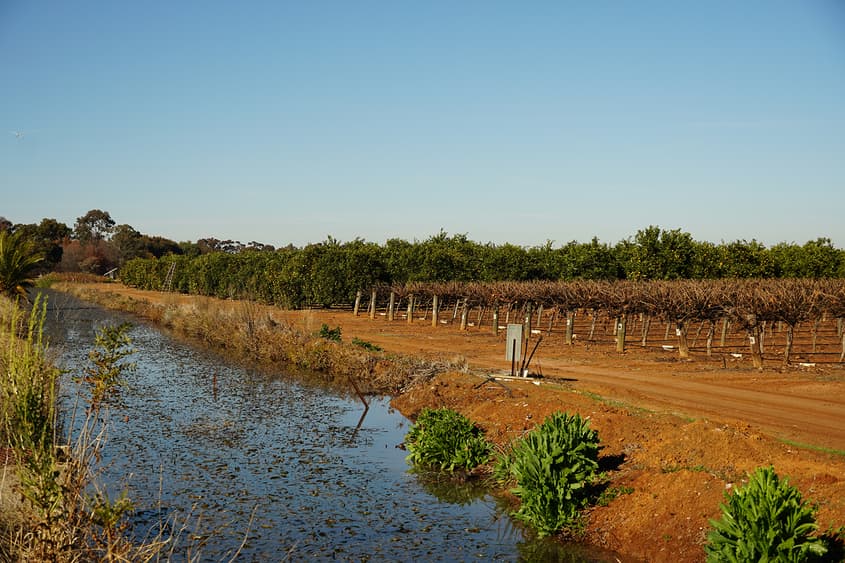
Photo: supplied


As you enjoy the fruits of Australia’s autumn harvest, spare a thought for the hands that likely picked it. Thousands of workers from across the Pacific are currently here under the Pacific Australia Labour Mobility (PALM) Scheme, working hard to earn an honest living and provide a better future for their families back home.
While the Scheme offers benefits to workers, employers, and communities, many workers are ‘disengaging’ due to flaws in its design. In practice, this means workers are leaving their approved employers—often to escape poor conditions—and moving into the shadows of the informal economy. This ‘disengagement’ not only leaves workers highly vulnerable to exploitation without legal protection, but also creates significant labour instability for regional businesses that rely on them. Peter Mares and the Scanlon Foundation Research Institute recently published an extensive research narrative, Improving PALM, with a clear leading recommendation:
… give workers greater flexibility to change jobs and remove the whiff of indenture that clings to the PALM scheme. If workers had mobility in the Australian labour market, poor employers would be forced to lift their standards or lose staff.
A major problem with the PALM Scheme is its visa architecture, which ties workers to a single employer and requires employer permission to change jobs, effectively bonding them. This system requires everyone involved to embrace ‘fair work’ and assumes that any problems on the job will be resolved equitably. But what happens if you need to change employers because of unfair treatment, underpayment, low working hours and concerns about excessive deductions for travel and accommodation?
‘Fair work’ should mean exactly that. Yet, the PALM Scheme falls short.
It should be unthinkable for an Australian Labor Government to administer a visa scheme that offers mobility in name only. Imagine telling someone, “Sorry, you can’t change jobs unless you have permission from your employer and a government department.” That doesn’t pass the pub test.
Recently, an Australian labour hire company supplying agricultural workers was fined $540,000 for wage theft and for forcing 475 workers to live in squalor. While it remains unclear whether these people were in Australia under the PALM Scheme, what is certain is that more must be done to eradicate worker exploitation and modern slavery.
The fine, while record-breaking, equates to barely more than $1,100 per worker—likely a mere fraction of the profits made at their expense.
The political response was framed around how these cases of exploitation impact ‘Aussie workers’. Assistant Minister for Citizenship, Customs and Multicultural Affairs Julian Hill noted that exploitation of ‘migrant workers’ “drags down wages for Aussie workers, and will not be tolerated”. That is a true statement; modern slavery affects everyone. However, this isn’t an issue of parochialism; it’s a question of human rights. Treating 475 people as slaves is abhorrent, regardless of their nationality. Fair work should be fair for everyone.
Beyond Australia, PALM workers who leave their employers face significant challenges back home. The program has highlighted a culture in Pacific nations akin to ‘Colonial Stockholm Syndrome’, where disengaged workers are blacklisted and shamed as ungrateful failures. Improved visa design alone won’t solve these deep cultural and systemic complexities.
Migrant workers offer diverse skills and experiences that are vital to the success of communities across Australia. However, governments and industry bodies often take a deficit-based approach to workforce shortages by focusing solely on “worker readiness.” What is frequently overlooked is “employer readiness”— the knowledge, resources, and frameworks businesses need to effectively engage and retain a diverse workforce. To address this, Welcoming Australia and the Mayoral Alliance for the Pacific have developed a roadmap for reform, which prioritises ensuring that employers are properly prepared to work with, and support, people from the Pacific and Timor-Leste.
The reality is that many Australian employers are not yet ‘ready’ to navigate these complexities. The solution, however, should be less ‘stick’ and more ‘carrot’. More resources must be directed toward supporting employers in creating environments where diversity is understood and celebrated, and where every individual feels a genuine sense of value.
In policy circles, discussions about the PALM Scheme often centre on ‘push and pull factors’—the economic pressures driving workers away from home and the opportunities attracting them to Australia. But human movement is rarely that mechanical. When the ‘pull’ of an Australian job comes with the ‘push’ of a restrictive, bonded visa and an unprepared employer, the system fractures. Real solutions require a more holistic approach: one that combines urgent visa reform with a focus on ’employer readiness.’ We must move beyond simple equations of supply and demand to build a system that centres on the human beings at its heart.
Over the past 18 months, Welcoming Australia has been working with 20 Mayors and regional councils, researchers, and industry leaders to improve outcomes for everyone involved in the PALM Scheme.
Yes, reforms have been made, but many only tinker around the edges. We urgently need genuine worker mobility, better access to healthcare, and expanded family inclusion to build fairer, stronger regional communities. We must stop placing the entire onus on ‘the worker’ and start investing in employer readiness.
There is goodwill and commitment to change; the PALM Scheme must reflect that. Labour mobility must be part of the design, not just the name. We need fair work for all, not just some. The question we need to answer is whether we are finally ready and willing to offer it.
Aleem Ali is the CEO of Welcoming Australia and co-founder of the Mayoral Alliance for the Pacific.
You can hear stories from the Pacific Islanders who have worked in Australia under the scheme in the four-part Australia Institute podcast PALMed Off.
Advertisement

What do preparing for climate disasters, preventing cruelty to animals, and building social connection have in common? Charities engaged in these activities are often locked out of receiving tax deductible donations and philanthropy.
Only six OECD nations lag behind Australia's public holiday count at the national level

When Goorie and Koori poet Evelyn Araluen won last week’s $100,000 Victorian Prize for Literature, along with the $25,000 Indigenous Writing prize, she called on the Australian government to change the way it taxes arts prizes.

Earlier this week the Finance Minister and Minister for Women, Senator Katy Gallagher released the latest data of the gender pay gap by the Workplace Gender Equality Agency.