

This is the new foreword, written by Clare Wright, for the new updated edition of 'See What You Made Do' by Jess Hill

Thu 2 Apr 2026 00.00
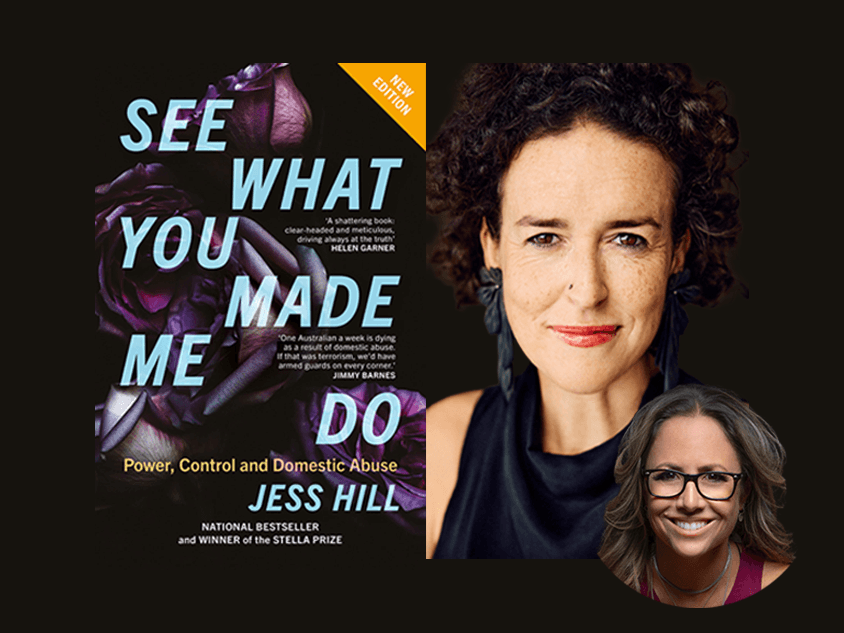


Book blurbs can sometimes be fatuous, but Helen Garner was both precise and prescient when she blessed the first edition of See What You Made Me Do with this endorsement: ‘a shattering book.’ After Jess Hill’s jackhammer analysis of the causes and effects of domestic abuse, no lustrous surface was quite the same. The political status quo was shattered. The policy stalemate was shattered. The fantasy of ‘post-feminism’ was shattered. Marriages were shattered.
It’s not that people hadn’t asked the uncomfortable questions – and tried to have the hard conversations – about why (mostly) men hurt, terrorise, intimidate, undermine, devalue, track, trap, assault and kill their partners. This had long been the tireless, thankless work of dedicated anti-DV advocates – including decades of work by First Nation activists – and the nation-changing impact of Rosie Batty, whose personal tragedy blew a hole in Australia’s indifference. But, still, the language that would reveal the true nature of coercive control – not just in relationships but in our systems – was largely quarantined from public conversations. See What You Made Me Do opened this door, and it has remained open ever since.
I’m staring at an actual door as I contemplate the impact of See What You Made Me Do, six years on. A toilet door, to be precise, in a university where ‘impact’ is the KPI buzzword du jour. When I was an undergrad in the late 1980s, university toilet doors – at least the women’s ones where I relieved myself – were plastered with ribald graffiti, doleful poetry, phone numbers of erstwhile lovers and reliable dealers, and names of men to be avoided at all costs. But the door I’m crouched before now is doodle-free, the pristine paint a backdrop for a single poster asking a direct question: Are you safe at home and in your relationships?
Before See What You Made Me Do, no one had ever asked me this question. If you are experiencing controlling behaviour or abuse, there is support available, I’m now assured. We all deserve to feel safe and protected. What is transformative, post–See What You Made Me Do, is that the poster now speaks directly to me, a 56-year-old history professor, and every other woman, young and old, who uses these facilities in this institution of higher education. No more whispers in the library. No more it-couldn’t-happen-to-me pretence or only-in-those-families scapegoating.
No more problem with no name.
It’s Betty Friedan’s epoch-defining feminist text that I return to when reflecting on the thwack of recognition that so many women experienced reading See What You Made Me Do. The Feminine Mystique (1963) unleashed the genie in the psychic bottle for a generation of suburban housewives, naming their latent torment, their daily dissatisfaction. It was an instant bestseller. A global conversation about women’s rights and roles was sparked, and the axis of women’s lives tilted towards personal fulfilment outside the narrow, gendered functions of wife, mother, housekeeper.
Just as Friedan found a language to unlock the cultural confines of (white, middle-class, heteronormative) conformity, so Jess Hill gave us a new lexicon to understand the fear, dread and despair that still remained in many homes more than five decades after women had apparently been liberated from their cages. Coercive control. Narcissism. Gaslighting. Love-bombing. Coming out from underground. Slow-boiled frogs. Humiliated fury. Patriarchy. Shame. Hill didn’t invent these words any more than Friedan conjured the vocabulary of destiny, biology, femininity, happiness, sex and self-actualisation. But she did thread them – persuasively, empathetically, evocatively – into the warp and weft of an evidence-based narrative that made sense of a condition that is as existential as it is structural: domestic abuse.
And it’s the last word there that is Hill’s masterstroke. As she made clear in her author’s note, Hill came late to the term ‘domestic abuse’. She’d written the first draft of her book employing the concept of ‘domestic violence’ as the organising principle for her challenge to the gender order. Days before the book went to print, she changed course and replaced the V-word with the A-word. It was this cataclysmic code shift that made the book a manual for self-identification for the many women who had not experienced physical violence, or for whom the violence was not even the worst part; women who had been white-knuckling through lives of hyper-vigilance, disrespect, manipulation, degradation, insult, isolation, fear, fawning, submissiveness, surveillance, marital rape, financial exploitation and other insidious forms of dominance and control. As the Buddhists say, the near enemy of love is not hate but control. Many read See What You Made Me Do and woke up to the fact that they were sleeping with the enemy every night of their anxious lives.
Hill gave language and form not only to the interpersonal abuse happening behind closed doors but to the institutional abuse and injustice occurring in plain sight: the misogyny and racism in policing and criminal justice, the desperately unsafe decisions made in the family courts, the chronic under-resourcing of frontline services, the buck-passing that prevented so many victim-survivors – particularly those already marginalised – from accessing help and safety.
See What You Made Me Do can be seen as a tipping point in the recognition and visibility of abuse, assault and trauma in the lives of women who don’t necessarily have bruises on their bodies but bear scars in their minds and on their hearts. Though it’s hard to separate the canonical wheat from the zeitgeisty chaff with less than a decade’s hindsight, what’s apparent is that Jess Hill’s gutsy, gritty reporting hit a publishing nerve. Just as The Feminine Mystique cleared a path for Greer’s The Female Eunuch, Summers’ Damned Whores and God’s Police and Naomi Wolf’s The Beauty Myth, so See What You Made Me Do can be seen as the precursor to the clear-eyed yet guttural, gut-wrenching, primal screams of Amani Haydar’s The Mother Wound, Jane Caro’s The Mother and Sonia Orchard’s Groomed, among others. See What You Made Me Do itself was also spun off into a three-part SBS documentary and a podcast, The Trap. To my mind, that is the genius of the book: distilling the solid evidence-base of academic scholarship into compelling narratives across various platforms. Thanks to Hill’s skill as a writer, broadcaster and storyteller, the issues of intimate partner violence, coercive control and the harm caused by systems that are meant to protect us can no longer be unsaid or discounted. We put posters up in toilets. We teach our daughters to look for red flags.
And, arguably, we also look more protectively – and perhaps proactively – at our sons, mindful of the men they will become. One of the most rare and precious things about See What You Made Me Do is the fact that it also shows compassion for men. This is not a paradox; it is part of the solution. At the heart of this book is a kind of compassionate accountability. Many men report that reading the chapters on the abusive mind, shame and the patriarchy felt to them like the first time they had truly been seen; that these chapters humanised behaviour otherwise dismissed as simply monstrous. What a fine line Hill was able to walk: never excusing but always seeking to explain, to decode and to reach those who might otherwise feel alienated by a book on men’s violence.
This is public interest journalism changing the system; a book that revealed to a nation (and wider world – adapted versions of See What You Made Me Do were published in the United States, Russia, Hungary, Taiwan and the UK) the hidden underground of intimate partner violence, catalysing a revolution in countless lives as well as in public policy and law reform. Perhaps most critically (for this was Jess Hill’s gift, should it be accepted and paid forward), this book brought about a critical turning point for prevention: what can we change when we stop asking ‘why doesn’t she just leave’ and start drilling down into the biopsychosocial, cultural and historical bedrock of ‘why does he abuse her?’
Shattering. What’s seen cannot be unseen.
This is an edited extract of the New Foreword written by Clare Wright, to See What You Made Me Do: Power, Control and Domestic Abuse: Updated Edition, by Jess Hill. Published by Black Inc. (RRP $36.99)
Professor Clare Wright is an award-winning author, historian, broadcaster and podcaster and Professor of History and Professor of Public Engagement at La Trobe University.
Jess Hill is an Industry Professor researching gender-based violence at UTS.
Advertisement
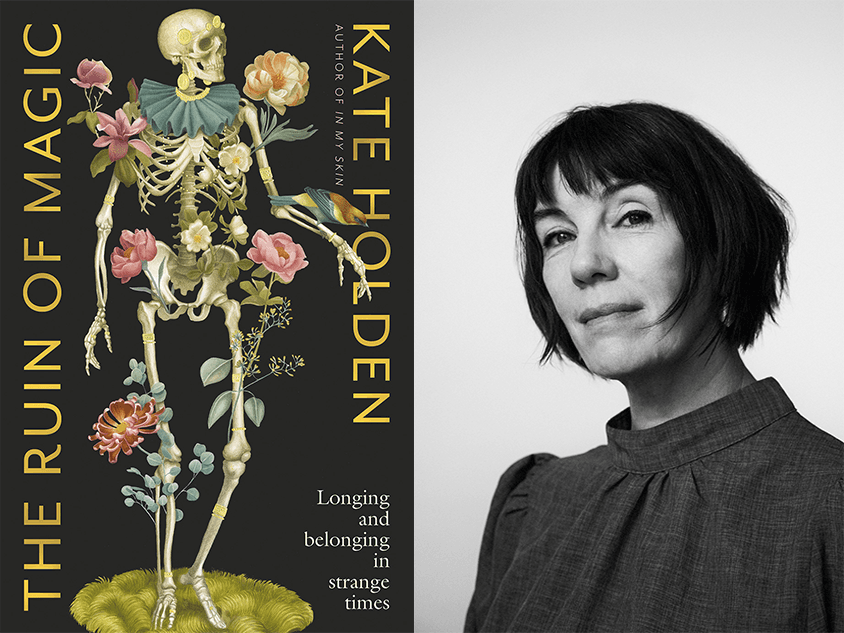
This is an edited extract from "The Ruin of Magic" by Kate Holden, published by Black Inc.
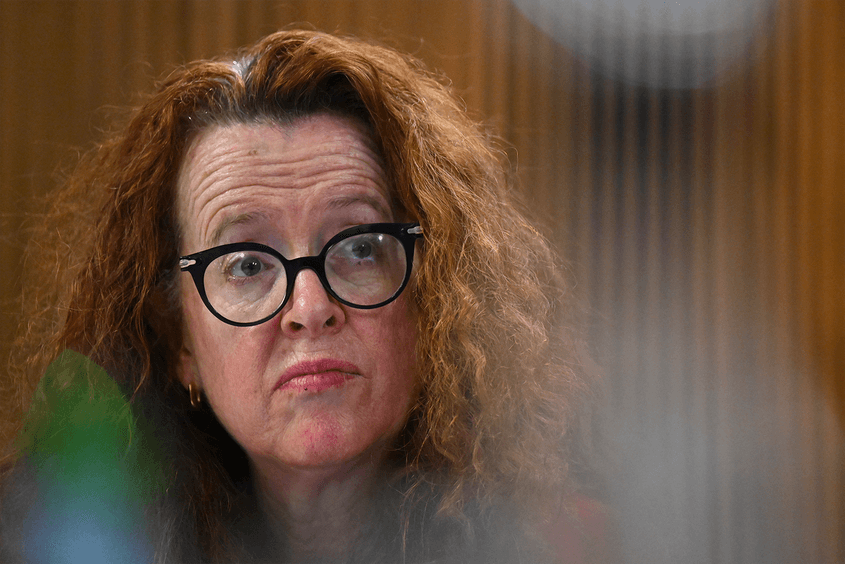
Last year the Australian National University (ANU) was getting some bad press, so they engaged a company called Bastion Reputation to help with the media fallout from restructures and the heavily criticised leadership of its Vice Chancellor, Professor Genevieve Bell. The meeting cost $6,000, which is more than ANU paid me for a full semester of tutoring in 2023. According to a response to an FOI request, the meeting did not warrant any notetaking and was “not significant”.
Australia has more than $11 billion sitting in philanthropic funds that have already received generous tax deductions. Much of that money is intended for public good, but only a small portion is required to reach charities each year.

This is the first of two articles examining the value private health insurance and private healthcare bring to the Australian healthcare system.
