Last year the Australian National University (ANU) was getting some bad press, so they engaged a company called Bastion Reputation to help with the media fallout from restructures and the heavily criticised leadership of its Vice Chancellor, Professor Genevieve Bell. The meeting cost $6,000, which is more than ANU paid me for a full semester of tutoring in 2023. According to a response to an FOI request, the meeting did not warrant any notetaking and was “not significant”.

Wed 1 Apr 2026 09.15
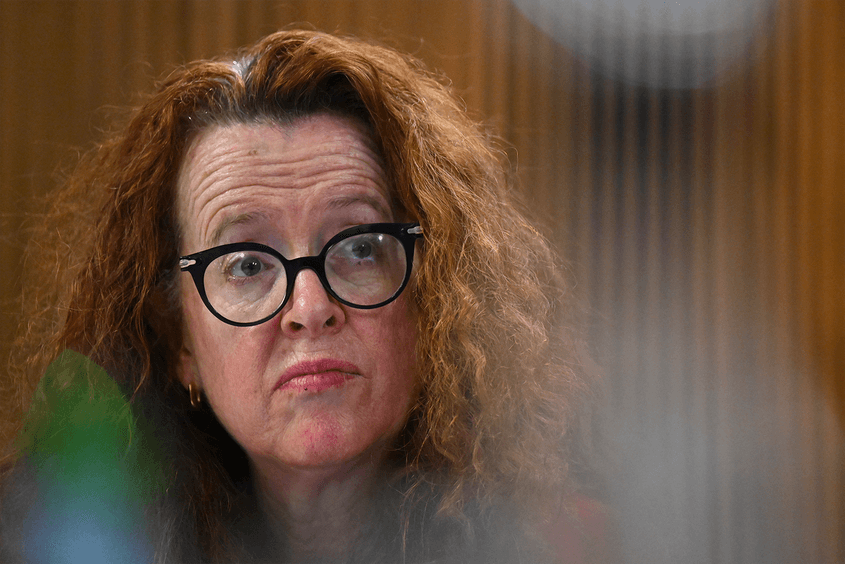
AAP Image/Lukas Coch


Last year the Australian National University (ANU) was getting some bad press, so they engaged a company called Bastion Reputation to help with the media fallout from restructures and the heavily criticised leadership of its Vice Chancellor, Professor Genevieve Bell. The meeting cost $6,000, which is more than ANU paid me for a full semester of tutoring in 2023. According to a response to an FOI request, the meeting did not warrant any notetaking and was “not significant”.
Australian universities had a hard time during COVID. Unlike other industries, and unlike private universities such as Notre Dame, they did not receive JobKeeper (the Australian government scheme to support business during the pandemic.) After the peak of the pandemic, universities faced a new potential crisis with a cap in international student numbers. Given the contribution of international student fees to universities’ budgets, the cap had serious implications for the bottom line of Australia’s higher education institutions.
In the midst of these challenges, Vice Chancellor Bell announced a plan called “Renew ANU” and the need to plug what they called a $250 million hole in the budget. The plan included voluntary redundancies, the merging of schools and colleges, and the expectation that ANU would be “a smaller university, but remain distinctive, excellent, and with a strong sense of community”.
What followed was strong criticism in the press, a string of attempts to support the Vice Chancellor before her ultimate resignation, a significant severance package, and the decision from the university to halt redundancy programs.
During the furore, ANU engaged Bastion Reputation and paid $6,000 for a meeting. According to their website, Bastion Reputation is there to help “your organisation be its best on its strongest day, and resilient when it matters most.” A freedom of information request (FOI) reveals just how little help Bastion was for the ANU during some of its worst days.
In response to the FOI request for details of the meeting, ANU said:
“The services provided by Bastion were not significant and comprised verbal advice only. There are no associated documents, notes, transcripts etc”. They added, “Noting the above I have decided to refuse access … on the basis that no documents relating to your request exist”.
A lack of transparency around university decision-making is not new. Australia Institute research has shown shortcomings in university governance again and again. This poor governance is part of the reason that universities are not spending the time and effort they need to on their core functions: teaching and research.
In 2021, I tutored an undergraduate subject as a casual employee of ANU for which I was paid less than $5000. To earn this money, I had to prove my identity with my passport, supply confirmation of a working with vulnerable people check, and access no fewer than four separate university IT systems. I attended lectures, read books, responded to emails, marked five assessments per student, participated in a moderation meeting, and ran tutorials for twenty-five students. The administrative load was heavy, and the marking always took longer than the allotted time of one hour per student for the whole semester, but the work was fulfilling because, despite what some may tell you, the students were keen to learn and generally engaged thoughtfully with what I was trying to teach.
It is galling to see that the university would be so blithe about a $6,000 meeting at which the attendees did not take a single note, and that the advice was not “significant”, when the expectation for tutors earning less than that for a semester’s work is so great.
Alice Grundy is a research manager at the Australia Institute, the managing editor of Australia Institute Press and a Visiting Fellow, School of Literature, Language and Linguistics at Australian National University.
Australia has more than $11 billion sitting in philanthropic funds that have already received generous tax deductions. Much of that money is intended for public good, but only a small portion is required to reach charities each year.

Advertisement
On March 25th, 2026, a Los Angeles jury handed down a world-first decision, holding Meta, (who own Instagram and Facebook), and YouTube (owned by Google), liable for intentionally building addictive social media platforms.

On 24 March 2020, Scott Morrison took an unprecedented step: at the drop of a hat, he made the activities people on some Centrelink payments are forced to do completely voluntary as the COVID crisis loomed. It was a change that not only protected the community, but one that brought massive relief.