Under the pressure of decades of right‑wing culture wars—which have run parallel to cross‑party support for neoliberalism—the traditional vocabulary of welfare, redistribution, egalitarianism, and class has not just fallen out of fashion; it has been demonised.
In its place, we get the softer idiom of individual responsibility, social insurance, social cohesion, and civility, and this is where the real power of neoliberalism lies: at the level of culture and language. Rather than simply being an economic agenda of privatisation, tax cuts and the like, it shapes what can be said, and therefore what can be imagined, long before anyone sits down to draft a budget.
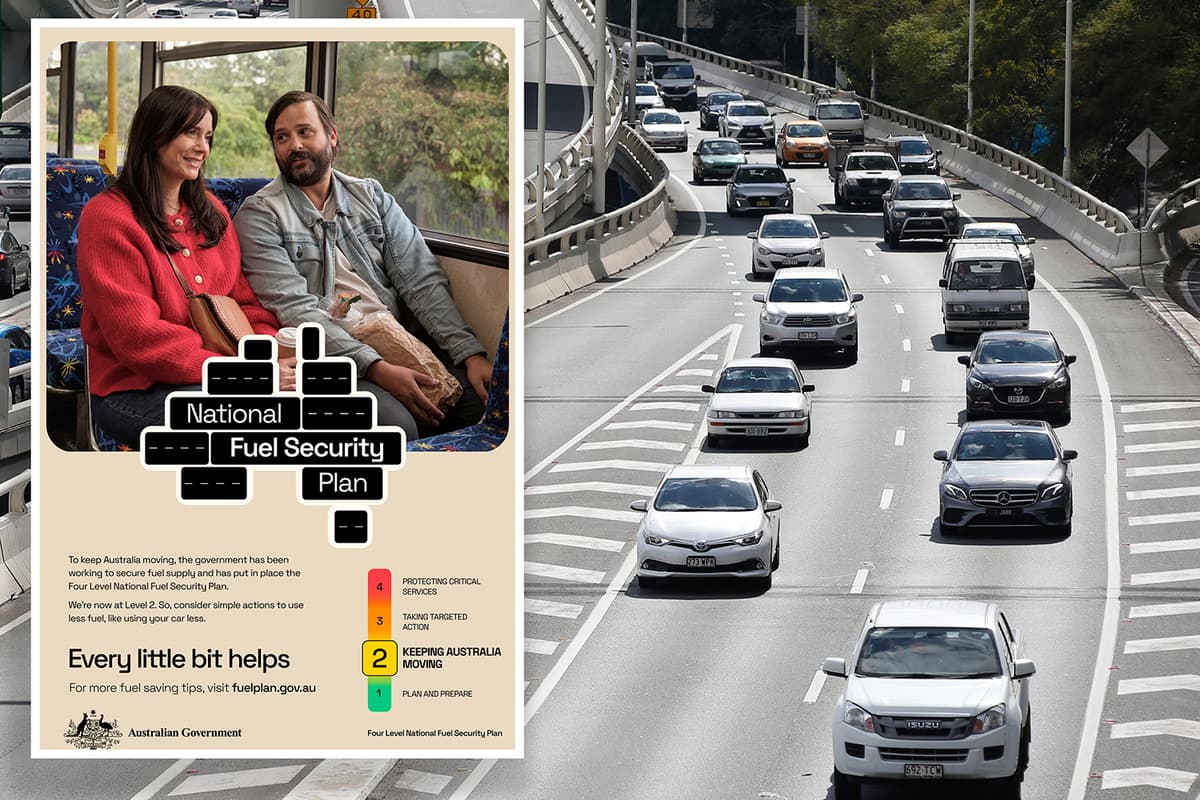
Take the federal government’s new multi‑million‑dollar fuel‑saving campaign, launched in response to the ongoing global oil crisis.
The television spot and associated materials urge Australians to “drive smoothly”, remove excess weight from their cars, consolidate errands, and “only fill up with the fuel you need”. All that, along with the slogan, “Every little bit helps”, frames the problem as one of aggregated personal behaviour rather than of supply chains, energy systems or corporate profiteering.
The visual focus is on ordinary motorists at the bowser, parents walking the kids, and commuters on their daily rounds, reinforcing the idea that the crisis will be managed by the prudent conduct of individuals. Structural levers—reserve policy, price regulation, accelerated investment in alternatives, or restrictions on wasteful commercial usage—barely feature in the public‑facing discussion, even if they exist elsewhere in the policy response. The citizen is addressed not as a member of a polity with claims on the state, but as a responsible consumer, invited to adjust their habits in the national interest.
This is classic neoliberal burden shifting.
Instead of asking whether our dependence on imported fuel, our hollowed‑out refining capacity, or our dispersed, freight‑intensive supply chains might be political choices open to contestation, the campaign asks households to become micro‑managers of their own fuel efficiency. The moral economy at work is not one of rights and obligations between citizens and the state, but of thrift and self‑discipline. “Doing your bit” becomes the primary civic virtue.
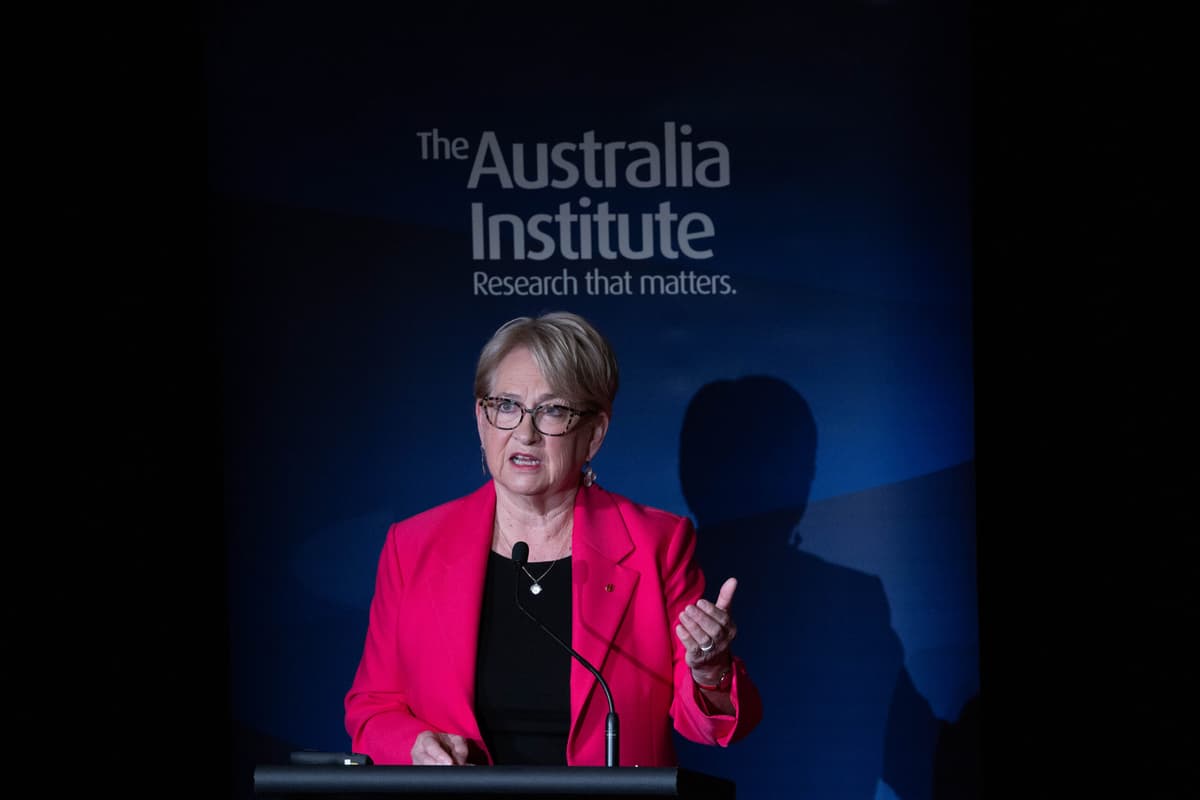
A similar logic underpins the recent insistence by independent MP Dr Monique Ryan that the National Disability Insurance Scheme (NDIS) is “not a welfare scheme” but a form of “social insurance”. In a recent BlueSky post, she says, the NDIS is “an invaluable piece of social insurance, like Medicare. It’s there for all Australians,” and the rhetorical move is telling.
On any straightforward description, the NDIS is a redistributive program funded from general revenue and directed toward a defined group of people with particular disabilities. Participants do not pay risk‑rated premiums; there is no actuarial link between individual contributions and the benefit, and eligibility is based on need, not on prior payment into a pool. The “insurance” language originated as a macroeconomic metaphor in Productivity Commission work: upfront social investment now to reduce longer‑term costs. But that analogy has hardened into a political identity: this is not welfare, but something more respectable.
Why does this distinction matter?
Because “welfare” has been systematically demonised. Decades of political and media rhetoric have associated welfare with passivity, rorting, and moral failure. (This was at the heart of the tactics around Robodebt, too.) “Welfare dependency” is a condition to be cured; “welfare reform” is always a euphemism for cuts or tighter conditionality. Within that moral universe, to call the NDIS “welfare” would be to expose it to suspicion and attack. Supporters wanting to defend the scheme reach instead for the vocabulary of insurance, productivity, and investment.
The move is defensible as a tactic, but it comes at a strategic cost. It reinforces the stigma attached to welfare, and it accepts the neoliberal premise that redistribution must always be justified in quasi‑market terms. The notion that disabled people might simply have an unconditional right to social support as a matter of justice is not allowed to stand on its own feet. It must be reframed as prudent insurance for “all Australians”.
This is how neoliberalism works at the cultural level.
Instead of reclaiming welfare as a positive expression of egalitarian solidarity, we flee from it, leaving those whose payments cannot easily be rebranded—people on JobSeeker, parenting payment or public housing—stranded in the category of the undeserving. Leaners, not lifters, as Joe Hockey was fond of saying. And by now, the landscape of justification has shifted so far that even progressive politicians and commentators instinctively reach for neoliberal language to defend social‑democratic gains.
This all connects to the Albanese government’s heavy reliance on the rhetoric of “social cohesion” too.
In official speeches and documents, cohesion is treated as a matter of attitudes, behaviours, and symbols. The threats to it are cast as extremism, hateful speech, offensive protests, and the “fraying” of a once‑intact social fabric. The solutions, accordingly, are regulations on expression, royal commissions into antisemitism, community‑outreach programs, and campaigns urging respect and civility, even legislation limiting or banning public protest.
The deeper material conditions that make some groups feel scandalously unsafe or unwelcome—poverty, over‑policing, housing precarity, precarious work, the legacies of colonisation and racism—are acknowledged at the margins, if at all, but they are not the central terrain of action. Inequality and injustice appear as background context; the foreground is a call for everyone to moderate their tone and think of the neighbours.
Politics appears not as a structure built on contested distributions of power and resources, but as a delicate web of interpersonal relations and norms. Social problems are failures of attitude and communication; social solutions are better behaviour, more respectful dialogue, and the careful management of diversity. In this worldview, a society riven by class and racial hierarchies could in principle still count as cohesive, so long as everyone behaved civilly and gross expressions of hatred were kept out of sight.
Cohesion becomes the highest political good, outranking justice. Protest, anger, and disruption are measured primarily by their impact on cohesion, rather than by the legitimacy of their underlying claims.
In each case I’ve outlined, then, political conflict over distribution and power is displaced into a language of individual conduct and technocratic management. The fuel crisis becomes a question of how you and I drive. The future of disability support becomes a question of whether we can rebrand welfare as insurance. Racial and geopolitical conflict becomes a question of whether people are speaking politely enough to preserve cohesion. Across the board, the old social‑democratic language that would have named these as struggles over equality, solidarity, class, and rights is sidelined. In its place, we get neoliberalism’s preferred vocabulary of responsibility, insurance, resilience, and civility.
None of this necessarily means that the Albanese government, or figures like Dr Ryan, are consciously neoliberal ideologues. In fact, whether they are or not is almost beside the point. The power that is really being exercised is that neoliberal assumptions are taken as simple common sense, not as a contested politics. When a minister reaches for a campaign idea, it is obvious to them that they should ask people to “do their bit” rather than to threaten fossil‑fuel companies, because in the world we have created, the former sounds reasonable, and the latter sounds unhinged.
When an MP wants to defend the NDIS, it appears obvious she should disavow “welfare”, because welfare is what “those people” get and “those people” are always in trouble. When a Prime Minister faces a wave of protest, it is obvious that he should call for cohesion, because cohesion is synonymous with good order and good character.
For those who still care about a fairer society, this presents a double challenge. There is the immediate fight to defend particular programs and communities from cuts, scapegoating, and repression. But there is also the slower work of rebuilding a different language: one that can speak unapologetically of welfare as a shared right rather than a shameful dependence; of redistribution as a necessary tool of democracy rather than a regrettable distortion of markets; of egalitarianism not as a nostalgic slogan but as a living commitment to flatten hierarchies of wealth and power.
That means being willing, at times, to reject the easy protection offered by neoliberal framing—to say, yes, the NDIS is welfare, and that is exactly why it matters; yes, cohesion is important, but it cannot be purchased at the price of silence or inequality; yes, individual choices matter, but only within structures that we have a right to change through a genuinely democratic politics.
If neoliberalism’s deepest hold is cultural and linguistic, then contesting it will require more than technical policy fixes. As John Quiggin said the other day, “A policy problem is solvable with better policy. A legitimacy crisis is not.”
It will require writers, activists, politicians, and citizens to become awkward again in public, to say the unfashionable words, to insist that the real obscenity is not the language of redistribution, but the conditions that make it necessary. The point is not to abandon responsibility, insurance, or cohesion as concepts, but to re‑embed them in a larger, explicitly egalitarian story about what society is for.
Only then does it become possible to see through the gentle rhetoric of “every little bit helps”, “social insurance”, and “social cohesion” to the underlying question they so effectively obscure: who gets what, and on what terms?
Tim Dunlop is the author five books on Australia politics, the media and the future of work. He writes a popular Substack newsletter called The Future of Everything.
His new book The Culture Wars: Identity, Belonging and the Transformation of Australian Politics is released October 13.