Sat 25 Apr 2026 07.51 AEST
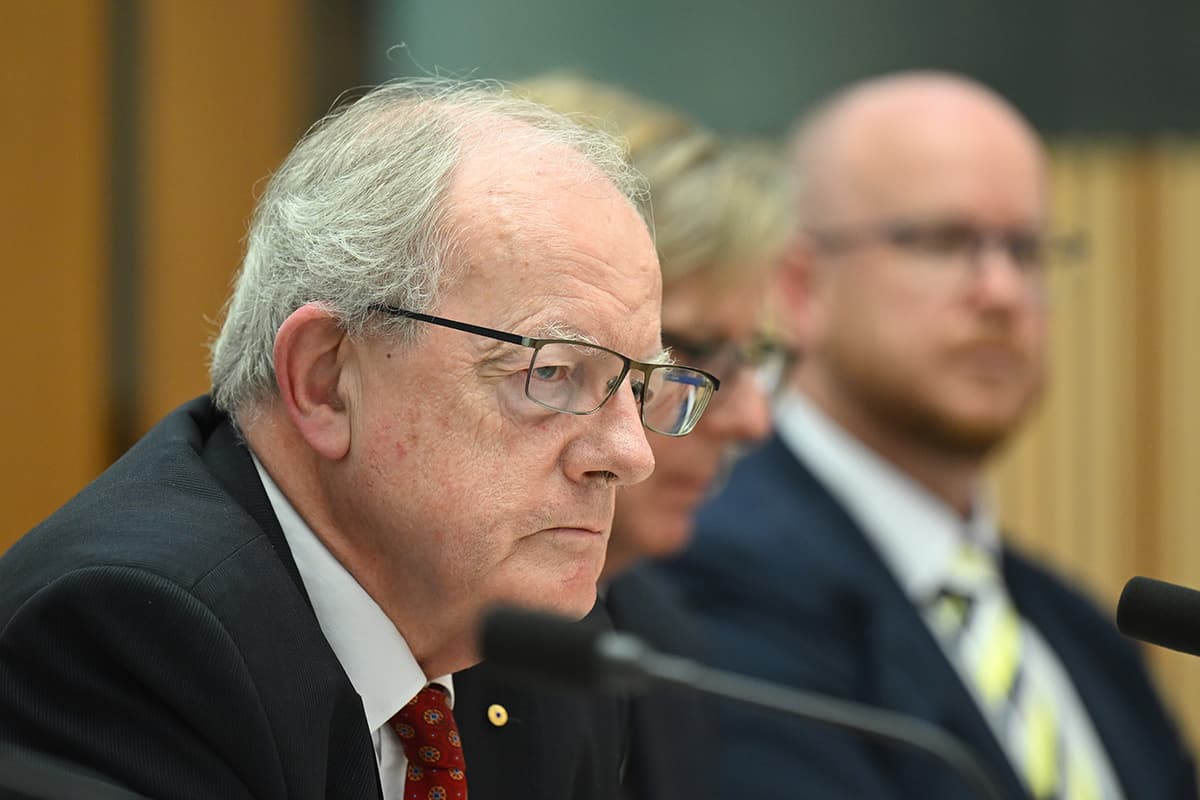
Photo: National Anti-Corruption Commission chief Paul Brereton speaks during an inquiry at Parliament House, Thursday, December 11, 2025. (AAP Image/Lukas Coch)
The National Anti-Corruption Commission’s performance since its inception has been widely condemned. The leadership of Commissioner Paul Brereton, in particular, has drawn heavy criticism.
The mismanagement of his conflicts of interest, firstly in relation to Robodebt and then his potential conflict arising from defence-related investigations, have undermined the reputation of an institution whose success relies on its transparency and accountability, as have the NACC’s inordinate secrecy and its refusal to hold any public hearings to date.
As a result, greater responsibility for NACC investigations has been placed in the hands of its three deputy commissioners. However none of these deputies has been a judge or senior legal professional. By comparison, the dozens of assistant commissioners who’ve served the NSW ICAC, for example, have overwhelmingly been SC or KC, and many were also judges.
Indeed, the NACC’s three current deputy commissioners as a group represent the least qualified combination of deputies permitted under the NACC Act.
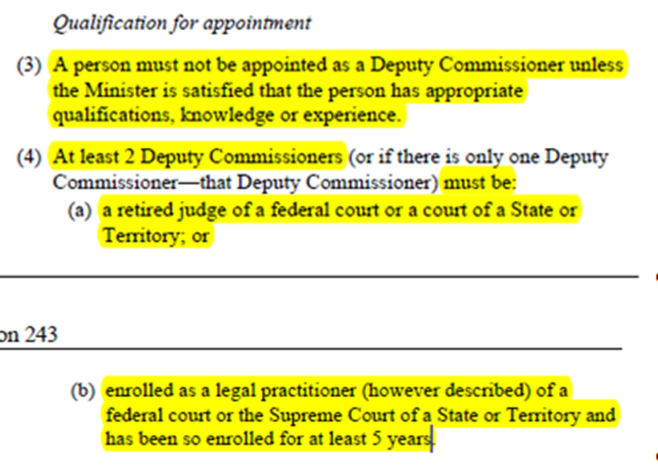
This months-long investigation by The Point raises major concerns about the suitability of all three deputy commissioners, casting serious new doubt on the legitimacy of the NACC as currently constituted.
Following the March publication of the NACC’s long-awaited Robodebt report, the Centre for Public Integrity, while welcoming the report, raised concerns that go to the heart of the NACC’s credibility. It said the protracted Robodebt episode had highlighted “ongoing structural concerns” about the design of the NACC: “In particular, we note the absence of a transparent (emphasis added), arms-length and merit-based appointment process for the Commissioner. Without a clearly independent appointment process, governments cannot readily point to an objective mechanism to reassure the public when trust is challenged.”
Those same concerns about the appointment of the Commissioner apply equally to the appointments of the deputy commissioners.
Two current NACC Deputy Commissioners were appointed to the NACC straight from jobs into which they had been parachuted by Coalition governments: Nicole Rose and Ben Gauntlett were both “captain’s picks” into public roles that ordinarily required the use of a transparent merit-based selection process. In neither case did the Coalition do this.
Deputy Commissioner Rose, the delegated decision maker who decided not to investigate the Robodebt Six, has a diploma of hotel management as her highest academic qualification. She was handed two CEO roles, at AUSTRAC and CrimTrac, by then Justice Minister Michael Keenan, ahead of vastly more experienced candidates, including a judge, barristers, and a former police commissioner.
Deputy Commissioner Gauntlett, meanwhile, was handpicked by Scott Morrison’s Coalition Government as Disability Discrimination Commissioner, a move that was condemned by numerous human rights legal experts at the time for not being an open merit-based selection process as required.
Until the Government delivers “a powerful, transparent and independent NACC – one with teeth”, as promised by Prime Minister Albanese – the NACC will continue to be a running sore in the nation’s integrity framework, mistrusted and maligned by the public. It could be argued that the NACC was set up to fail.
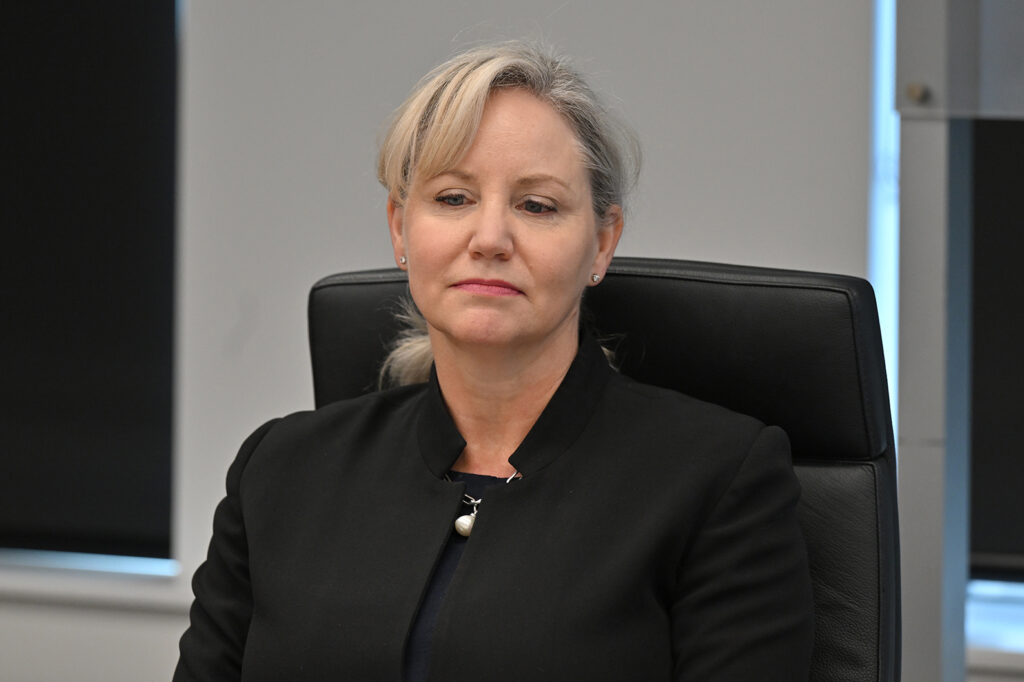
Nicole Rose was appointed NACC deputy commissioner by the Albanese Government for a five-year term commencing 1 July 2023. She was previously the CEO of AUSTRAC, Australia’s anti-money laundering and counter-terrorism financing regulator and financial intelligence unit, and before that the CEO of another law enforcement agency, CrimTrac. (When CrimTrac was folded into the Australian Criminal Intelligence Commission, Rose was for a short period deputy CEO of ACIC.)
“Ms Rose brings to the NACC diverse experience in law enforcement, intelligence and regulatory environments,” states her brief bio on the NACC website. While true, a deeper look at her work history raises serious questions about her appointment by the Attorney-General, not just to her current position, but also to her previous two roles.
In February 2020, the Daily Telegraph published an investigation by senior reporter Natalie O’Brien into Rose’s AUSTRAC appointment, revealing “the meteoric rise of a woman with limited police experience to the top of Australia’s financial crimes watchdog ahead of candidates with decades of law enforcement and legal experience”.
Based on Freedom of Information (FOI) documents solicited over months (and still available), the article describes how Rose “was parachuted into the job running the $75 million agency in a ‘unique’ behind-the-scenes deal” in 2017.
There were 22 candidates for the position: “eleven had law enforcement backgrounds including a Commissioner and Deputy Commissioner, and one was a judge”. Rose, who was then on a secondment to the Attorney-General’s Department, was listed in the job advertisement as the contact person for inquiries about the application process. She was also on the four-person panel that interviewed the seven shortlisted candidates.
The panel recommended three candidates as “highly suitable” for the role.
Yet, two months after the interviews, Minister Keenan bypassed the process and appointed Rose CEO on the grounds that she was an “eminent person”.
The Daily Telegraph described the appointment as “a back room deal”, in part because the FOI documents provide no explanation as to how or why this decision was made.
After it became aware of the growing controversy the Attorney-General’s Department provided the following statement: “Whilst it may not be readily apparent from the documents, the (former) Minister for Justice recommended the appointment of one of the candidates found highly suitable by the panel. However, before that proposal could be finalised, the candidate was no longer available… The Minister for Justice subsequently exercised his option to appoint an eminent person.”
Despite requests by the journalist for documentation or further information about this unusual decision, including why the two other “highly suitable” candidates weren’t approached, no explanation was ever provided.
A few days after publication of the article, Labor Senator Louise Pratt raised the matter with Rose in Senate Estimates: “How is it that you are responsible for the recruitment process but actually end up with the job at the end of the day?” and “Can you please take us through the process that you were asked to undertake in order to recruit for this statutory appointment.”
Rose replied, “There was a recruitment process. I suggest that the attorney-general’s [department] be approached as they ran that recruitment process … I did not apply for the job. I was approached by the minister sometime after that process was complete.”
Detailed questions had been put to the Attorney-General’s Department, and Rose, by journalist Natalie O’Brien at the time, but both declined to respond.
The Point approached the NACC for a response to the Daily Telegraph’s account, including whether Commissioner Brereton or Deputy Commissioner Rose contested any of the facts relayed about Rose’s AUSTRAC appointment (noting that the account remained on the public record).
The NACC replied, “Deputy Commissioner Rose was appointed as a Deputy Commissioner … following a rigorous merit-based selection and vetting process managed by the Attorney-General’s Department.”
It also stated (without providing evidence) that the “Daily Telegraph articles published in 2020 contain false and defamatory information. The baseless claims made by the journalist were dealt with by the then responsible Minister, and in Senate Estimates at the time.”
Natalie O’Brien rejects these imputations, saying the article was vetted by lawyers, and was watertight. Furthermore, “we received no complaint about inaccuracy or defamation at the Telegraph when we published. The ‘allegations’ were upheld for all to see in the [FOI] documents.” Those FOI documents remain accessible and support her account.
*
This information didn’t raise any red flags in the Attorney-General’s Department as it considered appointments for the new National Anti-Corruption Commission. But what preceded Rose’s AUSTRAC appointment was even more alarming.
FOI documents revealed that Justice Minister Keenan had also appointed Rose as CEO of CrimTrac in 2015, after stating, as reported by O’Brien, that he wanted to “directly appoint” a new head “without conducting a full selection process”.
Rose was hand-picked to run the $80 million agency starting April 2015. CrimTrac was established in 2000 to provide national, technology-based policing information systems, such as DNA and fingerprint databases, to state and territory police. Its biggest project in 2015, by a significant margin, was the creation of the $52 million Biometric Identification Solution (BIS), a new identification capability to recognise fingerprints, palm prints and facial images. The project turned into a $34 million disaster.
The 2019 postmortem on BIS by the auditor general noted: “none of the milestones or deliverables met”. The contract, which was signed and managed by Rose, “did not explain the milestones and performance requirements in a manner that was readily understood and applied”, the Australian National Audit Office (ANAO) stated.
The Point does not allege that Rose was responsible for the failures that led to the termination of the BIS. However, this information shows that it was known within Minister Keenan’s portfolio that BIS was in deep trouble before he appointed Rose into the second job as CEO of AUSTRAC in 2017.
Under Rose, CrimTrac started a tender process for the BIS in June 2015 and signed a contract with NEC Australia in April 2016.
The project was in trouble almost immediately, with the ANAO finding that “the first contract milestone (and arguably the most important), Solution Design, was supposed to be completed by June 2016, two months after the contract was signed. This milestone was not met and project monthly reports began being reported as ‘red’ (‘requires corrective action’) shortly thereafter, in August 2016.” The project would never get back on track.
CrimTrac was folded into the Australian Criminal Intelligence Commission (ACIC) in July 2016 following a merger with the Australian Crime Commission, and the newly amalgamated agency was tasked with delivering and maintaining national information sharing systems. According to the ANAO report, “There was awareness at all levels within ACIC that BIS was encountering serious difficulties.”
Nevertheless, Rose, now deputy CEO of ACIC, wrote in CrimTrac’s final annual report in September 2016, “The new Biometric Identification Services will deliver an improved tool to Australian policing agencies that will contribute to the effectiveness of operational policing, improve safety of frontline police and enhance community safety and security … The service is expected to start in mid-2017.”
By June 2017, however, more than a year after the BIS contract was signed, “a PwC review commissioned by ACIC reported that the program was yet to define a robust governance structure with roles and responsibilities across the project and that decision-making governance was unclear.” The result: CrimTrac and NEC Australia were in a running dispute over where responsibilities lay amid ongoing failures to hit targets.
Four months later, in October 2017, having abandoned the AUSTRAC executive recruitment process, Minister Keenan appointed Rose as AUSTRAC’s new CEO.
CrimTrac’s BIS project was officially terminated in June 2018.

The process of appointing deputy commissioners to the new NACC in 2023 was overseen by Attorney General Mark Dreyfus, with proposed candidates requiring the approval of the Parliamentary Joint Committee on the National Anti-Corruption Commission (PJC-NACC).
Dr Ben Gauntlett commenced his five-year term as deputy commissioner of the NACC on 1 July 2023. He had previously spent almost five years as Disability Discrimination Commissioner at the Australian Human Rights Commission (AHRC), where he was “a champion for increasing meaningful employment opportunities for people with disability, increased access to accessible housing for people with disability, greater community awareness of disability rights and disability discrimination, and strengthened legal and policy frameworks to protect disability rights.”
Gauntlett was one of two commissioners appointed to the AHRC “without an open, merit-based selection process”, wrote the Australian Human Rights Institute (AHRI) in 2019.
Also critical of the appointment was the executive director of the Human Rights Law Centre, Hugh de Kretser: “The Morrison Government has undermined the independence and effectiveness of the Commission.”
AHRI director Professor Justine Nolan warned that the appointment put Australia’s status on the international stage at risk. “The Australian Human Rights Commission’s current ‘A status’ means it has full participation rights at the UN Human Rights Council … Australia’s ‘A status’ is now in jeopardy, thanks to the government’s handpicking of commissioners.”
Her fears were warranted: the relevant international body didn’t immediately reaccredit Australia’s human rights commission as an A-status organisation, instead deferring consideration of its re-accreditation application for 18 months. A black mark for Australia.
Unlike Rose, Gauntlett did have academic legal qualifications, but his general background as a barrister followed by almost five years as a human rights commissioner was hardly ideal for a senior role at the NACC, and included little experience fighting corruption.
When the NACC began considering the Robodebt Six referrals, Gauntlett was tasked with “considering options for dealing with the public official who was not a public servant”, according to NACC Inspector Gail Furness in her October 2024 report on the NACC’s original decision not to investigate the Robodebt referrals.
This “public official” was recently revealed to be former prime minister Scott Morrison. Inspector Furness added that Gauntlett “circulated various drafts of his review of the options for dealing with [Scott Morrison]” between January and March 2024, and his work on it had commenced as early as November 2023.
Deputy Commissioner Rose confirmed in her formal decision letter (setting out reasons the NACC would not open an investigation into the Robodebt referrals) that she had received Gauntlett’s work in relation to Morrison and that she was “assisted in my decision-making by his memorandum”.
Gauntlett was thus placed in a position of influence in the NACC’s decision-making process around Morrison less than six months after he had left a role for which he was hand-picked by Morrison’s government. (There is no evidence, and it is not alleged, that Gauntlett was in any way influenced or acted with impropriety.)
In response to questions, the NACC replied that Gauntlett’s appointment as Disability Discrimination Commissioner was “consistent with legislation that existed at the time”. (To address public concerns about the controversial human rights commissioner appointments, in October 2022 parliament passed legislation requiring all Commissioner roles to be publicly advertised and merit tested.) The NACC added that it was “confident its Deputy Commissioners made all appropriate declarations of actual or perceived conflicts of interest concerning their involvement in the Robodebt referrals.”

The third deputy commissioner is Kylie Kilgour, who commenced in February 2024.
In October 2024, NACC Inspector Gail Furness found that Commissioner Brereton had engaged in officer misconduct for not having appropriately managed his Robodebt conflict of interest. The NACC accepted the Inspector’s recommendation that it revisit its decision not to investigate the Robodebt referrals by appointing an independent person to reconsider it.. The NACC appointed former High Court Justice Geoffrey Nettle KC to do this. He found that each of the six referrals raised a corruption issue and should be investigated.
The NACC decided it would, finally, investigate the Robodebt Six, and in February 2025 announced this in a media release, which ended with an ambiguous line: “The Commissioner and other Deputy Commissioners who were involved in the original decision not to investigate the referrals will not participate in the investigation.” It was not clear whether this included Kilgour or not.
As has been reported previously by Michelle Fahy and Elizabeth Minter, Kilgour was involved in the NACC’s original decision not to investigate the Robodebt referrals. She worked alongside Commissioner Brereton and deputy commissioners Rose and Gauntlett crafting the public statement that explained why the NACC would not investigate the Robodebt Six officials.
Kilgour was also involved in the editing of, and discussions regarding, the letters that were sent to the six officials advising them they were not going to be investigated. She was included in emails dating back to March 2024 from Commissioner Brereton outlining changes he wanted made to the public statement and the letters to the officials.
Despite this history of involvement, the NACC later announced that Kylie Kilgour would lead the Robodebt investigation.
Anthony Whealy KC, chair of The Centre for Public Integrity, said that all of the NACC’s deputy commissioners were “arguably tainted” and should not be involved in any way in the Robodebt investigation. (In May 2025, investigative journalism site Undue Influence put a series of questions about the matter to the NACC. It refused to answer any of them.)
Kilgour’s role sits under Brereton and alongside Gauntlett and Rose, and she was privy to the NACC’s considerations, but there were further reasons to be concerned about her appointment to run the new investigation.
An FOI disclosure related to Kilgour’s appointment as deputy commissioner and the vetting process managed by the Attorney-General’s Department revealed a conflict declaration by Kilgour of an affiliation either related to herself or her immediate family. The detail was redacted, but the Attorney General’s Department stated that “any such conflicts of interest have been managed in accordance with the Commission’s policies and procedures. She has no conflicts of interest in relation to the people subject to the Robodebt Royal Commission referrals.”
The following is not included in that FOI, but Kilgour is married to Tom Bentley, the long-time (2007-2013) deputy chief of staff to Julia Gillard. Gillard was the Minister for Education, Employment and Workplace Relations when Robodebt Six member Kathryn Campbell was appointed deputy secretary of that department in May 2010. Bentley was still working for Gillard when, as prime minister, she announced in December 2010 that Campbell would become the secretary of the Department of Human Services – the role in which Campbell became heavily involved in the creation of the Robodebt scheme. If the NACC has been dogged by perceptions that it’s too enmeshed in the club of Canberra mandarins who all knew each other, the appointment of Kilgour was unlikely to disprove them.
The Point does not allege any wrongdoing by Kilgour or Bentley, or that Kilgour had an undisclosed conflict of interest. Nevertheless, it is noteworthy that it took the government nine months to provide the FOI documents, and when it did they were heavily redacted.
*
A final example of the lack of transparency by the Attorney-General’s Department raises serious concerns about its role in the appointment of senior NACC officials.
Kilgour was not the Albanese Government’s first choice to fill the vacancy left by the departure of interim Deputy Commissioner Jaala Hinchcliffe in February 2024. The Government had nominated NSW Supreme Court Justice Stephen Rothman. But the parliamentary committee that oversees the NACC rejected Rothman upon learning of his long-term Labor and union connections – which included twice running for office as a Labor candidate, according to The Sydney Morning Herald.
How did a candidate with Rothman’s partisan background get through the supposedly robust and transparent selection process? The Sydney Morning Herald reported that pertinent information about the candidate’s background “was either not gathered in the departmental vetting process or knowingly withheld from MPs required to tick off or veto the nomination”.
According to PJC-NACC committee member and Greens senator David Shoebridge, the Attorney-General’s Department gave committee members “sanitised” documents about the candidate “rather than the original version provided by the candidate”. Helen Haines, deputy chair of the PJC-NACC, was contacted in relation to this article but declined to comment.
*
Shoebridge believes that “after almost two years in operation [the NACC] has produced more scandals than anti-corruption finding.”
“From appointments to secrecy to its disrespect for whistleblowers and complainants, it’s hard to point to a single part of the NACC that is delivering for the public.”
One can only speculate why the Albanese Government chose candidates that had been previously appointed via such compromised recruitment processes for these top roles at the NACC. Dozens of highly experienced, credentialed and well-regarded candidates would have been queueing up to be involved in Australia’s inaugural federal anti-corruption body.
Compare the composition of the NACC with that of the NSW ICAC, for example. The current commissioners sitting under the Chief Commissioner at ICAC are Helen Murrell SC and Paul Lakatos SC. Murrell is a former Chief Justice of the Supreme Court of the ACT with decades of experience as a judge in various courts, as head of several tribunals, and as a senior barrister. Lakatos is a former judge of the NSW District Court, also with decades of experience as a barrister and counsel assisting, including for the ICAC.
“The government of the day chooses who is appointed to the NACC, and by extension they must take responsibility if their appointees’ qualifications and experience are not sufficient for the role,” says Bill Browne, Director of the Democracy & Accountability Program at the Australia Institute. And given that a single deputy commissioner could be responsible for running a major corruption inquiry, “it would make sense for deputies to have commensurate legal experience.”
*
After almost three years of mismanaging the Robodebt case, the NACC published its final findings in March in a convoluted 445-page report. The NACC conducted no public hearings – on the grounds that even these circumstances were not “exceptional” enough to warrant them.
Kathryn Campbell and Scott Morrison were cleared, along with two other senior executives. Deputy Commissioner Kilgour – who has never been a judge or even admitted to the bar, although she is a former deputy commissioner of Victoria’s Independent Broad-based Anti-corruption Commission (IBAC) – effectively declared that Robodebt royal commissioner and former Chief Justice of the Supreme Court of Queensland Catherine Holmes got it wrong in many of her damning judgements about the parties responsible.
Journalist Rick Morton, who literally wrote the book on Robodebt, said the reasons given by Kilgour “in many of these scenarios are risible and, to borrow one of her phrases, tax credulity”.
For example, Kilgour excused the behaviour of some of the most senior public officials referred for potential corrupt conduct but “inexplicably” criticised the exact same conduct from other public officials also referred.
Morton wrote that “at times in her report, Kilgour displays a naive understanding of the real-life behaviour of senior public servants, wondering aloud in her official report how or why such officials could ever do the wrong thing while at times finding they did just that.”
The NACC did find that two executives acted corruptly, but it will not be referring them to the Commonwealth Director for Public Prosecutions.
After all the pain and heartache borne by the victims of the Robodebt scheme, after a royal commission, a successful class action, two senate inquiries, an ombudsman’s investigation, a Public Service Commission taskforce, and an eventual NACC investigation, not a single person will face charges over Robodebt. The worst case of maladministration in Australian Government history, costing billions of dollars, not to mention the lives lost and hundreds of thousands of people left scarred by the experience, has ended with a whimper.
The one national institution tasked with ensuring integrity in the public sector by detecting and preventing corrupt conduct involving public officials has done nothing of the sort.
UPDATE: On May 4 2026 the NACC announced that deputy commissioner Nicole Rose had resigned.
UPDATE 2: On May 25 2026, commissioner Paul Brereton announced his resignation.
Advertisement

Political leaders across the spectrum have rallied around independent MP Helen Haines, expressing shock and condemning violence after the 65-year-old was struck by a car in what the Prime Minister described as an “attack”.