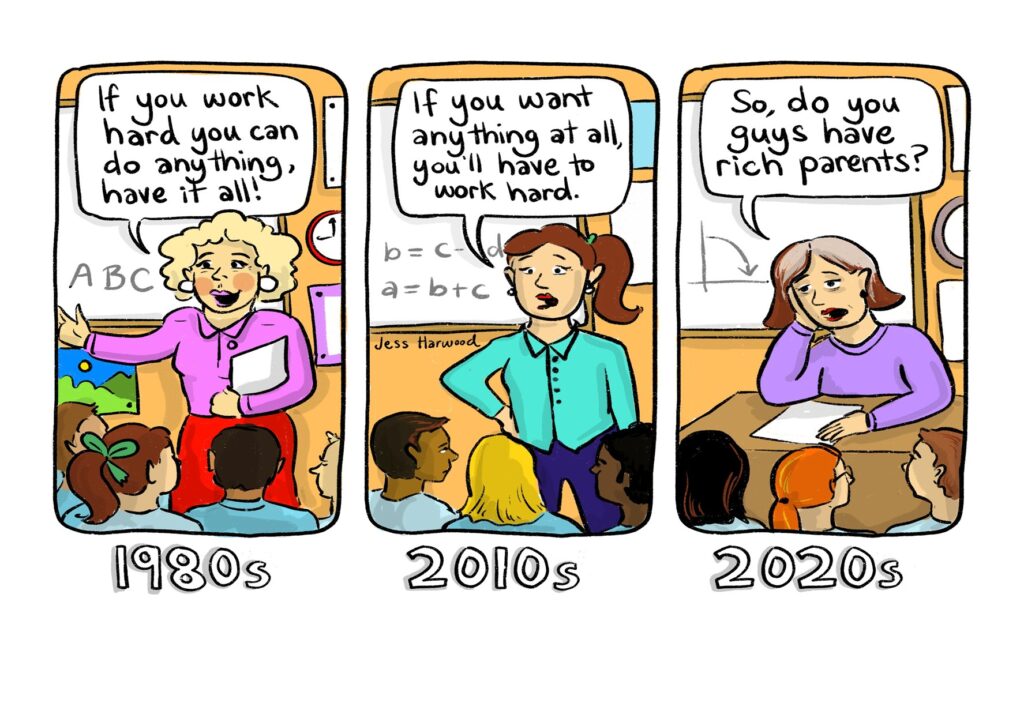
Australia used to do fairly well in terms of predistribution (that is, for white, able-bodied males). But no longer; we've become an ‘assetocracy’ where access to assets tends to be what shapes folks’ life chances and life choices.
Tue 28 Apr 2026 12.18 AEST
Photo: AAP Image/Lukas Coch


There is a lot of (long overdue) talk in Australia about taxing the rich and extractive industries more.
In the upcoming May budget, we’ll see how far the government is willing to go on this front. We might also hear if they use some of the funds raised to support those doing it tough.
But is this tax and transfer conversation the only front in the fight against inequality?
What if we asked why some are so rich in the first place, and why some companies operate business models where they can push margins to such a degree that their shareholders rake it in while consumers, suppliers, and employees struggle to get by?
Australia used to do fairly well in terms of predistribution (that is, for white, able-bodied males). But no longer; we’ve become an ‘assetocracy’ where access to assets tends to be what shapes folks’ life chances and life choices.
Credit: Jess Harwood, for The Next Economy
So it’s timely to look at what predistribution offers in terms of building an economic system that gets things right for people and planet the first time around, rather than remaining stuck on taxation, and how to better fund programs for those who are impacted by the inequalities built into our current system (‘compensating the losers’ as a report from a US think tank bluntly puts it).
The term predistribution was coined by American scholar Jacob Hacker who describes it as ‘market reforms that encourage a more equal distribution of economic power and rewards even before government collects taxes or pays out benefits.’
It differs from the government using tax and benefits to rebalance resources after market outcomes have emerged: this type of rebalancing is known as redistribution.
The essence of predistribution is ensuring that the market economy does more of the heavy lifting in delivering a more balanced divvying-up of resources. Its focus is on mechanisms that determine the distribution of wages, profits, and other flows and stocks of money.
Government comes into the predistribution story via its role in creating and shaping markets via rules, incentives, and other levers. This includes boosting (or curtailing) the bargaining power of market players such as workers, employers, and wealth holders, for example:
Inequality arises in and can be addressed via two realms: what is sometimes called the ‘primary’ realm of work, wages, and occupational pensions, and then in the secondary realm comprising taxes and benefits. Predistribution is about action in that primary realm.
This is where the bulk of the balance or imbalance of economic resources arises: the ‘biggest single factor in determining the distribution of market income is the relative shares going to wages on the one hand and to capital incomes (rent, interest, dividends, and capital gains) on the other’.
In Australia, “capital gains arising from accumulated wealth have produced large increases in passive, unearned income that have added further to the wealth of the rich”. In global terms, four-fifths of inequality stems from what was going on prior to the government getting involved via tax and transfers…[and] ‘“Predistribution”, not “redistribution,” explains why Europe is less unequal than the United States”, according to Blanchet, Chancel and Gethin.
There are a range of reasons to back predistribution in order to achieve a more balanced distribution of economic resources:
Predistribution is about pre-emption and prevention, and is a critical element of the upstream change that builds a better economy for all of us. There are a range of actions governments and other economic players can take to predistribute economic resources.
Now it’s time to start talking about it more and putting the changes in place, in order to make the most of its potential and to create the economy we could have!
Dr Katherine Trebeck is the Economic Change Lead at non-profit The Next Economy
Advertisement