When Australia’s original News Media Bargaining Code passed in 2021, it was presented as a small country standing up to Big Tech to save quality journalism. The Morrison Government, backed by Labor, framed the new code as addressing a “bargaining power imbalance” between Facebook and Google and struggling news outlets.
But the code was never any of that, any more than Shane Warne’s flipper was an actual leg break. It was all smoke and mirrors, and, like any decent batsman, we need to discern what is really being delivered.
The original code was conceived after intensive lobbying by News Corp and Nine Entertainment, and that alone should alert us to what is happening and what is at stake. From the start, the legislation was less an act of media reform than institutional engineering designed to keep legacy outlets at the centre of the public conversation.
The code forced platforms into binding arbitration unless they struck commercial deals with news publishers. Facebook briefly blocked Australian news in protest, but eventually both Google and Meta negotiated settlements worth around $250 million a year. Despite all the rhetoric of ‘supporting journalism’ broadly understood, most of the cash went to News Corp, Nine, Seven, the ABC and The Guardian. And they didn’t necessarily use it for journalism. As Chris Janz, former chief digital and publishing officer at Nine Entertainment and now CEO of Capital Brief, told ABC Radio National, the money “mostly went to the shareholders of Australia’s biggest media companies or was used to pay off their debts.”
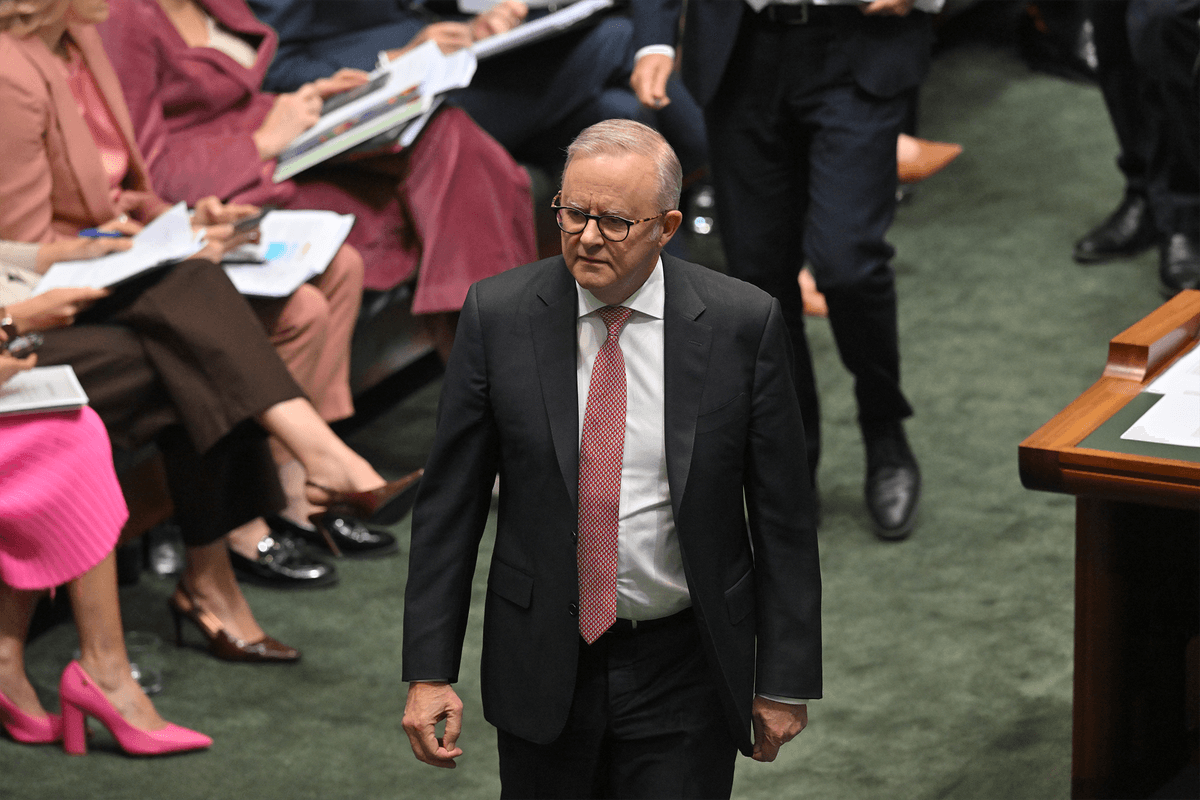
When Meta announced in 2024 that it wouldn’t renew contracts with Australian publishers, the Albanese Government doubled down, drafting the News Media Bargaining Incentive (NBI), released last week, which sets a levy of up to 2.25 per cent on platform revenue, with generous offsets if platforms do deals with news outlets. As Kim Wingerei argues, the mechanism has changed from a stick (binding arbitration) to a carrot (tax offset), but the underlying logic is the same: state power redirects platform revenue to legacy publishers, with no transparency and no requirement that the money supports public-interest journalism.
On one level it seems crazy to say a Labor Government would do anything to support organisations that are hostile to nearly everything it does. But the paradox is explicable if we look past the bowler’s hand and worry about how the ball hits the pitch.
Australians are abandoning both legacy media and the major parties. Newspaper circulation has collapsed and even online audiences are fragmenting across social platforms, podcasts and niche independents. Trust in mainstream journalism, especially among younger voters, is at historic lows. At the same time, the major party primary vote has been declining for a generation, eroding their dominance. Even Labor’s current massive majority is not a reflection of deep support for the party, let alone the leader, but a case of the preferential system rewarding the least-worst option.
In this context, propping up legacy media is not just about journalism — it is about preserving a channel of influence and gatekeeping that the major parties still need. In fact, need more than ever.
So, yes, the mainstream media — particularly News Corp — routinely savages the Albanese Government, but what matters is not whether the mainstream is friendly, but whether it remains central. Hostility and dependency are not opposites, and the major parties would much rather live with the media status quo than encourage an environment that potentially reflects how people’s commitment to them is changing.
Put simply, the legacy media — even when hostile — performs a number of functions the major parties can’t afford to lose.
They play a gatekeeping role that both determines and constrains what counts as ‘serious’ politics. This helps ensure the political focus stays on those the system recognises as central players and issues, so as not to stray outside established boundaries. A fragmented media landscape where audiences migrate to independent platforms, podcasts, newsletters and social media threatens this gatekeeping function entirely. Politicians lose the ability to control which ideas enter the debate and which remain fringe, as well as which politicians voters will take seriously.
Major parties know how to play the legacy game: how to feed stories to friendlies, preempt critics, and manage the cycle. They tailor messaging to ensure ‘newsworthiness’ while mainstream journalists rely on political elites as primary sources and amplifiers. Even when coverage is hostile, the terms of engagement are predictable and manageable. The hostility is factored in. A dispersed ecosystem of independent voices, algorithms and viral campaigns is far less predictable and far harder to co-opt or manage.
So, News Corp’s hostility to Labor operates within a shared understanding of what politics is: a contest between the Coalition and Labor, mediated by legacy outlets, focused on leadership, polling, scandal and marginal-seat arithmetic. That frame excludes far more than it includes. It keeps the Greens on the fringe, treats independents as novelties, dismisses movement politics, and ensures climate activists, union radicals and other reformers remain outside the ‘serious’ conversation. Worst of all, it undermines any reinvigoration of the media ecosphere itself and the emergence of new voices who better reflect changing political realities.
Of course, legislation like the NBI is closing the door after the horse has bolted, but it is a measure of just how desperate the status quo is to maintain itself that laws like this are enacted. Labor would rather be attacked by The Australian inside that frame than operate in a media landscape where the frame no longer exists. The new legislation allows them to look like they are being tough of Big Tech, while handing News Corp and other legacy players a cash injection they wouldn’t otherwise have.
We shouldn’t be surprised Labor is willing to play this game: maintaining such a status quo is almost the defining characteristic of the Albanese Government. Whether it is their changes to campaign finance rules that entrench mainstream advantage, or their unwillingness to tax super profits from fossil fuel companies, the pattern is consistent: a rhetorical nod to reform while structurally protecting incumbent power.
The News Media Bargaining Incentive fits seamlessly into this repertoire. It is reform as prophylactic: change that looks responsive but is actually designed to maintain the existing distribution of power and access.
Tim Dunlop is the author five books on Australia politics, the media and the future of work. He writes a popular Substack newsletter called The Future of Everything.
His new book The Culture Wars: Identity, Belonging and the Transformation of Australian Politics is released October 13.