Ever since the Liberals and Nationals split and reunited twice, the combined vote for the Coalition parties has collapsed, and support for One Nation has surged. Pauline Hanson’s decisive defeat of the Coalition in the weekend’s Farrer by-election is just the latest example of the fact that there are no longer any ‘safe seats’ in Australia.
The combined Liberal and National Party primary vote on Saturday, in a seat the Coalition has held since its creation in 1949, was just 22 per cent, well below Independent Michelle Milthorpe’s 28 per cent and One Nation’s 39 per cent. But, it’s not just the Coalition whose once safe seats are no longer safe.
Well before the surge in support for One Nation that followed the Coalition’s self-immolation, Labor’s once safe inner-city seats were in grave danger. Labor has held the seat of Fremantle since John Curtin won it in 1934, and while it’s been held by former luminaries like Kim Beazley and Carmen Lawrence, its incumbent, Josh Wilson, shed 3684 votes during the Albanese Government’s first term to pip independent Kate Hullett by just 1400 votes. Another term like Albo’s first, and Fremantle will likely fall.
The Canberra-based seat of Bean is even more marginal. Labor’s David Smith beat Independent Jessie Price by just 700 votes, making what was once one of Labor’s safest seats nationwide now its most vulnerable seat in the country.
Significantly, the seat of Melbourne went the other way for Labor, with the Greens Adam Bandt losing to Labor’s Sarah Witty. Labor is, no doubt, pleased with the result, but for all the talk about how Labor will defend outer suburban seats from a surging One Nation, there is far less discussion, publicly at least, about how Labor might try to hang on to seats like Melbourne, Bean and Fremantle.
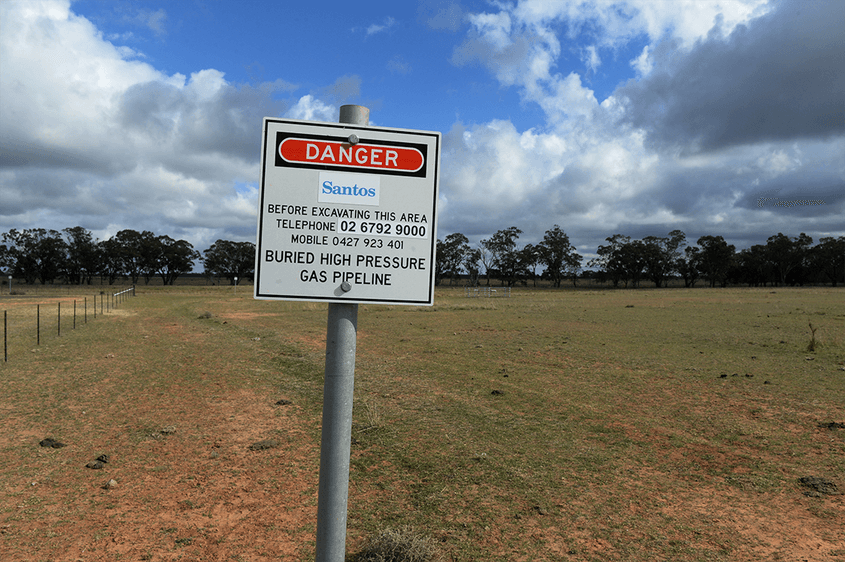
It was no accident that Labor waited until after the 2025 election to announce its support for the massive North West Shelf gas project, just as it was no accident that Labor waited until after the 2022 election to announce $1.9 billion worth of taxpayer subsidies for the Middle Arm gas project in Darwin. Labor keeps betting that voters will forgive and forget their support for fossil fuels expansion, but while that might work nationwide, it’s far less likely to work in the inner-city seats Labor is hanging on to by the skin of their teeth.
And then there’s Labor’s hostility to the idea of taxing gas exports, an idea supported by an overwhelming majority of Australians.
After years of being fed a steady diet of BS from the major parties and mainstream media about Australia’s gas shortage, Australian voters have figured out that the problem isn’t a shortage of gas but an excess of gas exports. And they are not happy to discover that not only is 80 per cent of our gas heading offshore, but that more than half of it was given away for free.
Even Pauline Hanson is hopping on the ‘tax gas’ bandwagon now, joining everyone from the Greens and David Pocock to Clive Palmer and Commonwealth Bank CEO Matt Comyn. Apart from Labor and the Coalition, it’s hard to find a soul who thinks it’s fair that builders always have to pay for bricks, bakers always have to pay for flour and that the gas industry should only have to pay for gas when it has a bumper year.
The gas industry wants to depict the tax gas cacophony as ‘anti fossil fuels’ but with Palmer and Hanson on board, that’s not biting. Likewise, some try to argue the push is anti-Labor but given that the campaign was kicked off by the ACTU, that’s a tough sell as well.
Which brings me back to why Albo seems so keen to sacrifice Labor’s inner-city seats.
The easiest way for the PM to stop the surge in One Nation spreading from disgruntled former Coalition voters into his Labor voting base would be to deliver on the ‘progressive patriotism’ he promised, put the interests of Australian taxpayers ahead of foreign-owned gas exporters, and slap a simple 25% tax on all gas exports.
It would raise an extra $350 million per week, increase domestic supply of gas, and push Australian gas prices down (as the only way to avoid an export tax is to divert supply from exports to the domestic market). To be clear, it’s not foreign customers who would pay more for our gas, it’s foreign gas companies that would make lower profits (hint: there is no premium on the world market for high tax Norwegian gas).
But instead of doing the easy, profitable, and popular thing, the Albanese Government will either bleed support to Pauline Hanson (especially if she embraces a gas export tax) or try to counter her right-wing populism with some anti-immigration rhetoric of its own. Either approach will likely cost Labor the slim majorities it holds in a growing number of its inner-city seats.
Pauline Hanson has spent 30 years telling Australians that they deserve better, that their governments are letting them down, and that they are mugs to think that the major parties put the interests of Australians first. And she has also spent 30 years blaming migrants, rather than those with actual power, for the genuine hardships faced by millions of Australians.
Taxing gas exports provides the Albanese Government with a once-in-a-generation opportunity to show Australians, be they regional Hanson voters or inner-city Green voters, that an Australian government really can stand up for them, get them a better deal, and in turn spend an extra $17 billion per year making Australian lives a little bit easier.
Or not.
In the more likely event that the Albanese Government remains supine before the foreign-owned gas companies, it won’t just be the outer suburbs where Labor will pay an electoral price. As the Farrer by-election result shows, there’s no such thing as a safe seat, and the fastest route from ‘major party’ to minor party is by ignoring what the majority of the population is saying.
Unfortunately, for Labor MPs, the Prime Minister has had so much feedback about the need for a gas tax on social media that he has literally turned off the comments. Putting your fingers in your ears is the riskiest political strategy of them all.
Richard Denniss is the co-CEO of The Australia Institute