Australians are grappling with soaring living costs, including the costs of climate change, so it’s pretty perverse that generous tax benefits have flowed to gas companies to undertake fracking in the Northern Territory with the intention of opening up vast new gasfields, propping up their finances as they inch towards commercial exploitation of the Beetaloo Basin.
There’s been lively recent public debate about getting more public revenue from gas exports, but another scheme has actually been quietly channelling millions into the industry with little to no scrutiny.
Last month, gas company Beetaloo Energy Australia announced it had received another $15 million handout under the Research and Development Tax Incentive (RDTI) for the 2024 financial year. To put this in context, its total expenditure on gas exploration in the 2024 calendar year was just over $12 million. Its available liquidity at the end of the most recent quarter was reported as less than $15 million, and drilling and fracking each well costs millions.
The company, formerly called Empire Energy, has NT government approval to drill 10 fracking wells and an agreement in place to sell this gas to the NT government. Extracting the gas requires drilling more than a kilometre and then more than a kilometre horizontally and fracking the deepest parts of the well, using huge volumes of water and generating waste water laced with metals.
Beetaloo Energy’s payments through RDTI have been substantial and growing in recent years.
The problem? The RDTI scheme is designed to support innovation, research and development in Australian business. It’s not supposed to subsidise resource exploration. The law is clear: “prospecting, exploring or drilling for minerals or petroleum,” including activities primarily aimed at discovering deposits or determining their size or quality, are not eligible.
On the face of it, it looks like Beetaloo Energy might be driving a drilling rig through a loophole in the law.
The company’s 2024 ASX statement said it had secured a $30 million loan from Macquarie that would “fund exploration, appraisal and development activities.” The loan was, the company said, equal to 80% of what they expected to receive under the RDTI rebates from 2024 and 2025.
So why is this gas company being given multi-million dollar tax handouts, despite the clear exclusion of gas exploration activities from eligibility under the scheme?
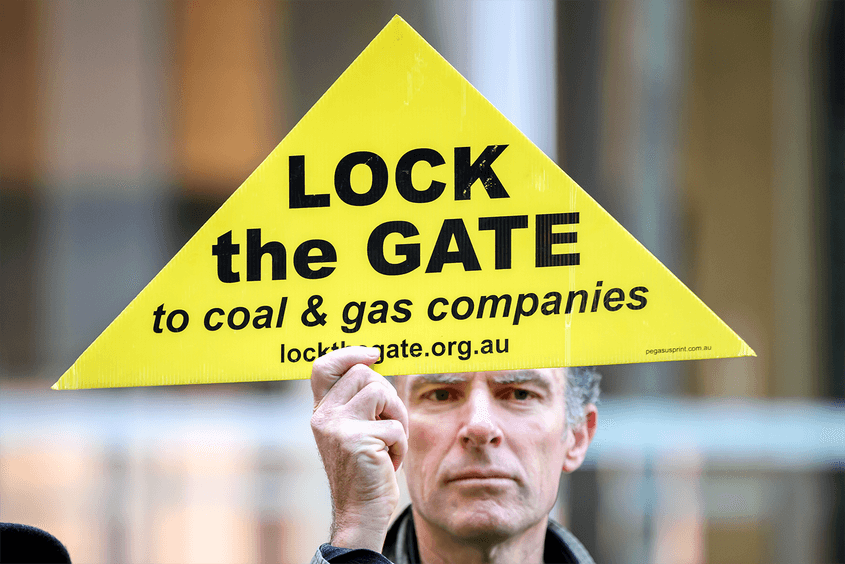
Lock the Gate Alliance and the Tax Justice Network Australia have asked this question repeatedly, including to the Board of Industry Innovation and Science Australia and other parties in November 2023, raising concerns that Beetaloo Energy may be improperly claiming R&D tax offsets.
A complaint to the Australian Taxation Office’s Tax Integrity Centre followed in February 2024. Despite repeated requests to the Department and the Minister for Industry and Science, including through Senate Estimates, tax privacy means the public can’t get answers. Officials have continued to point only to general compliance processes, without confirming any findings.
It may well be that Beetaloo Energy Australia’s claims are legitimate, but if that’s the case, the rules need tightening. A scheme designed to support innovation should not become a backdoor subsidy for the expansion of an established industry, especially not one that does so much environmental and economic harm by fuelling climate change and putting water resources at risk. The continued handouts to Beetaloo Energy are made worse by signals that further public support may be on the table.
Just weeks ago, Federal Resources Minister Madeleine King told journalists in Darwin there was “an opportunity” for the Federal government to back Beetaloo gas development by providing common-user infrastructure such as roads and access.
If true, this signals a departure in policy for the Albanese government, which has previously committed to not providing government finance to new coal and gas fields and specifically for fracking in the Beetaloo Basin.
“The Albanese Government has not provided, and has no plans to provide, public funding or financial support (such as underwriting, insurance, loans or equity) for the construction of pipeline infrastructure to deliver gas out of the Beetaloo sub-basin into the existing domestic pipeline network or to LNG export terminals. Investing in any such infrastructure would be a commercial decision for private sector investors.”
The Federal government must stick to this commitment. Public funds should be used to benefit the public, not to jeopardise water resources and unleash greenhouse gas pollution. If we’re not careful, our government could quietly provide the seed funding for widespread fracking in the NT that will do both.
Georgina Woods is the Acting National Coordinator of Lock the Gate Alliance