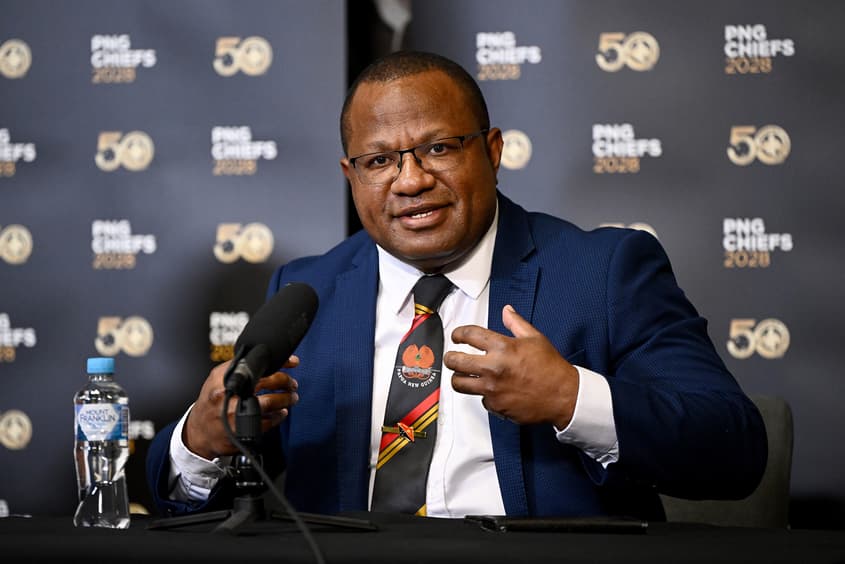
When the PNG Chiefs run out onto their home ground for the first time, Papua New Guinea, a country of a thousand tribal groups, will unite, brimming with national pride.
Away from the stadium, women may be bracing for the worst – the return home of drunk, angry and violent husbands who have gambled away the household budget.
PNG is one of the most dangerous countries in the world for women. Some 3.41 million PNG women experienced family violence last year. On current trends, it could reach eight million women by 2046.
There’s limited research on how family violence, alcohol, and betting interact with major sports events in PNG. But Australian studies show an uptick in DV cases during finals fever. Our Watch says on AFL grand final day, Victoria Police expect a 20 per cent spike, while on State of Origin nights, NSW has a 40 per cent rise.
Femili PNG, a one-stop shop providing emergency support, deals with around 50-75 new cases a month across Lae, Port Moresby and Goroka – some are linked to sports watching, drinking and gambling.
“When I was working in Lae, I used to see survivors who would come and tell us the husband has been drinking while watching NRL… afterwards he would come home and be abusive,” Femili PNG executive officer Elly Toimbo said.
“The husband would use all the money to do betting online… the wife would (question this) and that is when she is abused.”
There are fears Australia’s gambling culture is already taking hold in PNG – two men reportedly bet their wives on the outcome of a State of Origin match.
University of Papua New Guinea academic, Minetta Kakarere, sometimes has students sitting in her office with black eyes, unable to sit exams.
“(A student’s partner) slapped her and punched her head… he said, ‘Don’t try to show off just because your team won’,” Ms Kakarere said.
Limited police resources are a major issue. The UN recommends a police-to-population ratio of one officer for every 220 people. In PNG, there is one officer for every 1145 people.
Even if there are police available, it’s common for them not to have petrol to drive out and arrest perpetrators or rescue women, Ms Toimbo said.
DV survivors queue outside police stations seeking help from the force’s understaffed family and sexual violence unit, which has a meagre annual budget of $100,000, the ABC reports.
Meanwhile, no expense will be spared for star recruits like Connor Watson, Jarome Luai and Alex Johnston, who are set to pocket tax-free salaries and lucrative sponsorship deals. They’ll be living on a resort island far away from the dangerous streets of Port Moresby.
Anthony Albanese, who has been gushing the Chiefs’ growing roster with his PNG counterpart, has committed the Australian government to a $600 million stake in the team.
“I can’t think of any aid and assistance in our region in the Pacific – and we’re part of the Pacific family – that will be more important than support for the PNG Chiefs,” Mr Albanese said.
Behind the scenes, foreign affairs officials have raised alarm over a lack of transparency.
ANU lecturer Michelle Nayahamui Rooney questions whether Canberra’s financial contribution is “sports diplomacy or a gendered cultural war?”
Perhaps the prime minister needs to take off his Rabbitohs scarf and visit some PNG women’s shelters on his next bilateral visit. He’ll be guaranteed to hear the most gut-wrenching testimony.
On assignment to Port Moresby in 2015 and a Lae visit accompanying Rosie Batty in 2017 – I interviewed PNG women who arrived at shelters with broken bones and the clothes on their backs.
They spoke of the cultural practice of bride price (money paid by a groom’s family to the bride’s family) that allows men to feel like they own their wives. I met a survivor who had lost three babies from bashings while pregnant, a teenage girl raped by her father and case workers who helped an 11-year-old give birth to a rape baby and then return to primary school.
The PNG government recently released a new ten-year gender violence strategy, which aims to improve services for survivors and conviction rates. The government flagged an annual budget of 180 million kina ($58 million), 60 per cent government-funded and the rest from international donors and the private sector. Incidentally, the previous strategy failed to make a dent because “annual budgets were delayed or underspent”.
While the NRL should be commended for its Voice Against Violence training program in Papua New Guinea, the PNG Chiefs’ debut is an opportunity for the league to take a greater leadership role as part of its social licence. (Voice Against Violence reached 500 people in PNG in 2019, but the NRL declined to provide statistics on total participants since 2015 or future plans.)
Public education campaigns on how to regulate emotions and be responsible sports fans aren’t just a measure to protect women – they’re an investment in public safety amid reports of spectators invading pitches, public brawls and vehicles being torched.
“People here worship the (players) like idols, they just hold them so high up… close to God,” Ms Kakarere said.
“By showing positive leadership, athletes can influence attitudes, promote respect, and contribute to building safer, stronger communities.”
Lisa Martin won the 2016 Australian Council for International Development Media Award for her reporting on PNG’s domestic violence crisis and hiked the Kokoda Trail to raise money for DV survivors.
AUSTRALIA DV SUPPORT
- 1800 RESPECT (1800 737 732)
- Lifeline 13 11 14
- Men’s Referral Service 1300 766 491
PNG DV SUPPORT
- 24/7 counselling is available on the toll-free 1-Tok Kaunselin Helpim Lain on 7150 8000
- FemiliPNG