When Australians think about climate policy, they probably think of the solar panels and wind turbines that are driving down emissions—and prices—in the electricity sector. But many of Australia’s biggest greenhouse gas polluters are in sectors like mining, metals, and gas production.
The Safeguard Mechanism is the Albanese Government’s key policy tool to tackle emissions from around 200 high-emitting facilities in these industries, which account for around 30% of Australia’s greenhouse gas emissions.
However, our new report for The Australia Institute shows that the policy is failing to drive emissions reductions across these industries, because they’re allowed to use unlimited amounts of so-called “offsets”, instead of cutting their own emissions.
Here’s how the scheme functions. Each facility is allocated an annual “baseline”—a nominal limit on emissions the facility is allowed to produce in that year. If a facility’s “net” emissions are above its baseline, then they have to pay a penalty. The baselines decline each year, in theory providing a stronger incentive each year to cut emissions. But—and it’s a huge but—where a facility’s actual (“gross”) emissions exceed its annual baseline, its operator can avoid penalties by buying carbon credits to “offset” the excess emissions, bringing their “net” emissions (actual emissions minus offsets) to within their baseline.
That’s a big problem, because, as we’ll show in detail in part two of our series on the Safeguard Mechanism, offsetting in general has been scientifically discredited, and the main types of carbon credits used as offsets in Australia’s scheme have major flaws.
Many credits are not delivering real, additional emissions reductions at all, and most are simply not capable of undoing the full harm to the climate system caused by extracting and burning fossil fuels. The upshot is that when a coal mining company or a gas producer emits greenhouse gases above its baseline but reduces its net emissions on paper by using so-called “offsets”, harmful emissions are still entering the atmosphere without being cancelled out. This results in higher overall emissions, leading to worse climate impacts.
How dodgy offsets undermine decarbonisation
Because so many offsets are dodgy, they’re cheap. And because facilities regulated by the Safeguard Mechanism can use an unlimited amount, two-thirds of them have opted to use offsets to meet their baselines instead of cutting those emissions on-site, which is often more expensive.
The BHP Files powerfully illustrate this logic: BHP had grand plans to electrify the trucks and trains used to transport the iron ore mined in its Pilbara operations and to supply these with new renewable energy, but it quietly decided that these investments were not worth it. The Safeguard Mechanism should be incentivising precisely those kinds of decarbonisation projects, but instead, BHP opted to spend reportedly less than $9 million (a tiny amount for the world’s biggest resources company) buying offsets to comply with the scheme, because it could. (The hundreds of millions of dollars BHP received in fuel tax credits—a massive fossil fuel subsidy— further undermined its incentive to decarbonise).
Fossil fuels are the big winners
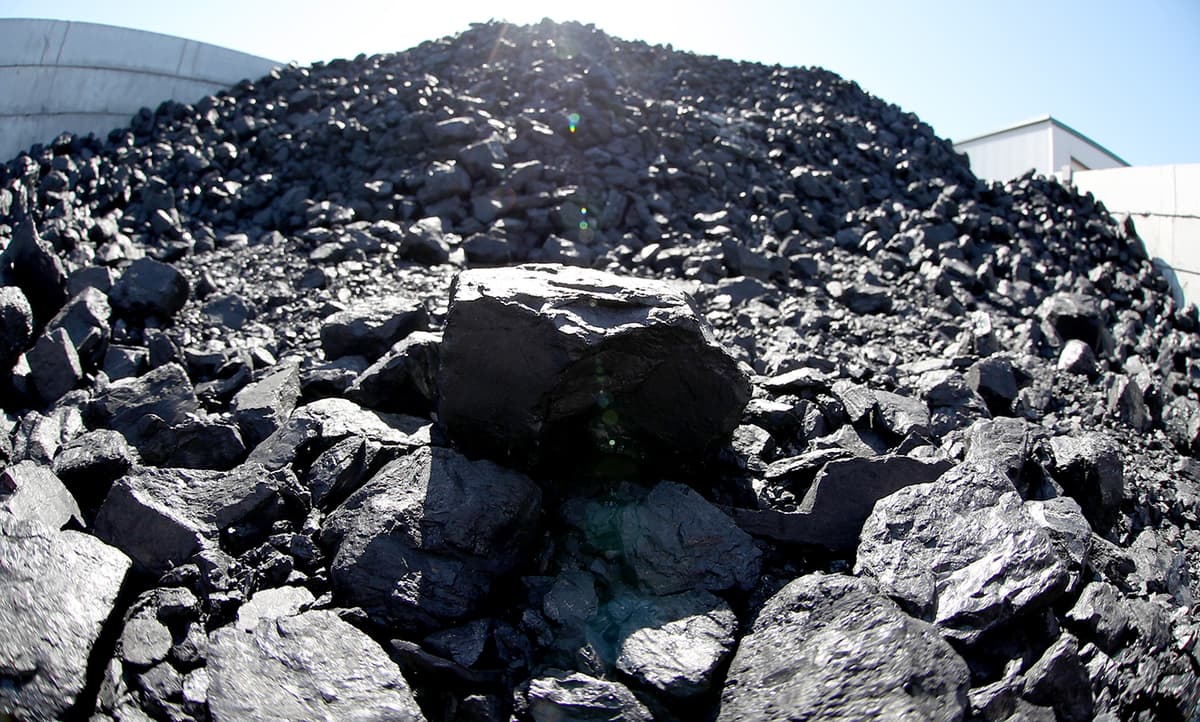
But it’s not just BHP. In fact, the fossil fuel industry is the biggest beneficiary of this offsets loophole. Fossil fuel companies have used more than two-thirds of the offsets that have been used for compliance under the Albanese Government’s reformed Safeguard Mechanism since it commenced in 2023.
Worse, emissions from some fossil fuel facilities regulated by the scheme have even grown during this time. And the scheme has not stopped the Albanese Government from approving 36 new coal and gas projects, extensions and expansions since it took office.
In fact, the existence of the scheme seems to have indirectly made it easier to approve coal and gas projects. For example, the Western Australian state government scrapped the requirement for proponents of proposed fossil fuel projects to assess the impact of their emissions on the dubious ground that the Safeguard Mechanism deals with those emissions.
By enabling fossil fuel expansion, the Safeguard Mechanism—combined with Australia’s extraordinarily generous fossil fuel subsidies and pathetic environmental impact assessment processes for fossil fuel projects—places Australia in breach of international law and contradicts the Government’s international commitment to transition away from fossil fuels.
In short, the Safeguard Mechanism is safeguarding the fossil fuel industry’s expansion plans; it’s not securing the real decarbonisation that Australia needs, and it’s not safeguarding Australians from the devastating effects of climate change.
Fergus Green and Frances Medlock are the authors of the Australia Institute’s new report, ‘Safeguarding the Fossil Fuel Industry? How Carbon Offsetting Undermines the Safeguard Mechanism’.
Dr Fergus Green is an Associate Professor in the Department of Political Science and School of Public Policy, University College London and an Honorary Senior Fellow at the Melbourne Law School, University of Melbourne.
Frances Medlock is a policy and law reform lawyer currently undertaking a Masters in Climate Change Policy & Politics in the Department of Political Science and School of Public Policy, University College London.