Professor Anne Poelina has spent her life caring for her living ancestor, the Mardoowarra Fitzroy River of Life.
From when she was young, the Nyikina Warrwa and Warlungurru traditional owner learned “from Country and from Elders how to read the sky and the ground, the movement of insects and birds, the behaviour of the boab trees, the colour and sound of the water.”
But today, the seasons and weather patterns that make the Kimberley so remarkable are off kilter.
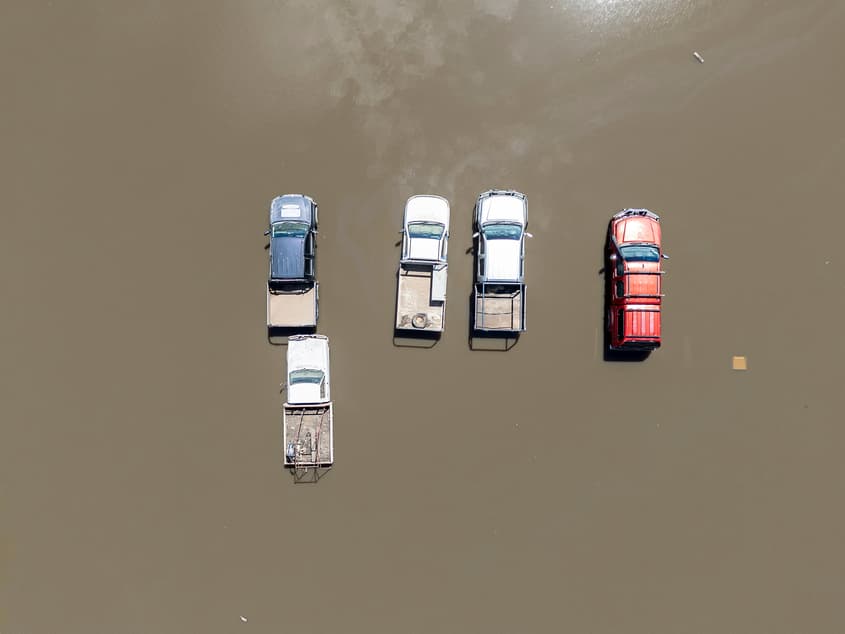
In 2023, catastrophic flooding submerged Anne’s home beneath metres of water. Homes, sacred sites, gardens and the graves of ancestors were inundated. Families were displaced from Country.
Anne knows this was not simply a “natural disaster”. The hard truth? It was a foreseeable consequence of a warming climate.
“I carry deep grief watching this disruption unfold”, says Anne, the globally recognised Indigenous leader, researcher, and advocate for living waters.
The flooding displaced Anne and her family for nearly three years, and she’s only now beginning flood recovery and relocating back to her community.
“What concerns me most is the intergenerational loss of cultural knowledge. So much of our knowledge is not written down. It lives through ceremony, story, songlines and being physically present on Country with Elders. Every year communities remain displaced from Country is another year where knowledge risks being lost forever.”
More than 3,000 kilometres away, Brendon Donohue has also experienced the fear and devastation of climate disruption.
For ten long days, Brendon, who is blind, was trapped alone in his social housing apartment when floodwaters swept through Brisbane in 2022.
“The lifts, intercom and exits stopped working. I knew that the street was flooded and cars were underwater.”
“I remember feeling terrified because I had no idea how I would safely leave the building if conditions worsened. I felt isolated, confused and unsafe.”
Anne and Brendon live on opposite sides of the country, and their lives are very different. Yet they are both part of a group of ten Australians who this week have taken an extraordinary step.
Represented by Environment Justice Australia, the Human Rights Law Centre and Earthjustice, these 10 Australians have filed a human rights claim against the Australian government before the United Nations Human Rights Committee. This “Hard Truths case” argues the government is failing to protect them from foreseeable climate harm.
Their experiences reveal a reality that many Australians know too well.
Climate disruption is here, it’s now, and it’s getting worse.
Each of these ten Australians has been profoundly impacted by climate harm. They’ve been trapped in floods like Brendon, lost homes and loved ones to bushfires, been hospitalised from extreme heat, and, like Anne, some are grieving Country and cultural practices disrupted by flooding, rising seas, extreme heat, algal blooms and marine heatwaves.
Another hard truth? While Australians deal with consequences, the federal government is adding fuel to the fire and making the climate problem worse.
The Albanese Government generally tries to get climate claps for renewables – in its billboards and bid to host COP31, its celebratory social media posts and radio sound bites.
But that same government is actively approving new polluting coal mines and gas expansions, most of it for export.
Australia is currently one of the largest exporters of coal and gas in the world.
In fact, around 80% of the coal and gas produced in Australia leaves our shores to be burned overseas – and with it, political and legal accountability.
Because this coal and gas is for export, the Albanese government excludes the resulting climate pollution from our national climate targets and policies.
As if it doesn’t count. As if climate pollution shipped “away” is someone else’s problem. As if climate change recognises national borders.
But we all share the same skies. The atmosphere does not distinguish between a tonne of climate pollution released in Australia and a tonne released overseas from Australian coal or gas.
Anne and Brendon know this with devastating clarity. That pollution doesn’t stay overseas. It comes back to us as floods, fires, algal blooms and extreme heat.
Another hard truth: Australia currently has no policy to reduce or limit coal and gas for export.
The Safeguard Mechanism, the Albanese Government likes to spruik as a policy for reducing climate pollution, is more of a smokescreen than a climate policy. It only covers around 220 industrial facilities collectively responsible for just under 30% of the climate pollution produced every year in Australia. And, importantly, it counts none of the coal and gas Australia produces for export.
The Hard Truths case our clients have filed this week argues that by supporting coal and gas companies, the Albanese Government is failing to protect Australians from foreseeable climate harm.
This is the world’s first case brought against a state since the International Court of Justice ruled in 2025 that states have clear legal obligations to use all means at their disposal to prevent significant harm to the climate system and protect people from climate-related impacts. Our clients say the Albanese Government must take this duty seriously.
By continuing to approve and export coal and gas pollution, Anne, Brendon, and their fellow claimants say the Albanese Government is breaching their rights to life, family and home, and culture.
For too long, Australia has pretended that the pollution from its exported coal and gas is someone else’s responsibility. But the hard truth is that the Albanese Government has the power to act now to protect Australians like Anne and Brendon from worsening climate devastation.
The ten Australians bringing this case are asking a simple question: if governments know the harm these projects are causing, and have the power to stop making it worse, what excuse is left?
Hannah White is a Senior Lawyer at Environmental Justice Australia. She specialises in climate change and human rights law and works with communities to protect their human rights from climate harm.
Jack McLean is a Senior Lawyer at the Human Rights Law Centre where he specialises in climate and environmental justice.