Advanced search
The Point - home
DonateSubscribe
HomeWhat's NewOpinionOff the ChartsExplainersFactcheckAbout Us
The Point — home
DonateSubscribe
The Point — home
Advanced search
  • Home
  • What's New
  • Opinion
  • Off the Charts
  • Explainers
  • Factcheck
  • About Us
DonateSubscribe
Subscribe
  • Home
  • What's New
  • Opinion
  • Off the Charts
  • Explainers
  • Factcheck
  • About Us
The Point - home
Privacy PolicySitemapComplaints & CorrectionsNewsletter

The Point recognises the ancestral connections and custodianship of Traditional Owners throughout Australia. We pay respect to Aboriginal and Torres Strait Islander cultures and to Elders past and present.

©2025–2026 The Point, an initiative of The Australia Institute

OPINION

Australia’s councils back call for fossil fuel exporters to pay climate costs instead of Aussie ratepayers 

Australian ratepayers had a big win yesterday as Australia’s 537 local councils agreed to call on the Albanese government to impose a national levy on coal, oil and gas companies to help them cope with escalating climate damage. 

Mark Ogge

Mark Ogge

Thu 25 Jun 2026 13.48 AEST

Economy
Australia’s councils back call for fossil fuel exporters to pay climate costs instead of Aussie ratepayers 

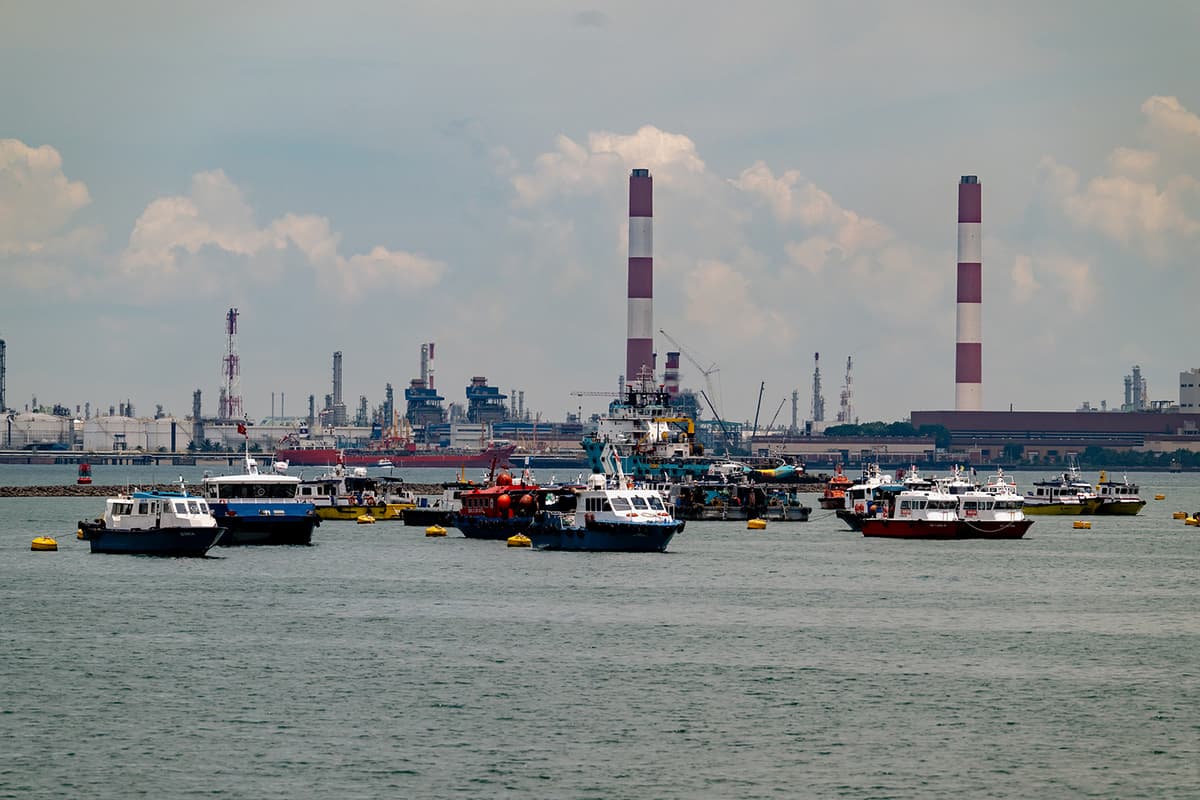
Photo: AAP Image/Tom White

Republish this article

This article is licensed under Creative Commons — Attribution-NoDerivatives 4.0 International (CC BY-ND 4.0).

Republishing guidelines

  • You must credit the author(s) and The Point.
  • You must link back to the original article.
  • You may not edit or modify the article content.
  • Images may be subject to separate copyright and are not included in this licence.

Australian ratepayers had a big win yesterday as Australia’s 537 local councils agreed to call on the Albanese government to impose a national levy on coal, oil and gas companies to help them cope with escalating climate damage. 

The motion, put forward by the City of Sydney at the National General Assembly of Australian local governments, for a climate compensation to be funded by a levy on coal and gas exports was formerly adopted unopposed. 

If the Albanese government imposes the levy, it will shift the cost of climate change from ordinary Australian ratepayers to the foreign-owned fossil fuel exporters, causing the damage.  

The Australia Institute has long advocated for a  levy on fossil fuel exports to make the fossil fuel exporters pay for the harms it has caused and raise up to $100 billion every year.  

The revenue raised would be an enormous boost to local councils and others currently bearing the costs of climate change, including emergency services, property owners and Australian taxpayers generally. 

The levy would have no impact on energy prices in Australia because the government can impose it only on exports. The levy is also sound economic management in line with the principle that polluters should pay for the damage they cause, not the people impacted by the pollution. 

The case is also boosted by the lack of taxes and royalties paid by many of the foreign owned energy companies exporting Australia coal and gas. Gas exports worth $170 billion paid no royalties and no PRRT over the last 4 years. 

While $100 billion would an enormous help to the Australian community, it is still significantly less than the true social and economic cost of Australia’s fossil exports. For instance, if the levy is set at the current rate of the EU trading scheme (around $150 AUD per tonne of carbon) it would raise around $150 billion annually. 

Mark Ogge is Principal Advisor at The Australia Institute.

Advertisement

Related Articles

OPINION

Six ways to save the Commonwealth billions, fairly and efficiently

By Matt Grudnoff & Greg Jericho

If the government wants to pursue significant spending cuts, this piece proposes six options that help achieve short term equity and long run efficiency goals. Together, they could save between $14 billion and $62 billion.

Economy
Six ways to save the Commonwealth billions, fairly and efficiently

OPINION

Who gets to decide what a 'realistic' energy transition is?

By Ray Wills & Peter Newman

There is a difference between what Australia should do and what our most influential businesses would prefer we don’t do. Our energy debate too often blurs the two by insisting on being ‘realistic’.

ClimateEconomy
Who gets to decide what a 'realistic' energy transition is?

OPINION

There's other ways to fight inflation than making mortgage holders pay

By David Shoebridge

You don’t get out of an economic crisis like the one we’re in through austerity. Cutting government services will only result in the people who can least afford it, falling further and further behind.

Economy
There's other ways to fight inflation than making mortgage holders pay

OPINION

When essential workers can't afford to live in our communities, everyone pays the price

By Kasy Chambers

There was a time when having a decent job meant you could afford a decent home. You might not have been rich, but if you worked hard, you could pay the rent, cover the bills, and have something left over. For millions of Australians, that has fallen apart.

EconomySociety & Inequality
When essential workers can't afford to live in our communities, everyone pays the price