A new analysis from InfluenceMap documents something most Australians already sense: the gas industry didn’t just oppose a fairer tax on exports. It ran a coordinated campaign to shape the terms of the debate, and it has – to date – largely succeeded.
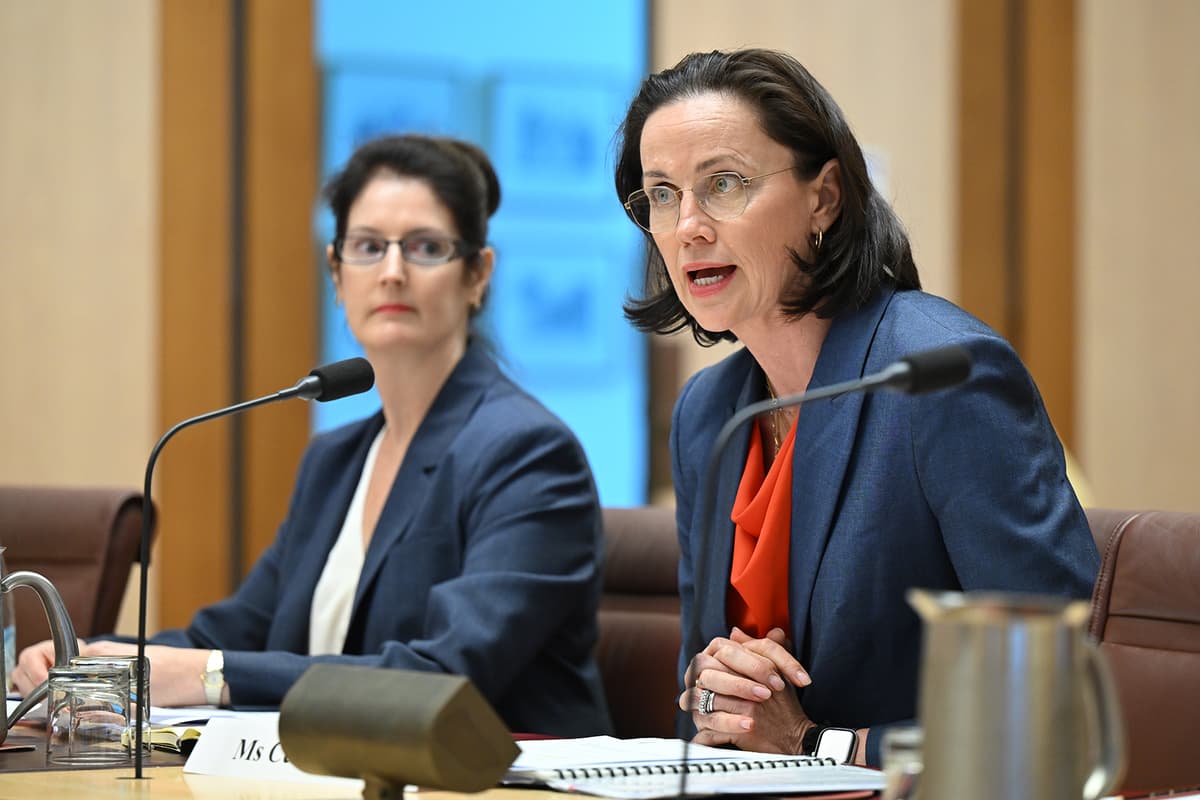
The analysis examined 13 companies and industry associations that appeared before the Senate’s Select Committee on the Taxation of Gas Resources, convened in April to scrutinise a proposed 25 per cent flat tax on LNG exports. Every single one opposed the tax. Not one advocated for policy aligned with IPCC guidance to limit global warming to 1.5 degrees. And 92 per cent deployed what InfluenceMap calls the “Energy Security and Affordability” narrative – the same playbook used to oppose climate action during every geopolitical crisis for two decades. This time, the crisis was Iran. 11 of the 13 entities explicitly referenced the conflict to justify expanding gas investment.
The coordination was overt. Shell disclosed contributing approximately $1 million to an Australian Energy Producers (AEP) campaign against the tax. Chevron, Woodside, Santos and INPEX acknowledged contributing similar amounts. Santos confirmed that it attended Treasurer-hosted events and engaged Treasury representatives directly.
Then there is the central talking point parroted throughout: 54 per cent of inquiry entities cited an AEP figure claiming the industry paid $22 billion in tax and royalties in 2024-25 – a figure challenged throughout the inquiry for accuracy. The Prime Minister cited it. AEP then quoted the Prime Minister, in its own testimony, to argue against the tax. That is not policy debate. That is an echo chamber that has absorbed the top office in the country.
The gas tax had every marker of a policy whose time had come. Australia Institute polling of 1,502 voters found three in five Australians – 61 per cent – support the levy, across Labor, Coalition, Greens and One Nation voters alike. Australia Institute modelling showed it could raise $17 billion annually, with every week’s delay costing the public $350 million in foregone revenue.
Since July 2022, Australia has missed out on more than $72 billion by failing to place a 25 per cent tax on gas exports. That is not a rounding error. That is a choice, made repeatedly, on behalf of an industry that lobbied for it. The crossbench supported the tax. The ACTU was on board. The Commonwealth Bank endorsed it.
The Prime Minister’s response, delivered at a Chamber of Minerals and Energy event, was to rule out taxing existing contracts, calling it the “worst possible time” to jeopardise trading relationships. The gas lobby got what it went in for.
This is not a policy failure. It is a structural one, and the gas tax is only the most visible symptom.
In November 2025, the Albanese Government signed the Belém Declaration, joining more than 80 countries in committing to transition away from fossil fuels. The government then proceeded to approve its 35th and 36th fossil fuel developments – including the North-West Gas shelf expansion, which adds 7.7 million tonnes to Australia’s annual Scope 1 emissions. That entirely erases the 7 million tonnes in net emissions reductions the Safeguard Mechanism achieved in 2024-25.
That Safeguard result deserves scrutiny. On-site emissions from covered facilities fell just 2.3 per cent. The headline net reduction came not from cutting pollution at the source, but from the purchase of Australian Carbon Credit Units documented by ANU researchers as crediting reductions that would have occurred anyway. The recent announcement that the Great Koala National Park will only proceed on the condition of ACCU offsets further embeds this dodgy offset market. New fossil fuel approvals keep coming on the basis that paper reductions will occur elsewhere. They largely aren’t.
Meanwhile, Australia Institute research found governments handed $16.3 billion in fossil fuel subsidies in 2025-26 – growing faster than the NDIS, working out to $31,000 per minute. More than half of Australia’s exported gas attracts zero royalties and zero PRRT. The Japanese government collects more tax from Australian gas exports than the Australian government does.
None of this is secret. The submissions are public. Shell’s campaign contribution was disclosed to a Senate committee. The echo chamber between industry and the Prime Minister’s office is documented, quote by quote. What is remarkable is not that it happened, but that it worked so cleanly against such overwhelming public support for change.
So, the Australia Institute is taking it to the people: a national plebiscite, a direct public vote on whether Australia should introduce a 25 per cent tax on gas exports. The 2017 marriage equality postal survey showed what happens when Australians are given a direct say – they vote yes, and parliament follows.
The question is simple: should the Australian Parliament introduce a 25% tax on Australia’s gas exports?
Right now, the evidence suggests our government is answering that question very differently to the Australian people.
Louise Morris is an Advocate at the Australia Institute.