Next week, more than 700 delegates will fill Melbourne’s Melbourne Convention and Exhibition Centre (MCEC) for the Carbon Capture APAC Summit. The region’s fossil fuel industry will once again talk up carbon capture and storage (CCS) as the technology that lets us keep burning coal and gas, while still hitting our climate targets.
It’s the second time this year Melbourne has hosted a CCS spruik fest.
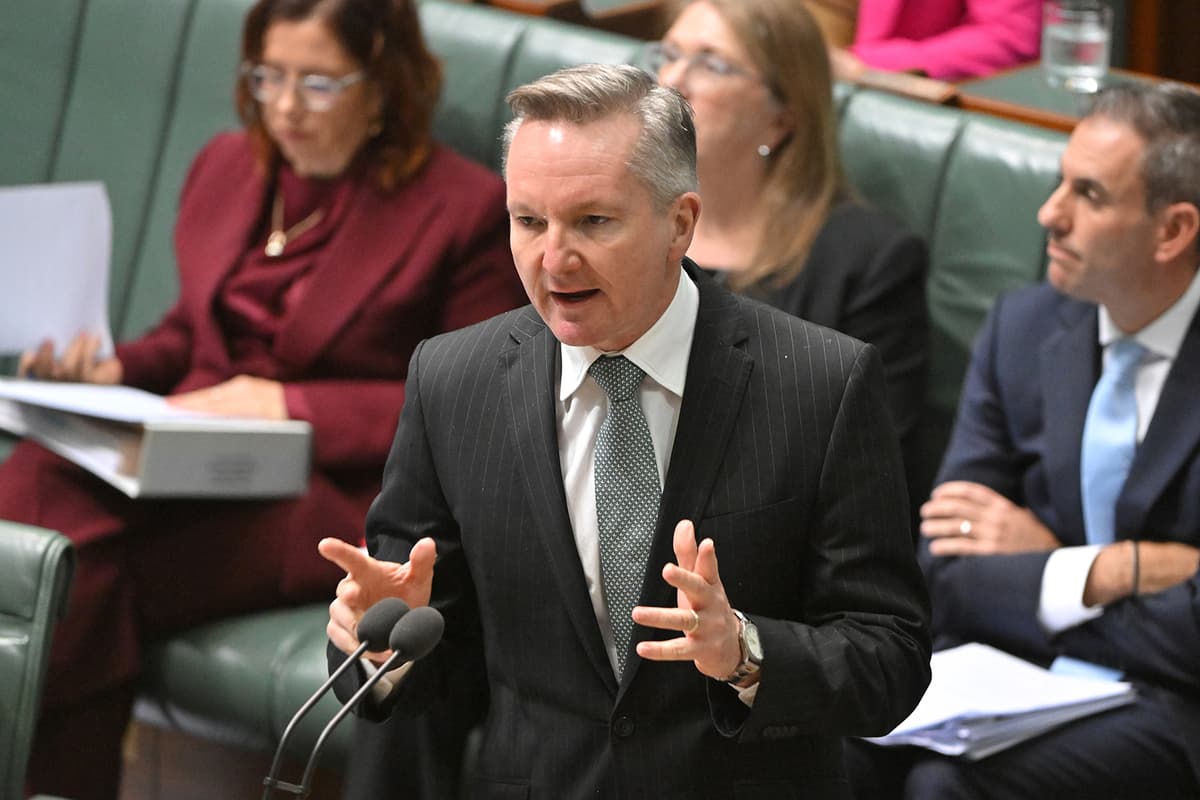
Back in February, the CO2CRC CCS Symposium gathered under the banner ‘confronting energy realities’, where Resources Minister Madeline King told the room that gas needs CCS in order to reach net zero.
There’s just one problem. The technology doesn’t work anything close to the scale its boosters need it to, and what little of it exists only survives on heavy taxpayer subsidies.
That’s the conclusion of a major new investigation, Carbon Captured, published this week by ProPublica and Drilled. It traces decades of oil industry-funded university research into climate “solutions” that were designed, from the outset, to let the public keep using oil and gas. The investigation found that boosters of carbon capture and storage have ignored evidence of the technology’s limitations, or overstated its potential, and in doing so, convinced the world that it could be effective.
The numbers in the companion piece, Why Carbon Capture Can’t Conceivably Solve Climate Change, are worth sitting with.
Back in 2008, the International Energy Agency projected that to stave off dangerous warming, the world would need to be burying around 1.6 billion tonnes of CO2 a year by 2025. We are nowhere close. Right now, the world is permanently burying less CO2 than a single large power plant emits in a year. Over that same period, solar power became the energy technology that actually thrived, while carbon capture and storage remained elusive, doing precisely what the modellers said it couldn’t.
None of this will surprise anyone who has followed The Australia Institute’s work on this, or the work of analysts who have been sounding this alarm for years. Climate and energy analyst Ketan Joshi has been tracking the gap between the promises of CCS and its reality in his annual CCS updates since 2022, and his findings anticipate much of what the ProPublica and Drilled investigation has reported.
Joshi’s analysis of the Global CCS Institute’s own pipeline data shows operational capacity has consistently landed at a small fraction of what earlier project timelines promised, while the gap between the International Energy Agency’s net zero scenarios and what CCS has delivered keeps widening, rather than closing.
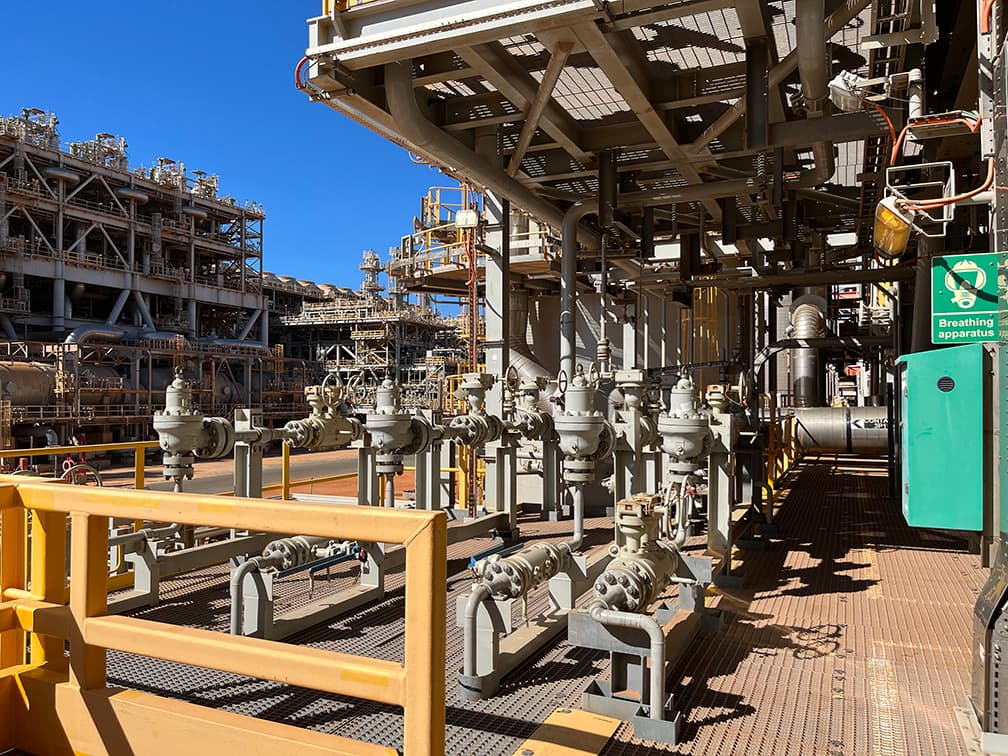
He has also gone through Chevron’s own environmental performance reports for Gorgon and found that in 2023-24, of the 5.3 megatonnes of CO2 the project removed from its gas stream, only 1.6 megatonnes made it underground. The rest was vented into the atmosphere. Since the project began operating seven years ago, roughly two thirds of all the carbon dioxide it has ‘removed for injection’ has ended up in the atmosphere anyway, all while Chevron buys offsets to paper over the shortfall.
We’ve been calling CCS a boondoggle and a scam for years, and the evidence keeps piling up.
ZeroGen, the $4.3 billion “clean coal” flagship in Queensland, collapsed in 2011, having sequestered nothing, at a cost of more than $100 million to taxpayers. Chevron’s Gorgon project was supposed to capture 80 per cent of its reservoir CO2. It has run at a fraction of that for years, with no penalty for missing its target. More than twenty years of sunk costs into Australia’s CCS experiment, and we still have nothing resembling the industry we were promised.
And when something does go wrong, it’s the public who wears the risk. Under Australia’s CCS legislation, a company’s liability for its buried carbon doesn’t last forever. Once a project closes and passes a 15-year monitoring period, if the regulator is satisfied the site is stable, liability transfers to the Commonwealth, meaning taxpayers. If the company no longer exists by then, the Commonwealth simply inherits the risk, the costs and the responsibility for monitoring an abandoned CCS dump. Companies bank the credit and the subsidies now. Any leak or failure decades from now becomes ours to manage and pay for into the future.
What we do have is a reliable mechanism for making dirty projects look clean on paper. Santos’s Barossa gas field, one of the most emissions-intensive projects ever approved in Australia, won approval partly on the promise that carbon offsets would cover what its own capture equipment can’t. Santos isn’t only buying those offsets either. It’s positioned to generate and sell its own, for carbon it should have been capturing in the first place. That’s the offset system in a nutshell: a mechanism engineered by the very companies whose emissions it’s meant to cancel out, the same integrity problem running through the ACCU scheme, where credits for projects that would likely have gone ahead anyway wave through new fossil fuel developments.
This is the throughline connecting a ProPublica investigation to two CCS spruiking conferences held in Melbourne this year alone. Carbon capture and carbon offsets are the same trick in different costumes: mechanisms that let governments claim climate progress and let fossil fuel companies claim subsidies and social licence to expand, all without reducing what gets burned. When Minister King tells CCS speculators that gas needs CCS technology to reach net zero, she’s repeating an industry line that decades of failure have already disproven.
None of this is an argument for a better-designed CCS scheme. It’s an argument for a fossil fuel phase-out.
The Australia Institute’s position has been consistent: stop approving new coal and gas projects rather than waving them through on the promise that unproven technology will bury the consequences later, and stop subsidising these polluting scams.
Woodside’s Browse gas development makes the point well. Developers openly acknowledge the project needs carbon capture and storage, and offsets bolted on just to manage its unusually high CO2 content, and a project that depends on CCS and offsets to be viable shouldn’t be approved in the first place.
Whatever happens to projects already given the green light, one line should hold firm: not another cent of public money, whether through grants, tax concessions or ACCU offset credits, should flow to carbon dumping CCS.
So, as APAC’s CCS industry gathers in Melbourne – again – to talk up bankable projects, subsidies, social license and regional cooperation, it’s worth asking a simple question: bankable for whom? The public has funded this technology for more than two decades with nothing to show for it, and will inherit the liability once these projects close or fail. The fossil fuel industry, meanwhile, has banked exactly what it wanted all along: permission to keep drilling.
Louise Morris is an advocate at the Australia Institute