A ground breaking report from the 1st Conference on Transitioning Away from Fossil Fuels was launched on 23rd June during Climate Action Week in London. The 176 page report is the final outcome of a pivotal climate conference held at Santa Marta, Colombia in April this year.
Australia’s Climate Change Minister, Chris Bowen, may be sweating as he reads it because this year at *COP31 he will have to deal with the turmoil Santa Marta has caused. [*Explainer: what is a COP?]
Bowen brokered a win out of the ashes after he lost his bid to host the 2026 COP31 global climate conference in Australia. Instead he wrangled the high profile job of President of Negotiations at the summit…in Turkey.
This outcome was one of two unusual events at the COP30 in Belém, Brazil last year.
The second event will test Minister Bowen’s negotiating skills: it almost brought the Belém conference to a disastrous conclusion; escalated concerns about the clandestine role petrostates play in negotiations at the COPs and was instrumental in creating the Santa Marta meeting as a backlash against inaction on phasing out fossil fuels.
It’s worth reflecting on how serious this second event was.
Timeline of a crisis at COP30
An apparent back room deal shocked many attendees when the finalised communique presented to the concluding plenary at COP30 failed to reference a phase out of fossil fuels, even though previously agreed versions had included those words.
Shock became anger when the COP30 President, André Corrêa do Lago, gavelled the final wording without checking the conference floor to see if there were objections. Under COP rules Presidents must hear any nation’s objections before bringing down a gavel that signifies all parties are in agreement.
But Colombia led other nations in a concerted rebuttal of the decision saying they had wanted to raise an objection but because the President had not ‘seen’ them they refused to accept the fall of his gavel. You can watch Daniela Durán González, Colombia’s negotiator, launch into two fiery objections as events unfold in the official video of the meeting from about 59:00 through to 1:07:00 when the President adjourns proceedings.
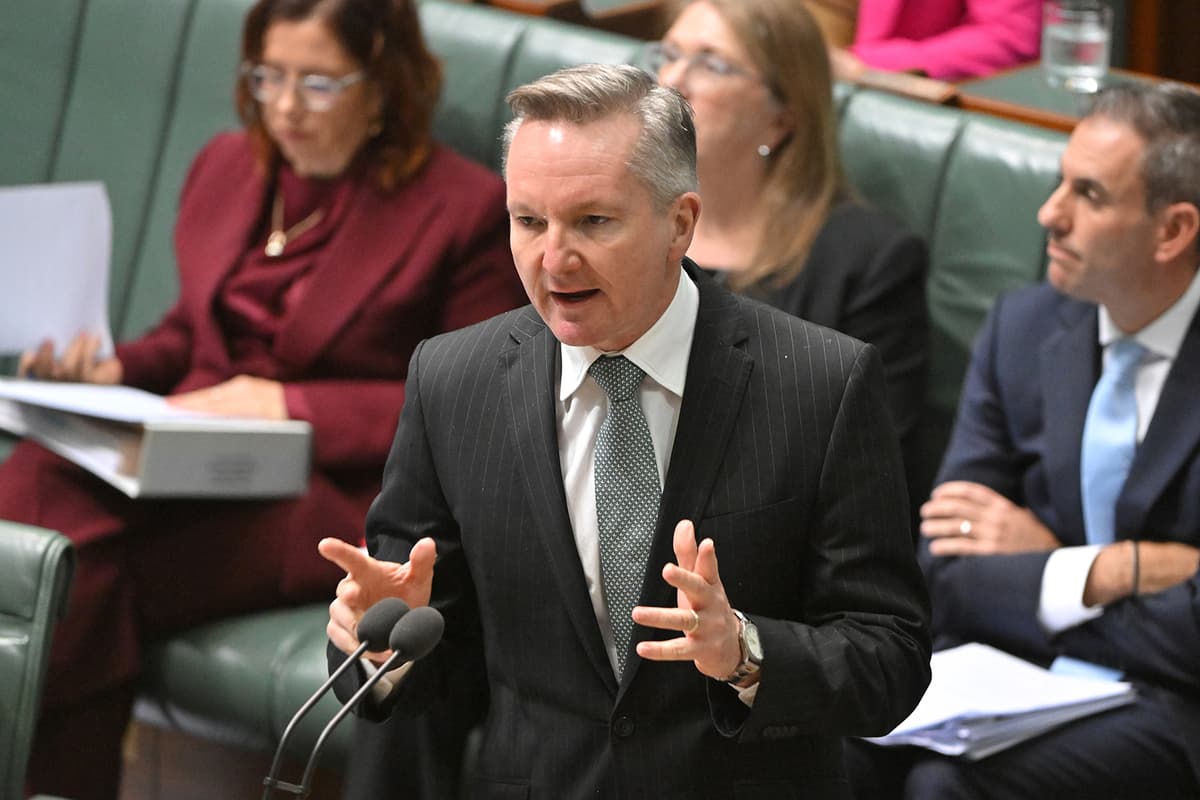
Minister Bowen was seated in the plenary when this happened……
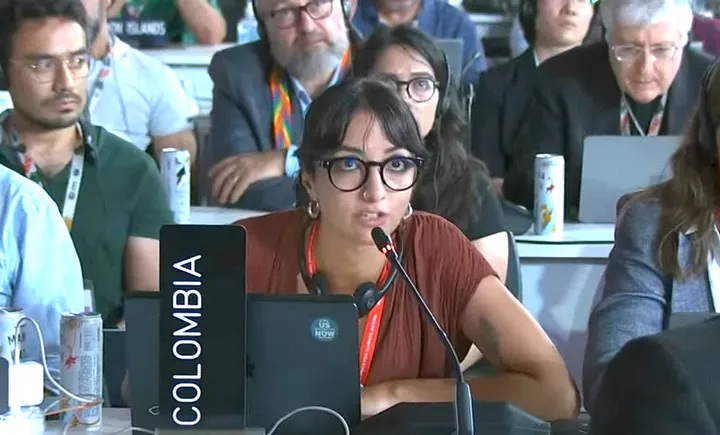
“I’m sorry Mr President, but Colombia objects.” Fiery rebuttal at COP30 from Colombia’s negotiator, Daniela Durán González, that closed down the conference for over an hour [from the official video of COP30’s final plenary]
All major decisions at COPs must be unanimously agreed upon so Colombia’s objection, direct from the floor of the final plenary, had the potential to rout the entire 13 day conference.
After halting proceedings for over an hour President do Lago announced that the communique would stand without mention of a phase out of fossil fuels. As in a court of law, once the gavel falls no changes are accepted. But that was not the end of the revolt.
Breakaway Belém Declaration emerges
At a highly charged press briefing (video) at COP30 a deeply frustrated breakaway group of countries, led by Colombia and the Netherlands, released the Belém Declaration on the Transition Away from Fossil Fuels and announced they were planning a corrective conference in Santa Marta, Colombia, in April 2026, to be called the First International Conference on Transitioning Away from Fossil Fuels.
Initially supported by 24 countries, including Australia, the conference happened in late April this year. Participation increased to 57 countries, numerous states and cities, indigenous peoples and over 400 academics — 1500 people in all, representing approximately a third of global GDP. The conference endorsed a raft of hard hitting plans aimed at phasing out fossil fuels that launched in London this week.
Bowen did not attend Santa Marta, why not?
Chris Bowen was notably absent from Santa Marta. One must ask why, especially as he signed Australia up for the Colombian gathering.
Allegedly, he chose to not attend because he was dealing with a fossil fuel crisis in Australia caused by the closure of the Strait of Hormuz. But was this a ploy to avoid embarrassment? After all, the government in which he is a Minister, has been ratcheting up support for Australia’s fossil fuel industry ever since it gained power in 2022.
If Bowen had gone to Santa Marta — to actively support a phase out of fossil fuel — was he worried his government’s hypocrisy would have been exposed? That same duplicity also raises doubts about his suitability as the President of Negotiations at COP31.
If he couldn’t cope with Santa Marta he may find himself flailing in Turkey when he’s faced with 198 nations fighting over the use of the words “phase out of fossil fuel”. Over 50,000 people attended COP30 so Bowen can expect a similar number in Turkey including the petrostates, and the fossil fuel lobbyists working behind the scenes, none of whom were invited to Santa Marta for fear they’d muddy the waters like they had done at COP30.
Bowen never overtly supported the outcomes of the Santa Marta conference. In fact, a surprising level of obscurity surrounded any of Bowen’s pronouncements on Santa Marta. But he must know that Santa Marta’s ‘phase out’ plans — including a strategy to counter energy disinformation — will cast a daunting shadow over his job at COP31.
Will Bowen’s negotiating stance ultimately be decided by his government’s ever-increasing support for the fossil fuel industry which places him and Australia in an ambiguous position as the world’s third largest exporter of raw carbon?
An additional problem is his Prime Minister, Anthony Albanese, who is increasingly ignoring calls for escalating action on climate change and is being warned that he is heading in the wrong direction.
Doubts over Minister Bowen’s impartiality
You’d be excused for concluding that Bowen cannot be seen as an impartial negotiator. If anything he comes tainted with a similar bias as the President of COP 28 in Dubai, Dr. Sultan Ahmed Al Jaber, who caused a furor when it became known that he was also the CEO of the UAE’s state-owned national oil company.
Like the COP28 President, Bowen may think he has mastered the art of double-speak. At the recent Bonn Climate Change Conference, a prelude to COP31, he may have been attempting to hone his skills with this ambiguous word salad:
Yes, we’re [Australia] a large fossil fuels exporter. But we also happen to have huge potential in the renewable energy sector. We’re blessed in that regard. Not every country can do that.
Do what? Was he trying to convince Australians, the world or himself? Because he conveniently failed to mention that his ministerial portfolio is currently participating in the expected approval of Woodside Energy’s proposed $48.7 billion Browse offshore gas project, estimated to emit about 1.59 billion tonnes of CO2 over the next two decades.
Is Bowen up to the job at COP31?
Chris Bowen’s full ministerial title as Climate Change AND Energy Minister comes with conflicting purposes; both the sun and coal produce energy but only one of those sources combats climate change. He therefore stands with a foot on each side of a widening crack hoping there won’t be an earthquake.
Every indication is that COP31 will create that earthquake where Minister Bowen must decide which way to leap. He knows the participants at Santa Marta were rock solid in their commitment to a phase out of fossil fuels. At COP31 Bowen must hear and act for all countries including those that attended the Colombian conference. He has no option; the rules of COP require that all parties must be heard right up to the final plenary of the summit.
All hell may break out if the President of Negotiations attempts to double-speak his way past the 57 nations that just launched the report from Santa Marta.
For 50 years Roger Smith has been involved in conservation, citizen science, climate action, wildlife tourism and energy-efficient housing. He worked for Australian Conservation Foundation in forest policy and political advocacy. He is currently a contributing author to the Australian Geographic Journal dealing with biodiversity, nature, tourism and climate related issues across Australia.
This piece was originally published on Medium. Read the original here.