The week gas politics showed its hand
The last full sitting week in October before budget estimates was a big one in Canberra for anyone who cares about who should benefit from Australia’s gas and missed revenue.
This is the first time since the Gunns 20 that a resources company has tried to use the courts to obtain information about an entire activist campaign, rather than just punish the individuals in front of them. That Woodside's attempt has now failed is a genuine relief. But it should not be mistaken for proof the system worked.

Fri 24 Jul 2026 10.40 AEST
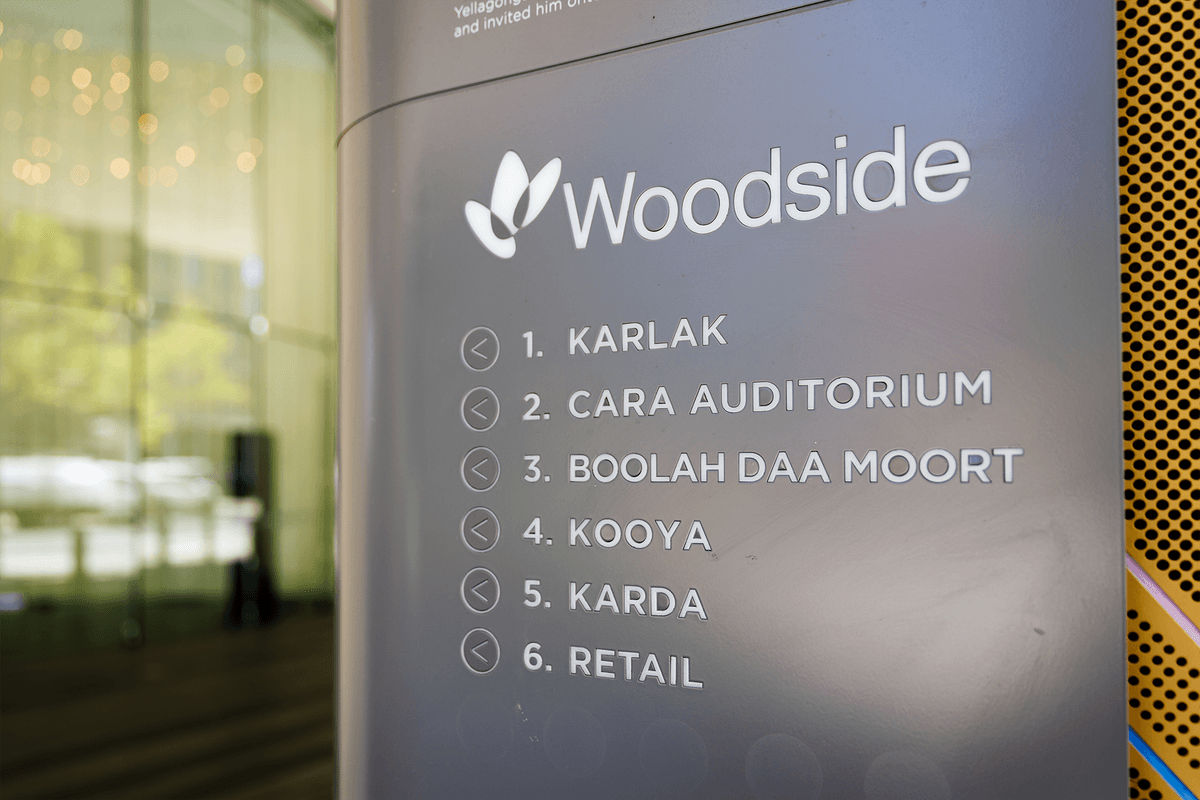
Photo: AAP Image/Richard Wainwright
More than twenty years ago, I found out I was being sued for $6.3 million. I was standing at a community vigil to stop the logging of Recherche Bay in Tasmania when Bob Brown told me I was being sued, along with him, and needed to get to Hobart by the next day for a briefing from volunteer lawyers, so we could figure out next steps.
I was named as one of the Gunns 20, the group of Tasmanian environmentalists and organisations taken to the Supreme Court of Victoria in 2004 by the Tasmanian native forest logging and wood chipping giant Gunns Ltd for daring to campaign against native forest logging. The writ ran to 216 pages. It named a sitting senator, a state MP, doctors, students and community groups, and accused us of an elaborate conspiracy to damage a company’s trade and brand.
It took five years, three revised statements of claim, two judges who described the case as embarrassing and incomprehensible, and millions in legal costs before Gunns dropped the case days before trial. We won, technically. But I remember what those years felt like: the fear a stray sentence in an email could become evidence, people quietly stepping back from campaigns, and the sense that speaking up could cost you your home, your livelihood and your right to free speech.
This week, I watched Woodside try the same play, and this time it did not work.
Back in December 2023, Woodside filed a civil case in the Supreme Court of WA against three climate defenders, Emil Davey, Joana Partyka and Kristen Morrissey, following a 2023 protest at its Perth headquarters in which stench gas, the harmless substance used to signal industrial emergencies, was released in the building’s lobby. Woodside sought orders forcing them to hand over documents naming anyone else involved in the protest and to compel them to appear as witnesses, despite a full police investigation and their guilty pleas and sentencing back in July 2025. Woodside was also pursuing the trio for cleaning costs and lost productive time.
On 23 July, the WA Supreme Court dismissed Woodside’s application. The judge’s reasoning, reported by the ABC and The Age, went further than a narrow procedural finding. The judge observed a tendency by Woodside to conflate the single protest incident with the broader activities of the wider campaign group and found that this apparent conflation could support an inference that the application was part of Woodside’s broader effort to discourage protests against its projects. That is about as close as a court gets to naming a SLAPP suit for what it is.
Davey and Partyka’s legal team, Climate Defenders Australia, put the win plainly in their social media statement:
“WIN: Woodside’s bid to force our clients to hand over information has been dismissed. Back in December 2023, Woodside filed a civil case against three climate defenders following a protest at its Perth HQ, seeking to force them to hand over documents naming anyone else involved, and compel them to appear as witnesses, despite a full police investigation having been done years earlier. We represented two of the three, Emil Davey and Joana Partyka. The WA Supreme Court has today ruled against Woodside’s application. This win is important for social movements across the country. It is a warning to powerful actors that they should take care when commencing civil proceedings against defenders who have already been punished in the criminal jurisdiction.”
This is the first time since the Gunns 20 that a resources company has tried to use the courts to obtain information about an entire activist campaign, rather than just punish the individuals in front of them. That Woodside’s attempt has now failed is a genuine relief. But it should not be mistaken for proof the system worked.
A SLAPP suit does not need to win in court to succeed. It only needs to make you afraid, drain your energy and savings, and convince the next person watching that speaking up is not worth the risk. Gunns Ltd lost every legal argument it made against us, and still achieved much of what it set out to do, because for five years, the case itself was the punishment. Davey, Partyka and Morrissey have now spent over three years fighting a civil action stacked on top of a criminal one, for a protest that harmed no one and used a substance found in mine sites across the country.
Bill Browne, Director of the Australia Institute’s Democracy and Accountability Program, has been warning for months that Australia needs anti-SLAPP laws, and that when big companies use their resources to overwhelm campaigners with legal action, it dampens public debate and protest. He is right, and I say that as someone who has lived through exactly what he is describing.
In 2008, the ACT parliament passed Australia’s first anti-SLAPP legislation. Seventeen years later, it remains the only anti-SLAPP protection anywhere in the country. Not New South Wales. Not Western Australia, where this case just played out. Not federally, where it belongs.
Woodside lost this round. But the Attorney-General still has the evidence, the precedent and the public support to act, and the political will to legislate national anti-SLAPP protection remains missing. If it is not this case that finally changes that, I fear for whoever becomes the target of the next David and Goliath corporate SLAPP suit.
Louise Morris is an advocate at the Australia Institute, with 20 years’ experience encompassing climate, energy, forest protection, and law reform in the not-for-profit sector, and federal politics.
Advertisement

The last full sitting week in October before budget estimates was a big one in Canberra for anyone who cares about who should benefit from Australia’s gas and missed revenue.
Earlier this week, researcher Alex Fein talked with Richard Denniss about why cost-of-living pressures, strained public services and declining trust are fuelling Australians’ anger.