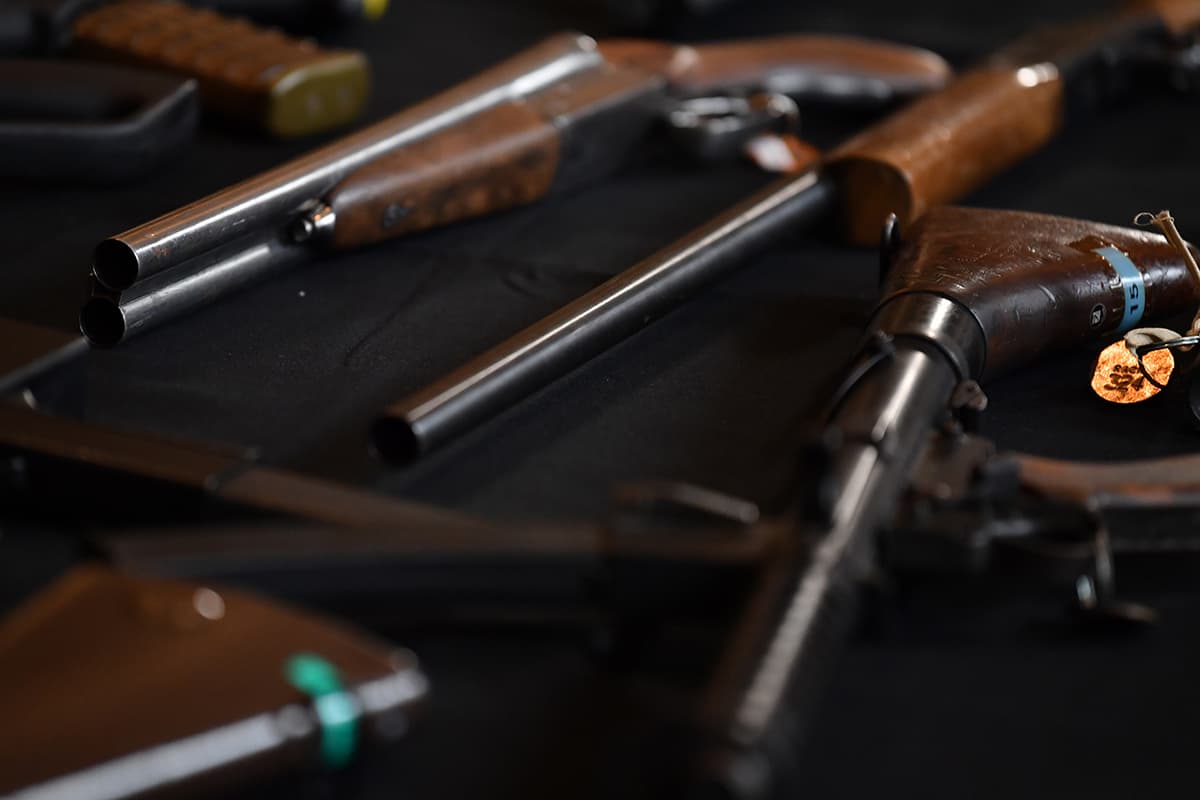
Australia is often held up here and overseas as the gold standard in gun control, where, in fact, we fall well short.
Indeed, Australia barely clings to silver when compared to Japan.
In Japan, like Australia, gun ownership is a privilege, not a right, and in both countries, a firearm license applicant must ‘prove’ they need one.
The comparison ends there. The glaring difference between the two nations is that Japan really demands proof of need and of emotional competence.
Here, the ‘demonstrated need’ demanded for a firearm license boils down to a demonstrated desire to own a gun – almost anyone can get a license; hence, the 930,000 gun license holders nationwide.
By contrast, in Japan (with four times the population of Australia), there are only around 200,000 licenses issued and that must be renewed every three years.
Unlike in Australia, no civilian can own a handgun in Japan.
Beyond political will, the key difference is that gun license applicants in Japan must really prove their mental and emotional fitness to own a gun.
In Australia, you need only be without a recorded serious mental episode.
Japan requires successful in-person psychiatric and psychological evaluations at an authorised health facility to qualify for a medical certificate to get a gun license.
The evaluating psychiatrist checks for readily detectable cognitive or mental disorders, violent episodes or a history of substance abuse.
This assessment costs the applicant up to $100, and the signed medical certificate must be filed directly with police.
Following this, the police thoroughly investigate the applicant’s life and temperament, including interviews with the applicant’s partner, family, neighbours and workmates.
These interviews aim to uncover unrecorded red flags such as domestic disputes, anger management problems or interpersonal conflicts.
The police also hold several interviews with the applicant to check why they want a firearm and to cross-reference them against extremist groups.
Applicants must then attend a seminar on firearm regulations and pass an exam with a score of 90 per cent or higher.
Then they must pass a lengthy safety and shooting proficiency course with a score of 95 per cent.
Having got this far, the applicant must buy police-approved lockers to separate the gun and its ammunition before police visit to inspect the lockers and give final approval.
Permits are only valid for three years and gun owners must repeat the mental health evaluation, written tests and background checks to retain their firearms.
This application process can take up to a year.
But to what end, and is it worth it?
The figures speak for themselves.
In Japan, fewer than 10 people die from gun violence each year – in Australia, with its vastly smaller population, around 200 people die unnecessarily in the same period.
The Bondi massacre surely shattered the delusion that Australia’s gun laws are sufficient to protect the community and police.
So, what stops our governments adopting truly effective firearm regulations like Japan?
It’s not the public, according to Australia Institute research. Even before Bondi, Australians overwhelmingly supported tougher gun laws or at least keeping existing ones – a sentiment supported by voters of all political parties.
The answer is the political pressure applied by the well-financed, powerful and shadowy gun lobby that makes significant donations to the major political parties.
This money buys access to ministers behind closed doors.
This is a lobby that doesn’t hesitate to threaten running candidates against sitting members of parliament, including ministers.
It also actively supports the Shooters, Fishers and Farmers Party across Australia, which campaigns to relax existing gun control measures.
The lobby also, where possible, infiltrates our universities, trade unions and political parties to push their agenda.
It has accessed the ALP’s Victorian Social Left faction and the Victorian Electrical Trades Union to successfully campaign against the Labor government introducing serious gun reforms.
Some academics (shyly) also accept the shooting lobby dollar to produce very thin ‘research’ that reflects the firearm industry’s interests.
This corrupting influence must end for the sake of public and police safety.
It’s time all Australian governments pushed back against the insidious gun lobby as they did with the tobacco industry decades ago.
Japan is the gold standard to which we should aim.
Australians deserve laws and regulations that ensure only emotionally stable and demonstrably responsible individuals with a real need, not a desire, for a gun get one.
Frank Noakes is an advocate for nature, peace and human rights