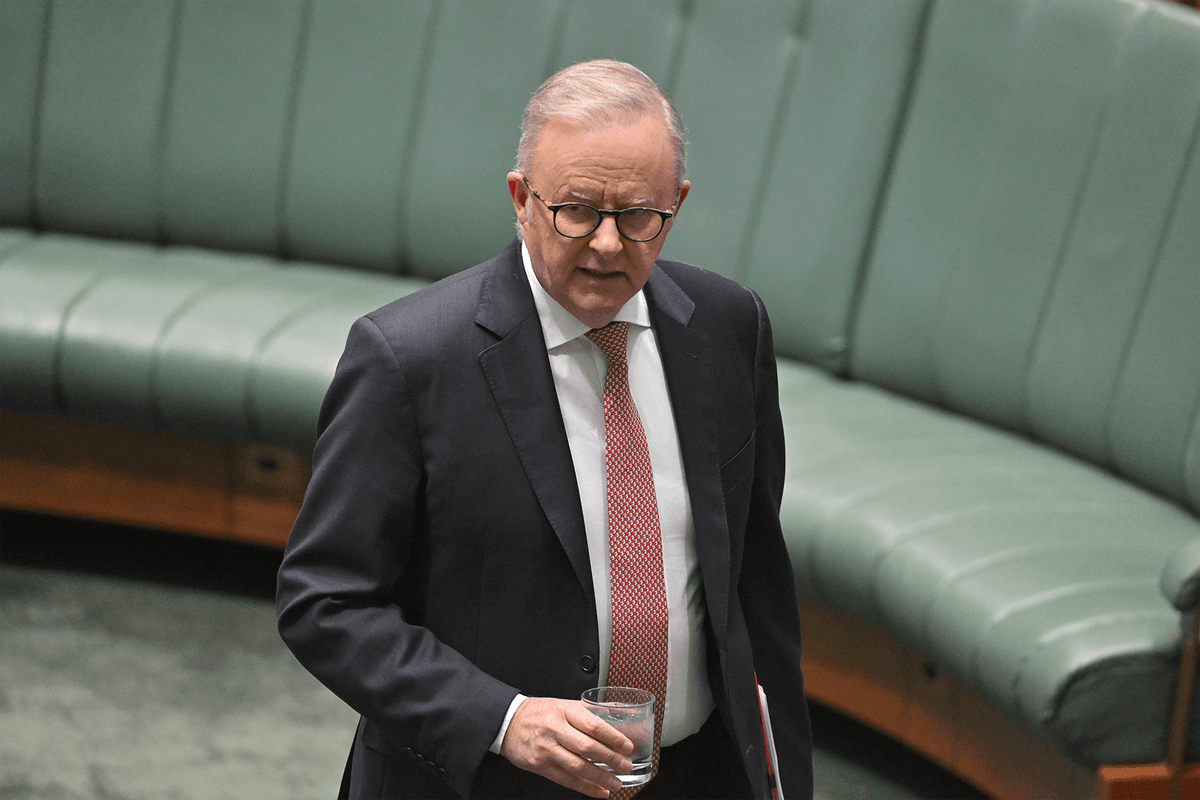
14 August marked a historic moment in Anthony Albanese’s professional career: he has now served longer as Prime Minister than Paul Keating, making him the 11th longest serving PM.
He will knock off a few more PMs before this term is through: he will overpass Ben Chifley on 30 October, Andrew Fisher on 17 March, and Alfred Deakin on 2 April.
The Australian Labor Party seems to have solved (at least for now) its historic problem with instability. Plagued by “faceless men” and splits in 1916, 1931, and 1955, the party long seemed on the verge of collapse in comparison to its opposition.
But with its large majority in the House of Representatives and the Liberal Party in a state of crisis, the ALP is more secure in federal government than it has been in decades.
And yet, the Albanese Government’s time in power has been marked by its lack of ambition.
You can see this lack of ambition when you compare Albanese’s time in office so far to previous Labor governments.
Though its time in office was short, the Gough Whitlam Government between 1972 to 1975 was one of the most ambitious federal governments in Australia’s history. Its only rivals are the Curtin-Chifley Labor Governments of 1941 to 1949.
In less than three years, the Whitlam Government introduced 697 bills: 254 in 1973, 229 in 1974, and 214 in 1975. The Senate rejected 93 of those bills – a record number that testifies both to the political resistance the Whitlam Government faced from the Liberal–Country coalition and the sheer quantity of legislation introduced in this short period.
Whitlam’s reforms covered almost every aspect of federal government activity and Australian life. In its time, the Whitlam Government:
- Supported equal pay for women and introduced a supporting mother’s benefit;
- Abolished tertiary fees and boosted funding for schools based on the basis of need;
- Formally ended the White Australia Policy through the Racial Discrimination Act 1975;
- Introduced no-fault divorce through the Family Law Act 1975;
- Addressed geographical inequality through the Department of Urban and Regional Development;
Get our newsletter
Quality research, analysis, explainers and factchecks from experts you can trust.
- Strengthened environmental and heritage protections; and
- Modernised Australia’s relationship with Great Britain by the removal of “colonial relics” (such as the imperial honours system and God Save the Queen as our national anthem).
The Bob Hawke Government between 1983 to 1991 was similarly ambitious (albeit with a much more neoliberal edge than Whitlam). After its election in 1983, the Hawke Government:
- Liberalised the economy by floating the dollar;
- Introduced the Child Support Scheme to address child poverty;
- Reformed the university sector through the Dawkins reforms (which included the reintroduction of fees and the introduction Higher Education Contributions Scheme (HECS), the creation of a Universal National System of higher education, and the increase of enrolment in fields crucial for economic growth);
- Opened employment to women through the Sex Discrimination Act 1984, Public Service Reform Act 1984, and the Affirmative Action (Equal Opportunity for Women) Act 1986; and
- Addressed Aboriginal affairs through the creation of the Aboriginal and Torres Strait Islander Commission (ATSIC), although it could not live up to its promises on native title and a treaty.
It would be difficult to collate a list of similar significance of the Albanese Government’s achievements.
Albanese’s most ambitious project so far has been the 2023 Aboriginal and Torres Strait Islander Voice referendum, which, despite its failure, was a genuine attempt to rewrite the Constitution in new terms that addressed Australia’s colonial history.
Otherwise, the Albanese Government has either tinkered at the edges of Australian society, such as amending the stage 3 tax cuts, along with negative gearing and the capital gains discount in the 2026-27 budget; or inherited the policies and frameworks of previous Coalition governments, including the AUKUS submarine deal and NDIS cuts.
The Albanese Government’s lack of ambition is striking given its context. Not only does it hold a large majority in the House of Representatives, with no effective Opposition to provide resistance, but there is a popular demand for the Commonwealth to do more. Despite the impression given by the commentariat, the Government’s amendments to the CGT discount and negative gearing were largely popular among Australians according to a recent Resolve Political Monitor Poll (even among home-owners).
It is possible that Albanese learned the wrong lessons from the failed 2023 Voice referendum. Rather than taking that failure as a sign that the Commonwealth should pursue future reform through parliament, as opposed to through the Constitution, the Albanese Government appears almost shell-shocked after that experience, and instead has dropped most of its more ambitious reforms from its agenda. Perhaps the 2026–27 Budget’s improvements to housing equality are a sign the Commonwealth has remembered it can govern.