It matters well beyond the Top End, and our Pacific neighbours are watching more closely than Canberra realises.
Last week, at the Pacific Islands Forum in Koror, Palau, Tuvalu’s climate minister Dr Maina Talia described losing sleep over a new UN Environment Programme finding that the world is already tracking past 1.5 degrees, not a future risk but a near-term reality. For a nation with a highest point under five metres above sea level, that isn’t an abstraction. Beside him, Vanuatu’s Ralph Regenvanu, who led the case that won a landmark ICJ ruling on states’ climate obligations, put it plainly: fossil fuels drive the crisis, and the least a major producer can do is stop expanding.
That is precisely what Australia isn’t doing. The Albanese government has approved 37 new or expanded coal, oil and gas developments since taking office, the latest one a coal mine approved on September 3, 2026. Meanwhile it hands the fossil fuel industry billions in subsidies a year, even while talking up a 50 per cent renewable grid to Pacific leaders watching their homelands disappear. A gas-fired data centre riding an unnecessary fracking basin is the newest addition, dressed up in AI-boom language.
Australia is co-president of negotiations for COP31 in Türkiye this November, at the exact moment Dr Talia and Mr Regenvanu are asking us for real political will, not talk. At COP30 in Belém, Australia joined over 80 countries backing a plan to phase out coal, oil and gas, which Brazil is meant to develop into something concrete before COP31. As the world’s third-largest fossil fuel exporter, Australia needs a clear phase-out plan, including exports, for that co-presidency to mean anything
You cannot honestly hold a leadership role at COP31 while approving a fracking-fuelled gas glut in the Beetaloo at home. The Australia Institute’s research is clear on what a credible roadmap looks like: stop approving new coal and gas projects, of which Australia has 94 in the pipeline, and enact the Transition Away from Fossil Fuel objectives we signed up to in Belém.
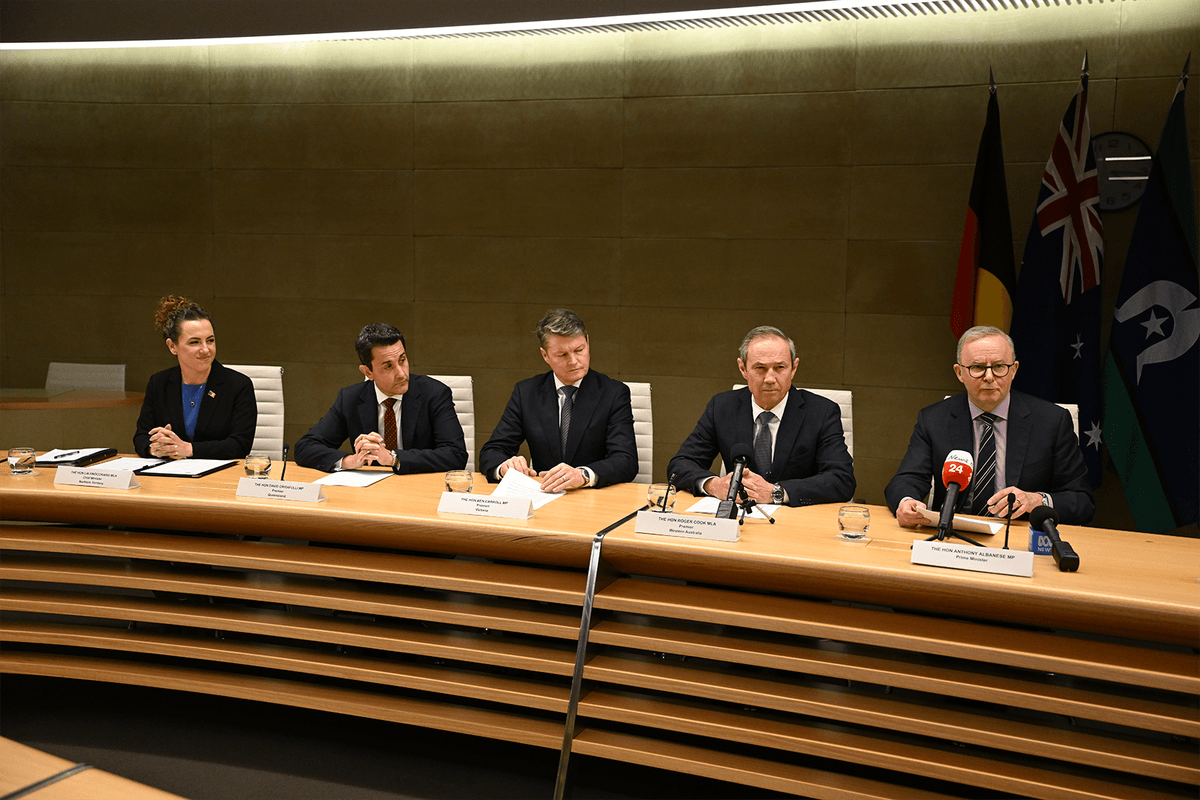
No new approvals, on a clear timeline to a transition away from fossil fuels, is a test the National Cabinet’s data centre decision has just failed.
If the government wants data centres to run on clean energy, the fix is simple: no carve-outs, no “gas firming” or “gas backing” loopholes, no new gas basins built on the promise data centres will suck up whatever excess gas is extracted.
Otherwise, the AI boom becomes what fossil fuel vested interests want from any new source of massive domestic energy demand: to paper over the shrinking market for gas globally and a reason to keep expanding domestically.
It’s a choice our governments must make on whether they keep gaslighting us on climate action, and Dr Talia and Mr Regenvanu have made clear our Pacific neighbours see it for what it is. It’s a choice we can still reverse before COP 31 in Antalya and the Transition Away from Fossil Fuels conference in Tuvalu in seven months.
Louise Morris is Head of Fossil Fuel Transition at the Australia Institute, with 20 years’ experience encompassing climate, energy, forest protection, and law reform in the not-for-profit sector, and federal politics.