


Kudelka Climate Cartoon Award announces 2026 shortlist
The annual Stanley Awards, Australia’s premier awards for cartoonists, has announced its shortlist for best climate cartoon honours.

The annual Stanley Awards, Australia’s premier awards for cartoonists, has announced its shortlist for best climate cartoon honours.
The Wilderness Society has lodged a new complaint with the nation’s corporate watchdog, urging it to investigate how oil and gas companies report their clean-up costs.
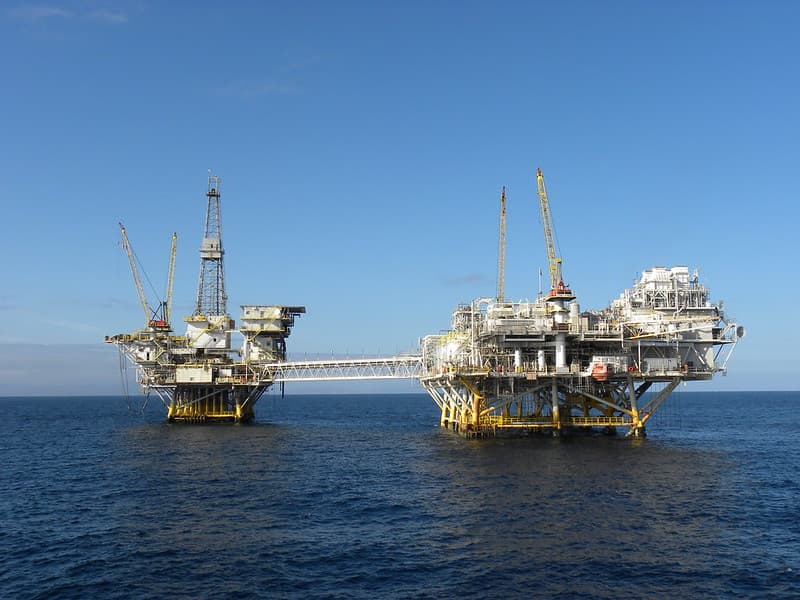
The last full sitting week in October before budget estimates was a big one in Canberra for anyone who cares about who should benefit from Australia’s gas and missed revenue. In the space of a few days, the Senate rejected a motion to look at taxing our resource wealth, and the government introduced its long-promised gas reservation scheme.
Put them side by side and a mining lobby pattern emerges
First came the Greens’ urgency motion, asking the Senate to consider whether Australia could raise an estimated $45 billion a year by properly taxing its resources. The Coalition voted against it. So did Labor. The motion was defeated 34 votes to 11.
This wasn’t a vote on a detailed tax bill. It was a request to recognise that our coal and gas should work harder for the people who own them. The major parties wouldn’t back even that.
Senator Susan McDonald warned that higher taxes would threaten jobs, energy security and essential services. Senator Marielle Smith pointed to the government’s domestic gas reservation, along with tax cuts, wage rises and health investment. Senator David Pocock reminded the chamber that once a finite resource is dug up and shipped offshore, the chance to collect value from it is gone.
Then the reservation scheme arrived.
The Albanese government promised a gas reservation policy earlier this year. Exporters would set aside the equivalent of 20% of their exports for the domestic market. It sounded like a serious answer to a serious problem.
It hasn’t stayed that way. The policy is now expected to require “up to” 20%. Up to, of course, being the upper limit of zero to not very much.
The start date has slipped. How it will work in practice is unclear, and recent drafts have been criticised for including “Santos-sized loopholes” that could let some companies and projects keep exporting as normal.
The Australia Institute’s analysis of the proposed scheme found it looked unlikely to fix the gas policy mess, with no specific commitment to make gas cheaper for regular Australians. Anyone who has watched the Petroleum Resource Rent Tax will recognise the pattern. Complexity, exemptions, and a tax that has failed for decades to raise significant revenue from our giant gas exports.
On the ABC’s 7.30 midweek, Sarah Ferguson asked Greens Senator Sarah Hanson-Young whether the Greens would support the reservation legislation. Hanson-Young said Labor was “walking back and watering down” its own policy and called instead for something “bigger and simpler”: a 25% tax on gas exports.
She’s right on both counts.
A 25% tax on gas exports is easy to explain and hard to dodge. It applies to the gas that leaves the country. There is no sliding scale of “up to”, no maze of exemptions to negotiate, and it does not make domestic gas prices higher.
Quality research, analysis, explainers and factchecks from experts you can trust.
Australia Institute research shows a 25% tax would raise about $17 billion a year. That is nearly $50 million every day. Had it been in place since the Albanese government came to power, it would have raised more than $78 billion. That is enough to pay for universal free childcare, or free university and TAFE for all. You can follow the Gas Giveaway Tracker to watch the number climb (it’s over $78 billion since 2022), and this explainer walks through how the numbers work.
A reservation scheme, however, it ends up, would raise not a single cent. It is a half-baked distraction that won’t change the fact that Australia is giving away more than half of the gas it exports.
Here is the part that gets lost. An export tax gives gas exporters a reason to send more gas to the domestic market, because gas sold at home avoids the tax. That puts downward pressure on prices for households and businesses. The Australia Institute’s gas policy plan sets out the economic modelling. In other words, a 25% tax can deliver the affordable gas a reservation scheme promises, and the revenue on top.
Hanson-Young said a 25% export tax is “hugely popular”. She’s right about that too. A national poll in April found 72% of Australians back it, including four in five Labor voters. Earlier RedBridge polling showed support cutting across party lines, from One Nation to the Greens.
People understand what is happening. Gas companies export about 80 million tonnes of LNG every year. Just over half of it comes from projects that pay no royalties, so in effect the gas is given away for free.
More than $55 billion worth of gas was exported last financial year. Well over $300 billion has been exported since the Albanese government took office. The invasion of Ukraine and the US-Israel attacks on Iran sent gas prices soaring, creating multi-billion-dollar windfalls for the multinationals that dominate our market.
Yet the PRRT, the Commonwealth’s main tax on gas, raised just $1.4 billion last year. The Institute’s submission to the Senate inquiry called the PRRT “an abject failure”. Santos, which stands to benefit from exemptions under the reservation proposal, has not paid company tax in over a decade despite reporting more than $50 billion in total income.
Labor and the Coalition differ on plenty. On the Greens’ motion, they voted together. On gas, Labor is offering a scheme that is shrinking, delayed and full of holes, while a simple tax that could fund childcare, housing and a faster clean energy transition sits on the table.
Design matters, and any estimate should be tested in the open. But the need for careful design is a reason to do the work, not a reason to refuse it.
Australians have been told for years that there is no money for the things they need. This week showed where some of it is. The question is why the major parties still won’t go and get it.
Louise Morris is Head of Fossil Fuel Transition at the Australia Institute, with 20 years’ experience encompassing climate, energy, forest protection, and law reform in the not-for-profit sector, and federal politics.


