When CEO of the world’s biggest green bank, Ian Learmonth of the Clean Energy Finance Corporation (CEFC), announced his retirement, he acknowledged that mining billionaire Clive Palmer had saved the organisation from being abolished by Tony Abbott in 2014.

Mon 7 Sep 2026 16.04 AEST
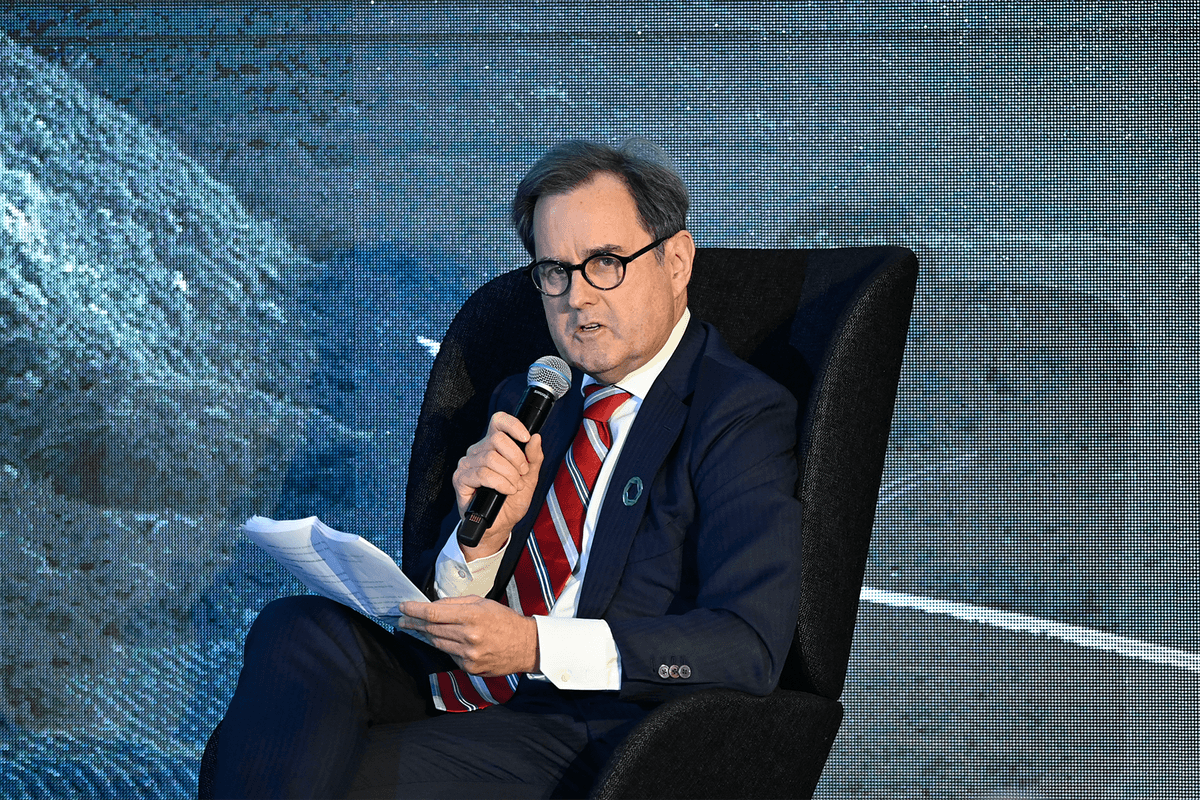
Photo: AAP Image/Pool, Jaimi Joy


When CEO of the world’s biggest green bank, Ian Learmonth of the Clean Energy Finance Corporation (CEFC), announced his retirement, he acknowledged that mining billionaire Clive Palmer had saved the organisation from being abolished by Tony Abbott in 2014.
As Ian Learmonth told Nick Bryant of the ABC’s Saturday Extra,
When Tony Abbott arrived he wanted to abolish the CEFC, which had been set up by the Gillard Government.
Interestingly enough in 2014, the balance of power was held by none other than Clive Palmer.
US Vice President Al Gore was in town. Someone had the brilliant idea of putting them together.
I think perhaps Clive was a bit starstruck and was persuaded by Al Gore to vote against the abolition bill.
We were never shut down.
The rest is history – full marks to Clive Palmer.
It is not just the Clean Energy Finance Corporation that was saved by Clive Palmer and his Palmer United Party colleagues back in 2014, but also the Climate Change Authority, the Renewable Energy Target and ARENA (the agency that funds renewables R&D).
The Australia Institute calculated back in 2019 that these institutions had collectively supported $23 billion worth of projects, assisted the installation of 806,000 solar panel systems and 226,000 solar hot water systems and delivered emissions reductions of at least 334 million tonnes CO2-e, and the numbers will have only grown since then.
But how was it that Clive Palmer and Al Gore came together for what the Sydney Morning Herald called the most unlikely press conference in political history?
The meeting was facilitated by Ben Oquist, then Strategy Director of the Australia Institute, and Don Henry, the Chief Executive of the Australian Conservation Foundation. Henry had been negotiating with Al Gore to come to Australia. Gore was travelling the world in 2014 campaigning to reduce climate change. Palmer and four colleagues had been elected to Parliament the year before under the Palmer United Party banner.
It wasn’t until Gore stepped off the plane in Canberra that Ben Oquist and Don Henry were sure Gore would be willing to go ahead with the plan and that Palmer too would deliver on his promised support.
The result was called spectacular, and a road to Damascus Conversion, by commentators: the day billionaire coal baron Clive Palmer stood up with former US Vice President Al Gore in front of the media.
What did Palmer pledge? In ‘a bizarre political twist’, he promised to block Tony Abbott’s proposed destruction of the Renewable Energy Target (RET), the Clean Energy Finance Corporation (CEFC) and the Climate Change Authority. Palmer’s decision to vote with the Greens sank much of the Abbott’s government’s anti-climate agenda.
As Ben Oquist said at the time :
Quality research, analysis, explainers and factchecks from experts you can trust.
The Palmer-Gore announcement has re-set climate policy and politics. Keeping the [Climate Change Authority], the [Renewable Energy Target] and the [Clean Energy Finance Corporation] is much more than most expected from the [Palmer United Party]. We have avoided a big step backwards.
Wednesday night’s announcement has also reframed the debate about carbon pricing – it’s hard to suggest carbon pricing is some form of left-wing, economy-wrecking conspiracy when a billionaire mining magnate supports it.’
Australia Institute then Executive Director Richard Denniss wrote in the Australian Financial Review that:
The day after Clive Palmer announced he would oppose the Abbott government’s efforts to abolish the 20 per cent renewable energy target, the price of market-traded renewable energy certificates jumped 27 per cent. …
Symbolism is important in politics. Al Gore’s endorsement was clearly valuable to Clive Palmer. But Al Gore’s objectives were more than symbolic. He wanted to help achieve real outcomes. By sharing a stage with Palmer, he helped reshape Australian politics.’
Veteran reporter Michelle Grattan commented as Palmer surprised everyone again:
Ben Oquist is one of the most savvy political advisers in the business…
Oquist had a role in the crafting of Palmer’s climate policy, released at the spectacular appearance with Al Gore.
This month, the CEFC announced that, over its lifetime, it has committed $27 billion towards projects worth a total of $105 billion, including record investment in large-scale clean energy infrastructure. This clean energy boom can be traced back twelve years to an unlikely alliance between coal magnate Clive Palmer and climate activist Al Gore.
Marilyn Chalkley’s best job was broadcasting for the ABC, her most important working for an Australian Deputy Prime Minister, as media adviser, and the hardest running a patisserie and making macarons for 12 hours a day. She now writes part time for the Australia Institute documenting its history.