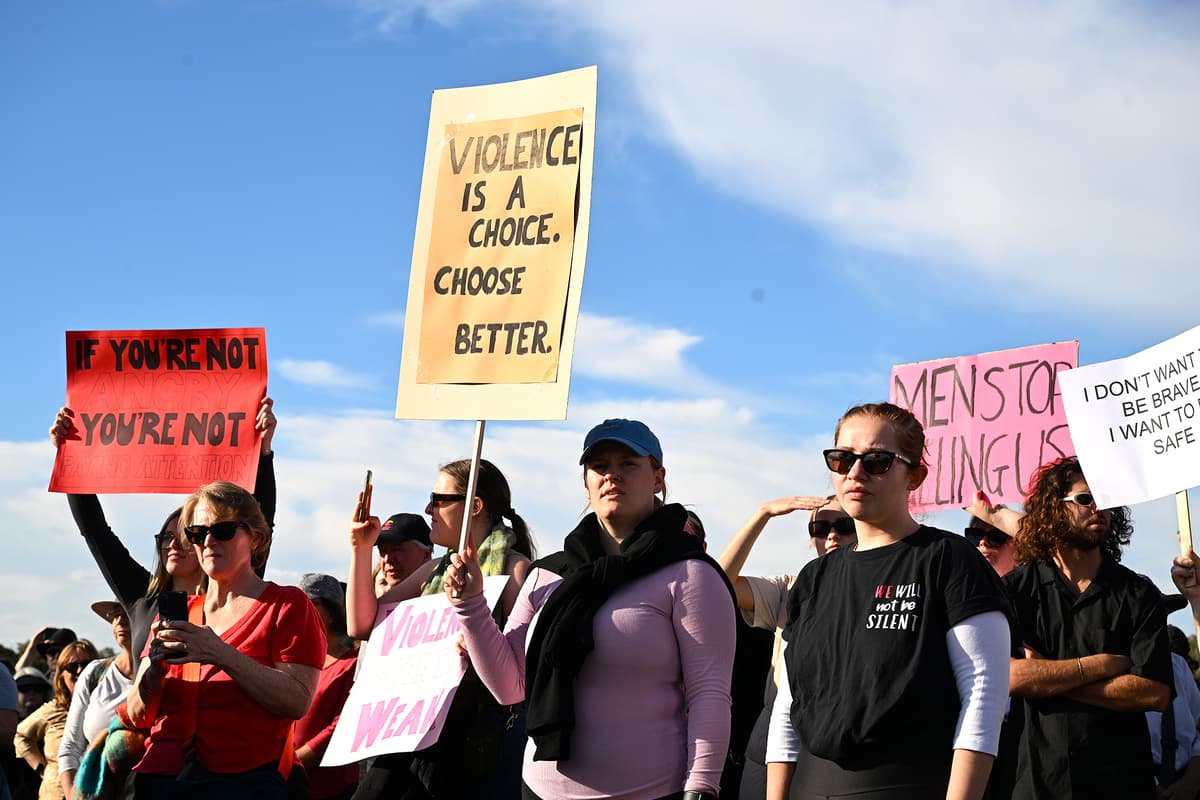
As women, this narrative gives us back a sense of control – if we can explain consent slowly and clearly enough, men will stop spiking our drinks, drugging us, wearing us down, pinning us down, hitting us, filming us, blackmailing us, yelling at us, assaulting us while we are unconscious, calling us sluts or prudes or lesbians, grabbing at our clothes, our hair, our necks, our bodies.
The problem with the rhetoric of self-gratification and a lack of impulse control is that these men have enough self-control to refrain from stealing their co-workers’ lunches when hungry; they have enough self-control to wake up at 4am every day to train for their silly little sports games; enough self-control to go to work, feed their pets, mow their lawns – the list of things that men achieve through their own self-discipline is endless.
The problem with the argument that some rape is about sexual gratification and a lack of empathy, rather than about power or violence, is that it misses the fact that some men understand power and violence to be sexy. Coercion and assault are not means to an end; they are the point.
The problem with the narrative that increasing sexual violence is driven by algorithms is that rape existed long before the internet, and that even without being funnelled toward it, some people would still choose to engage with violent content because it makes them feel powerful.
If some rapists are simply “opportunistic”, we must acknowledge that they have created their own opportunities everywhere – they have built workplaces, schools, sports clubs, and media environments where they are in charge, and women are not welcome. For the most part, it is men who have written the algorithms and produced the violent pornography. They have built the cultural norms that suggest women are deserving of sexual violence, and violence in general, if they are drunk, poor, homeless or sex workers. Or indeed, if they are feminists. Or teachers.
We must be extremely clear on one point: sexual violence is not simply a consequence of men’s power, as is suggested by the myth of the “opportunistic rapist”; it is a central mechanism by which that power is enacted and enforced.
The rise in sexual violence alongside increasing global instability and the resurgence of authoritarianism is not a coincidence. Nor is the escalating abuse of women in politics, as more women attain positions of power and the gender pay gap narrows. They are different sides of the same die, and it is loaded against women.
Instead of abdicating responsibility for rape by calling it “opportunistic” or “an accident”, or pinning the blame on the ever-evil internet, we must demand that everyone is responsible. Every rapist, but also every member of government, every tech company, every boss, every coach, every sponsor, every person in a position of power must do this work – and it is hard work – if we are to reach a future free from sexual violence.
Dr Gemma Killen is the Executive Director of the Working with Women Alliance.
The Working with Women Alliance is funded by the Commonwealth Office for Women to provide evidence based, intersectional advice and civil society expertise on gender equality and women’s safety.