After two years of consultation, the message from people subjected to compulsory income management is remarkably consistent: they want the right to choose if they want to be on it or not. Yet the Government is laying the groundwork to break its promise to First Nations people to abolish mandatory income management.

Thu 10 Sep 2026 16.59 AEST
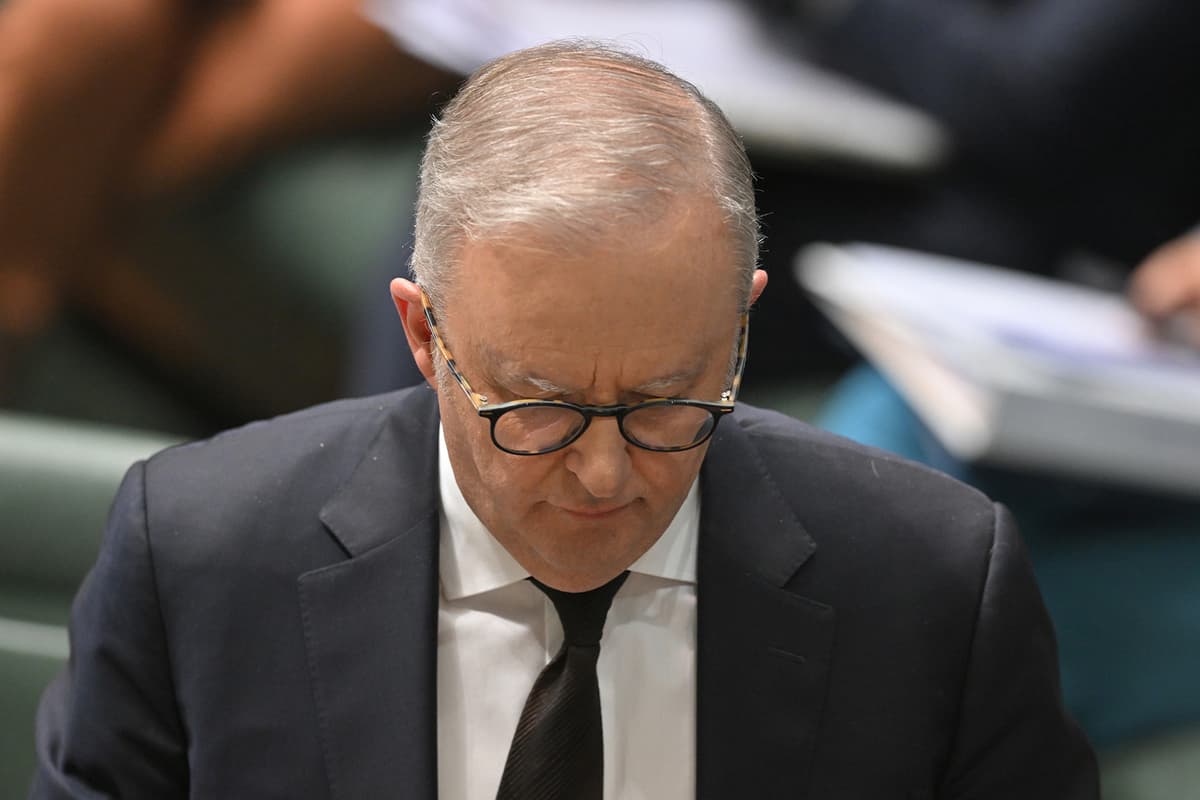
Prime Minister Anthony Albanese during Question Time. Photo: AAP Image/Mick Tsikas


After two years of consultation, the message from people subjected to compulsory income management is remarkably consistent: they want the right to choose if they want to be on it or not.
The Government’s long-awaited consultation reports, tabled on Tuesday after pressure from Senator Allman-Payne, confirm what First Nations organisations, advocates and experts have been saying for years.
People forced onto compulsory income management want the scheme to be voluntary.
As one participant put it, “No community would be ok with how it is at the moment.”
Yet the Government is laying the groundwork to break its promise to First Nations people to abolish mandatory income management.
Compulsory income management restricts 50-70% of a person’s welfare payment to a government-issued card that can only be spent on approved goods or at approved stores. It has run in the Northern Territory since 2007, when it began as part of the Northern Territory Intervention.
When it ran for election in May 2022, the Australian Labor Party promised that it was “abolishing mandatory income management”.
It abolished one form of compulsory income management later that year (Cashless Debit Card) but did not abolish the BasicsCard as promised. Instead, it rebirthed the Cashless Debit Card technology as an ‘enhanced Income Management’ smartcard in 2023, and gave those still forced onto compulsory income management the option to transition to the new technology or stay on the old scheme.
Instead of fulfilling the election promise of making compulsory income management voluntary there and then, Labor subjected abolition to consultation with affected communities, a process that dragged out until the very end of 2024.
Meanwhile, the Labor-chaired parliamentary human rights committee looked into compulsory income management in 2024. Its conclusion was as damning as a report of this kind ever is:
There is a considerable risk that compulsory income management constitutes an impermissible limitation on the rights to social security, privacy, and equality and non-discrimination.
In other words, compulsory income management was and continues to breach the human rights of participants. The committee recommended that it be made voluntary.
Rather than acting with speed to reinstate Australians’ human rights, the Government has not even bothered to respond to that almost two-year-old recommendation at the time of writing.
Instead of complying with human rights, taking evidence-based policymaking seriously, and listening to communities, the Albanese government appears to be quietly extending income management.
In June, the government removed legislative expiry dates that would have automatically ended parts of compulsory income management. Without those self-repeal dates, the parliament will not have to revisit income management again until 2033.
Labor and the Coalition combined on Monday to vote down a resolution that would have reinstated those sunset clauses.
This is significant, because those self-repeal provisions were put in place to allow the Government to undertake the consultation that has just been released, and make a decision on what to do. It seems that their decision has now been made.
Quality research, analysis, explainers and factchecks from experts you can trust.
The government also quietly committed $202.7 million over five years to maintain existing Income Management arrangements in the 2026-27 Budget, and then $49.5 million a year thereafter, making no specific public announcement of that arrangement to allocate funds for income management in perpetuity.
Meanwhile, the government has also delayed responding to the Human Rights committee’s recommendations for almost two years, including the recommendation that the scheme be made voluntary.
But the Minister has made no announcements, and given no reasons for these decisions.
And so, speculation is mounting that the Albanese Government is enroute to break its election promise to First Nations people through making compulsory income management permanent.
In July 2026, some 33,069 people were subject to income management, 94% of them in the NT. Almost none of them chose it or were assessed as needing it—6% opted in, and 1% were individually assessed.
The rest of the people are subject to compulsory income management because they are out of work, most simply because they live in a community where there are not enough jobs for everybody.
Peer-reviewed research has found that by limiting access to cash and restricting what people can use money for, compulsory income management can cause problems including worsening hardship and social stigma.
Its introduction was linked to a reduction in the birth weight of babies.
Despite successive governments funding evaluations of income management, it has never been convincingly shown to meet its objectives, and peer reviewed research shows it causes harm.
When income management was first introduced by the Howard Government as part of the NT Intervention, it was explicitly acknowledged to be a racist policy, requiring the Racial Discrimination Act 1975 to be suspended.
While the Rudd Labor Government amended the legislation to allow the Racial Discrimination Act 1975 to be reinstated, concerns that the policy was racist continue. Today, 82% of Australians who are income managed are First Nations.
The Labor-chaired Parliamentary Joint Committee on Human Rights also had serious concerns about the discriminatory nature of the scheme as recently as 2024.
After years of consultation, well over a billion dollars of wasted public spending, countless parliamentary inquiries and nearly two decades of harm, the Government has once again heard from those forced onto the scheme.
The question is whether the government will listen — and if they will break their 2022 promise to First Nations people.
Francis Markham is a Research Fellow at the Centre for Aboriginal Economic Policy Research (CAEPR) at the Australian National University.
Dr Elise Klein (OAM) is an Associate Professor of Public Policy at the Crawford School, ANU.