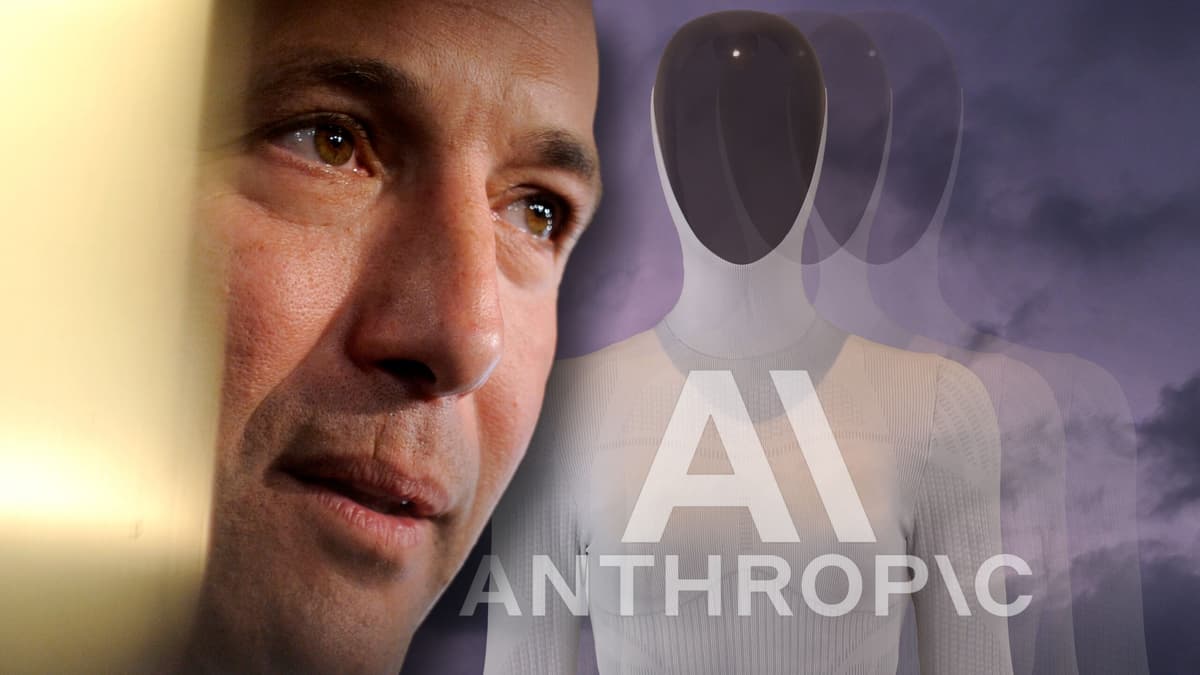
Last Thursday, something happened I never thought I’d see: some of the world’s biggest tech bros banded together to issue a public safety warning.
These are men who rarely miss an opportunity to compete, sue or posture against one another. Yet suddenly, they were singing from the same hymn sheet: there is a 10 per cent chance artificial intelligence could kill us all.
That’s a pretty alarming thing to hear from the people building the technology. And it got me thinking. If the people racing to develop AI are warning us about the risks it poses, perhaps we should stop and listen.
Unfortunately, this has not been the Albanese government’s approach. They’re still behaving as though the consequences of the AI boom are a problem for some distant future.
Newsflash: that future is already here.
Across Australia, data centres are being proposed, approved, built and plugged into the grid at an extraordinary speed. They use enormous amounts of electricity and water. They put pressure on the energy grid and power prices, compete with local communities and other industries for resources and make the task of cutting climate pollution much harder.
Australia urgently needs rules governing not only what AI can do, but the physical infrastructure required to house and power it. Yet the Albanese government is still refusing to put a moratorium on new data centres while Parliament works out what those rules should be.
This is bonkers. And frankly dangerous.
Because to let you in on a little secret, we have a very limited understanding of what the rapid and unregulated expansion of this industry means for Australia’s water and energy resources, local communities and cultural industries. And yet we are rolling out the red carpet for the data centre companies.
We’ve seen this film before with the fossil fuel industry.
For decades, big oil and gas companies have extracted Australia’s natural resources while governments have failed to ensure Australians receive a fair return or are adequately protected from the environmental consequences. Now we risk repeating the same mistakes.
So let’s be clear: AI is rapidly becoming Australia’s newest extractive industry.
For all the talk of clouds, algorithms and artificial intelligence, there is nothing weightless about AI. It requires enormous physical infrastructure: land, transmission lines, electricity, water and warehouses filled with servers.
Data centre companies are already learning from industries that came before them. They are hiring lobbyists, building relationships with governments and investing heavily in their public image.
Just last week, Firmus, one of the country’s biggest data centre companies, signed a sponsorship deal with Australia’s newest AFL club – the Tasmania Devils.
Get our newsletter
Quality research, analysis, explainers and factchecks from experts you can trust.
At the same time, Firmus is pursuing major data centre developments across Tasmania, which are set to become the state’s largest energy consumer, diverting precious energy resources from Tassie homes and businesses.
Call me cynical, but we’ve seen this strategy before.
In 2010, Woodside began its long-running sponsorship of the Fremantle Dockers. The fossil fuel industry has spent decades attaching its name to sporting clubs, arts organisations and community institutions while simultaneously fighting attempts to strengthen environmental regulation or taxation.
This is a prime example of big industries building social licence for their extractive projects.
Put your logo on the jumper. Sponsor the team. Become part of the community. Make your company synonymous with something people love. Then hope Australians don’t ask too many difficult questions about what is happening behind the logo. The lesson should be obvious.
When enormous corporations arrive seeking access to Australia’s precious resources, governments have a responsibility to set the rules before those industries become too powerful to regulate effectively.
Communities should not be left carrying the costs while private companies take the profits.
This is why Australia needs a moratorium on new data centre approvals and construction while we properly assess their cumulative impact on our energy grid, water resources, environment and communities.
But what about the data centres already built, or those being rushed through planning and construction while the government drags its feet on regulation? Any legislation the government introduces next year must apply retrospectively to existing and approved projects.
We cannot allow developers to race ahead under today’s regulatory vacuum, only to leave communities and governments to deal with the consequences once we understand the long-term impacts.
We only have one chance to get this right, which is why the Greens fought hard to establish a Senate inquiry into data centres: so parliament can hear from the communities, experts, workers and Big AI, and develop rules capable of protecting the public interest before governments lose control of the boom.
Next week, I’ll be travelling to communities around Australia already living alongside or fighting proposed data centre developments. I want to hear directly from the people being asked to host the physical infrastructure behind the AI revolution.
Australia needs strong laws now, not in years to come. Australia has spent decades learning what happens when governments allow powerful, extractive industries to establish themselves first and then try to regulate them later.
We cannot afford to make the same mistakes twice.
Senator Sarah Hanson-Young is the Australian Greens spokesperson for communications and Senator for South Australia.