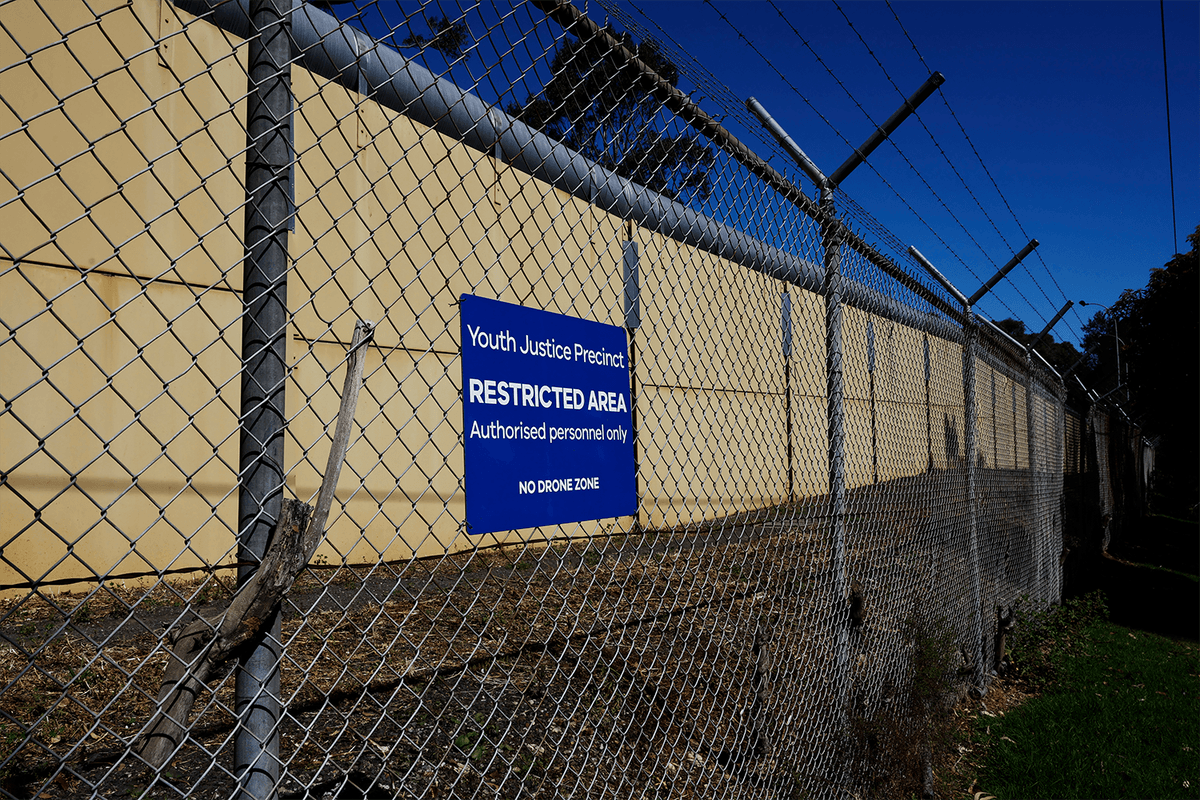
These recommendations are worth our attention, but are they enough to change a child’s life?
Several of the recommendations focus on gathering more information, more data. But this is not a scarce resource. We have known the causes of youth crime for decades. We see the poverty, the failure of social services, the inability of government departments to communicate with one another. We know that our children are dying in custody. We do not require another inquiry or even an education campaign to tell us the same things. What we need is the political spine to act on what we already know.
The Commonwealth must definitively ban spit hoods and solitary confinement – both recognised as forms of torture – invoking its constitutional power under Section 51(xxix), to override state and territory laws that violate the rights of children in our prisons.
We need more funding for community-led alternatives: rehabilitation programs, opportunities, upskilling and employment pathways. A prevention-led approach which invests in the village that surrounds every child is imperative.
But the report’s most glaring omission is perhaps its greatest tragedy: there is no agreement to raise the age of criminal responsibility. We cannot talk about protecting children while it remains legal to treat a ten-year-old as an adult criminal. We must raise the minimum age to 14. Nationwide. Immediately.
Last year, the government declared that a 15-year-old is too vulnerable to safely exist on social media. The message from our leaders rang out clear: we must “protect” our children.
The contradiction is impossible to ignore. We have decided that a teenager cannot navigate an algorithm, but a 10-year-old can navigate a courtroom. We shield adolescents from screens, but subject children to strip searches. We fear the harm of the digital world but accept the damage of a concrete cage.
Right now, Prime Minister Albanese is in New York, lobbying for a seat on the UN Security Council.
Despite frequently leveraging Indigenous culture on the world stage to build “diplomatic capital”, the Prime Minister recently dismissed concerns that the UN had raised Australia’s treatment of Indigenous children with him.
Let me be clear: that is a fiction. The UN Committee on the Elimination of Racial Discrimination explicitly and severely condemned Australia for its treatment of Indigenous children caught in these systems – in particular, the caging of these children at catastrophic rates.
You cannot champion human rights in New York while torturing children on Australian soil. By strapping spit hoods to the faces of terrified children, we are in active, undeniable breach of international law.
I began this piece with the words of a child held inside a Tasmanian prison, and that is exactly how I will end. And this 15-year-old told me to take his message directly to the leader of this country:
Prime Minister, I strongly believe that you should come to Ashley Youth Detention Centre so that you can hear our voices in person… It will break your heart…
These children may never read this Senate report. They will, however, live with what it produces, or indeed fails to produce.
Its significance won’t be measured by neat recommendations, but in whether a ten-year-old will have yet another spit hood forced on their head. In whether a child is left in isolation for days without sunlight. In whether our children – who are crying out to us from the dark – can eventually see some trace of their own humanity in what Australia does next.
Satara Uthayakumaran is a writer and the former Australian Youth Representative to the United Nations.