

On Wednesday in Fiji, Pacific ministers said what Australian ministers have so far avoided saying. The region needs a plan to end its dependence on coal, oil and gas. At a high-level pre-COP31 side event in Nadi, Navigating the Pacific Energy Transition, ministers discussed their intention to develop a regional roadmap to transition away from fossil fuels.
Thu 8 Oct 2026 11.34 AEDT
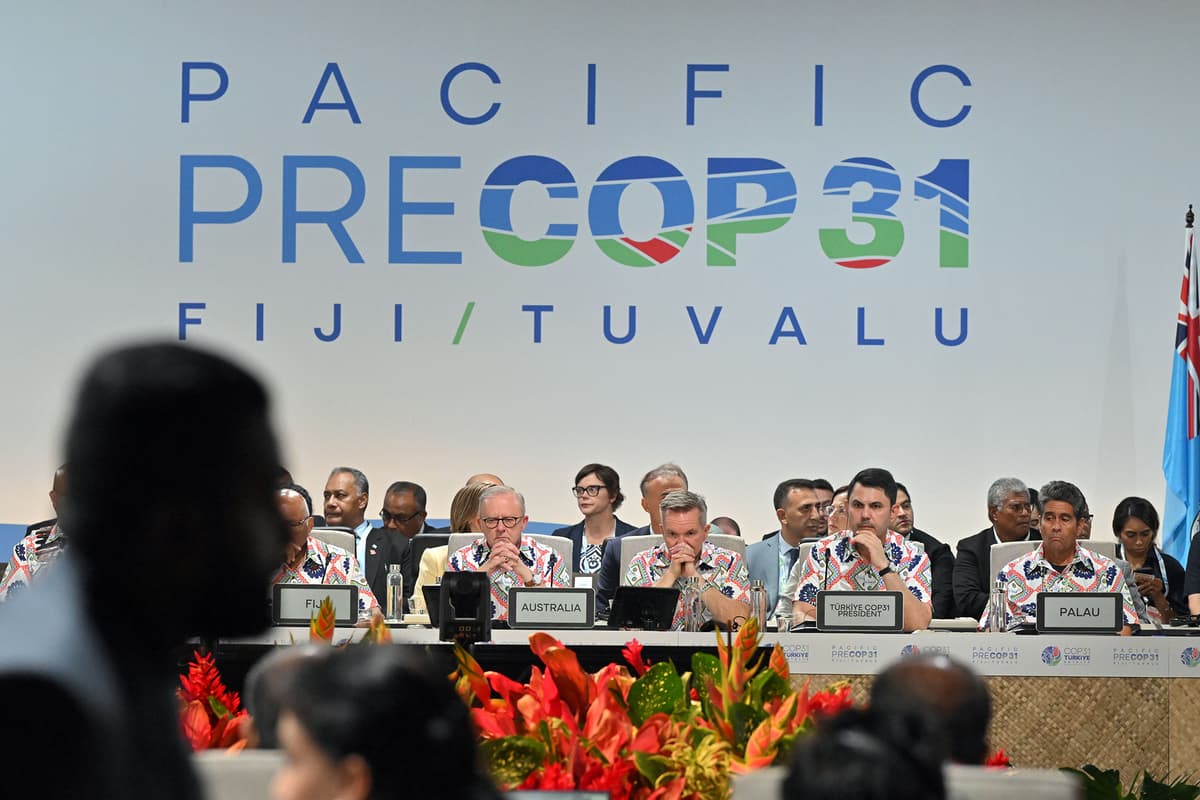
Photo: AAP Image/POOL/Mick Tsikas
The New South Wales Independent Planning Commission last week approved the largest coal mining project in the state’s history. The way it proposes to deal with the immense climate-harming emissions from burning the exported coal beggars belief.

On Wednesday in Fiji, Pacific ministers said what Australian ministers have so far avoided saying. The region needs a plan to end its dependence on coal, oil and gas.
At a high-level pre-COP31 side event in Nadi, Navigating the Pacific Energy Transition, ministers discussed their intention to develop a regional roadmap to transition away from fossil fuels. The event was co-hosted by the Beyond Oil and Gas Alliance (BOGA), the Marshall Islands, Fiji and Denmark. Ministers from Tuvalu and Vanuatu joined them and reaffirmed their vision of 100 per cent renewable energy and a fossil fuel free Pacific.
At this year’s Pacific Islands Forum, Leaders approved a Pacific Renewable Energy Commissioner to coordinate the shift to renewables and away from fossil fuels. BOGA and the NDC Partnership are backing countries that want to build their own transition roadmaps. The Asian Development Bank has set up a Just Transition Support Platform for the region. The Pacific Community says it stands ready to support the Commissioner and their team.
This is leadership with a track record. The Pacific called for a global phase-out of coal, oil and gas production in the Port Vila call in 2023. It helped deliver the first agreement to transition away from fossil fuels at COP28. It pushed for the global roadmap that Brazil’s COP30 Presidency will present before COP31.
Now the region wants its own. COP30 President André Corrêa do Lago says the Pacific’s move shows “what moving from ambition to action can look like.”
This is not just about electricity. Tuvalu’s Minister for Climate Change, Maina Vakafua Talia, said the work will look at supply and demand options and “mapping the likely changes in trade flows.”
Read that again. Trade flows. Supply. Extraction, export and burning.
That is the part of the transition away from fossil fuels that the Australian government has always preferred not to discuss.
The day before, Minister Talia gave a preview of this roadmap. In his closing remarks at the Pre-COP Tuvalu Special Leaders event, he said: “We must urgently phase out fossil fuels.” He reminded wealthy nations that they have binding legal obligations under Article 9.1 of the Paris Agreement to provide finance to developing countries, and that “the highest court has spoken.” He called for loss and damage to be fully funded, and for money to flow directly to least developed countries and small island states, without “bureaucratic hurdles and delays.”
He rejected false solutions like geoengineering and deep-seabed mining. And he urged the world to call out the public and private financial institutions that keep underwriting and subsidising fossil fuel expansion.
Then came the line that Australia should really listen to:
We should not be fighting wars over fossil fuels. We should be securing renewable energy for all.
The costs have been clearly mapped out too. The Marshall Islands’ Jess Gasper Jr said: “Fossil fuel prices are set beyond our shores, but their impacts are felt directly by our people.”
Fuel is $8 a gallon in the capital and $20 on the outer islands. Tina Stege, COP31 Pacific Envoy, said the Pacific must end its dependency on fossil fuels “for our own economic and energy security.” Pacific civil society has already named 1.5°C its “non-negotiable survival threshold” in the Funafuti Call for Climate Justice.
Which raises the question again. What is Australia offering the Pacific, besides small, token grants and lip service?
We signed the Belém Declaration. We sent departmental representatives, not a minister, to the First Conference for Transition Away from Fossil Fuels (TAFF) in Santa Marta. Minister Talia has backed that process as a “coalition of doers” willing to move beyond the lowest common denominator and says the world cannot be “constrained by the blocking actions of a few.”
Vanuatu’s Ralph Regenvanu has asked Australia to rethink its reliance on fossil fuels, and to phase out exports too.
The Albanese government has now approved 37 new and extended coal and gas projects since taking office. NSW opened new areas for gas exploration the same day the TAFF conference at Santa Marta wrapped up.
Quality research, analysis, explainers and factchecks from experts you can trust.
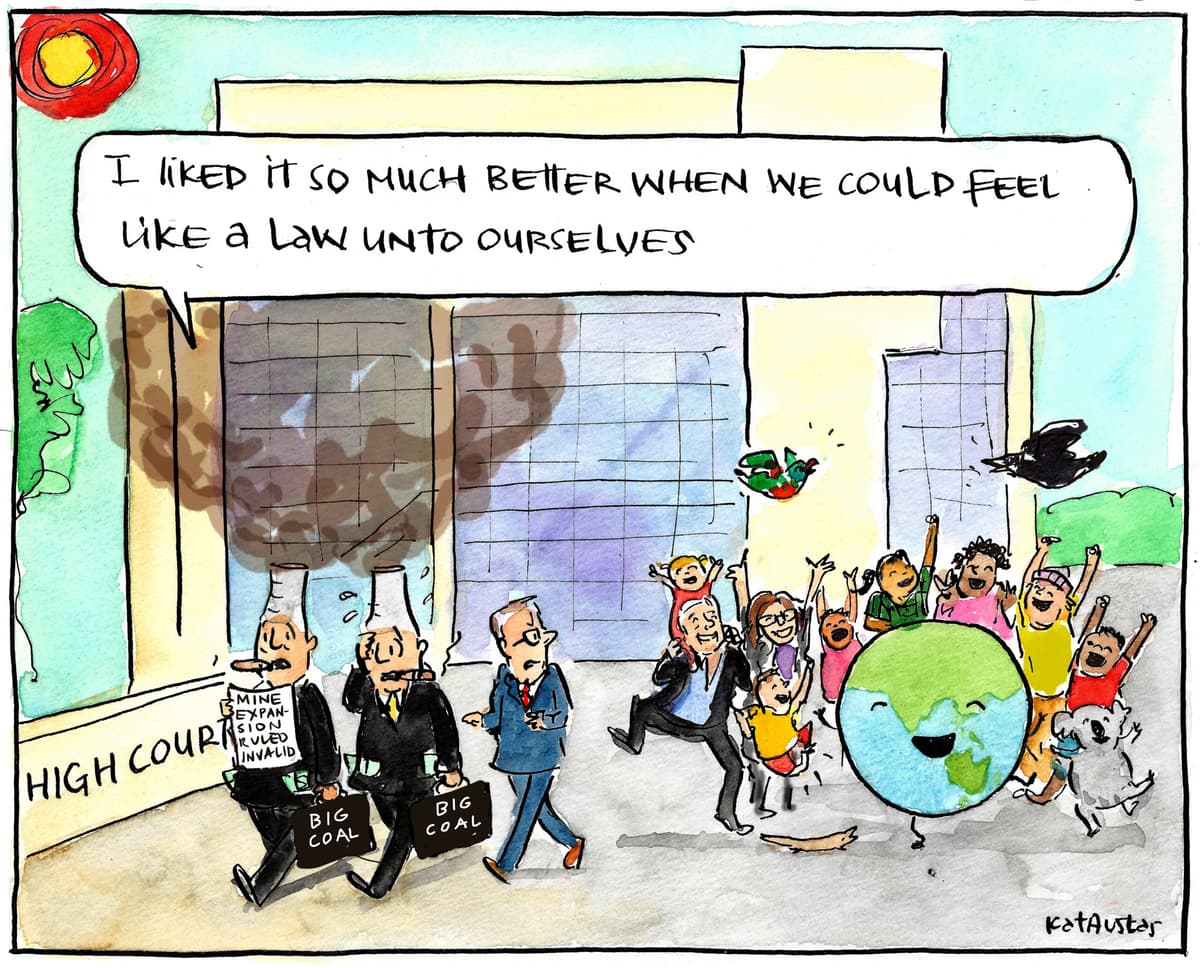
The next test is already on the desk. Last week, the NSW planning commission approved the Hunter Valley Operations (HVO) coal mine to 2045. By December, just after COP31, the Albanese government must decide whether to approve the HVO extension too. It will do that while digesting this week’s High Court decision. The court sided with a Hunter community group and confirmed that planners must consider the climate damage from exported coal burned overseas, known as scope 3 emissions.
In May, the Prime Minister said he hoped that legal challenge would fail. As the Australia Institute’s Rod Campbell put it, the court had to say, “what governments will not.” It should not have taken a High Court to point out the bleedingly obvious. Coal does not stop warming the planet because it is burned somewhere else.
Australia’s fossil fuel pathway is not just bad policy. For some Pacific nations such as Tuvalu, it means loss of their homeland – literally.
There is a light at the end of the tunnel. Australia holds real power as President of Negotiations at COP31, and the Pacific has just shown us the template. A roadmap from Australia does not need to be mysterious.
The Australia Institute has set out what it must, at a minimum, contain:
None of this is radical. It is the science-based, practical content of promises that we have already made.
Next month Australia will arrive at COP31 in Antalya as President of Negotiations, with the world watching. The Brazilian roadmap will be on the table.
Next year, Tuvalu and Ireland will co-host the Second International Conference on Transitioning Away from Fossil Fuels, and Minister Talia hopes the Pacific roadmap will be well advanced by then. We can arrive with a roadmap and a timeline of our own, or we can arrive with another declaration and another fossil fuel expansion permit.
The Pacific has drawn the map. Australia gets to decide whether to map our own pathway or keep digging.
Louise Morris is Head of Fossil Fuel Transition at the Australia Institute, with 20 years’ experience encompassing climate, energy, forest protection, and law reform in the not-for-profit sector, and federal politics.


