Coming back from Santa Marta, where nations were planning a fossil fuel phase-out, to the Australia of new gas permits and Japan’s gas-fired diplomatic arm-twisting is like stepping backward through the looking glass.
After spending almost two weeks in Santa Marta, a sun-drenched port city where the coal terminal looms over the Caribbean, a monument to everything the 57 nations gathered there were trying to move beyond. Governments were doing something radically pragmatic: talking honestly about fossil fuels.
Not polishing the turd and greenwashing through phrases like “transition fuels” or laundering with terms like “energy security”. Simply naming fossil fuels as the problem and talking about what comes next.
Then you land back in Australia. #thud
Before the jet lag cleared, the news caught up. The New South Wales government had opened new areas for gas exploration for the first time in more than a decade. The Victorian and federal governments have released five new offshore Otway Basin areas for new gas exploration bids. And Japan’s Prime Minister arrived in Canberra, with gas exports “part of the discussions”.
Of course they are.
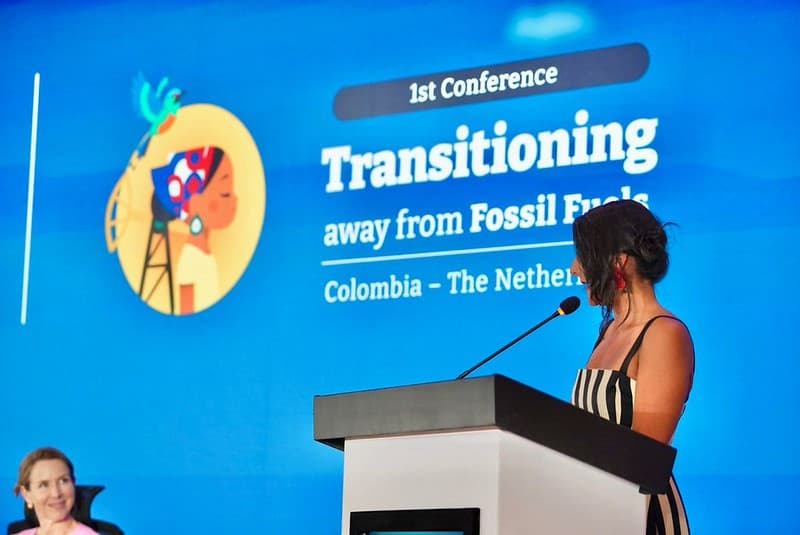
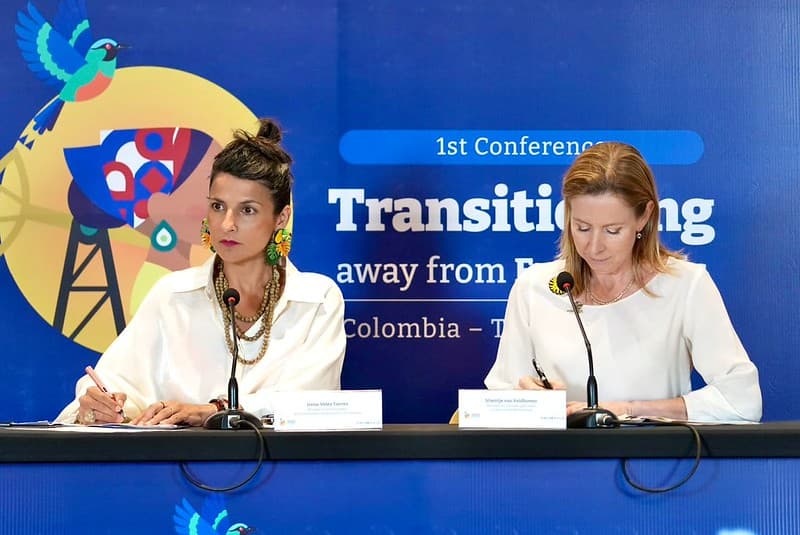
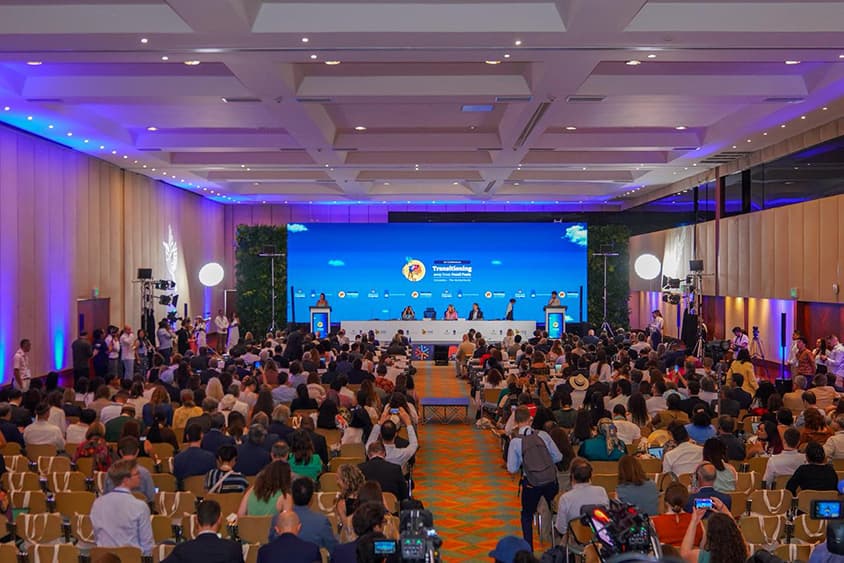
The First Conference on Transitioning Away from Fossil Fuels, co-hosted by Colombia and the Netherlands from April 24 to 29, was not a revolution. It was something more useful: ministers, scientists and envoys from 57 countries, representing roughly a third of the global economy, having open conversations about what a transition away from fossil fuels requires.
The format avoided the ritualised dysfunction of COP negotiations. No consensus requirement. No last-minute hollowing out of language. No national pavilions sponsored by fossil fuel companies selling carbon capture fantasies (looking at you, Australia and Santos).
Colombia’s environment minister, Irene Vélez Torres, put it plainly: governments are drifting further from climate science, pulled by denialism, lobbying and political cowardice. Santa Marta was an attempt to close that gap.
What emerged was more concrete than most COP outcomes. Three workstreams were established, including one focused on national roadmaps away from fossil fuels linked directly to countries’ UN climate commitments. A new scientific panel was launched to provide countries with rapid, tailored advice on accelerating the transition.
Tuvalu and Ireland also announced they would co-host the next conference in February 2027. The symbolism of Tuvalu, a nation literally measuring climate consequences in centimetres above sea level, was impossible to miss.
Johan Rockström, director of the Potsdam Institute for Climate Impact Research, opened proceedings with a warning that would trigger the two major parties and half the Australian political class into reflexive dismissal: the world will almost certainly breach 1.5 degrees within the next decade. Returning from overshoot is still possible, he said, but only if governments accelerate the transition away from fossil fuels.
Australia, notably, did not send a minister or MP. Just a departmental representative.
Still, Australia did sign the Belém Declaration. We are very good at agreeing to things, though not so good at doing them…
So with that in mind, the real question is always what Australia does when it gets home.
Apparently, what we do is open new gas exploration tenders.
On April 29 – the same day Santa Marta wrapped up – the Minns government announced it was opening two regions in western NSW for gas exploration: the Bancannia Trough and the Pondie Range Trough. To attract investment, exploration licence application fees were slashed from $50,000 to $1,000.
“What we need to do, carefully and methodically,” NSW Natural Resources Minister Courtney Houssos said, “is make sure we are responsibly pulling every lever.”
Every lever attached to expanding fossil fuels.
Meanwhile, the Albanese government has now approved 36 new, expanded or extended coal, oil and gas developments since taking office. Thirty-six. That is not a transition. That is an expanding portfolio.
And then.. there is Japan.
This is where this bizarre looking glass scenario becomes impossible to ignore.
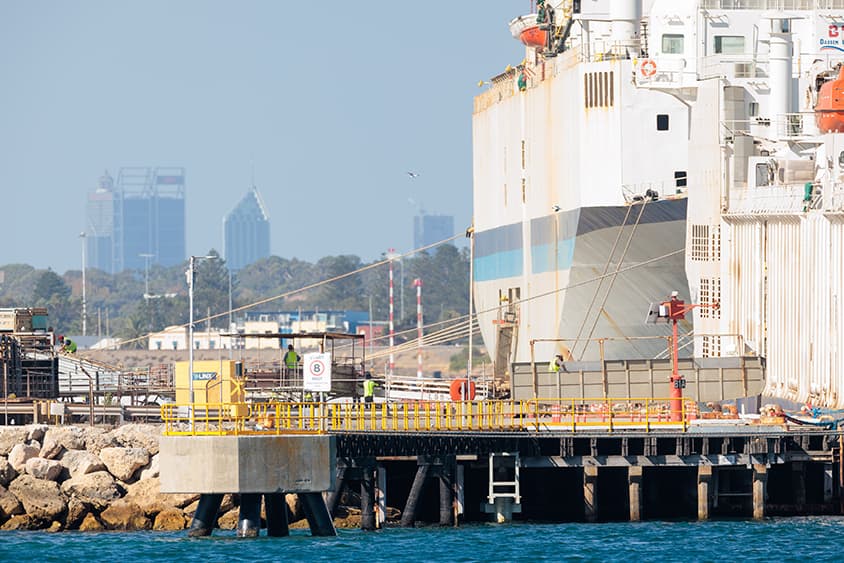
While the Australian delegation was in Santa Marta, participating in discussions about the end of the fossil fuel era, Japan was in Canberra ensuring Australia is expanding our gas exports – without any revenue tax on those exports, of course!
The numbers are staggering. Evidence provided by The Australia Institute to the Gas Taxation Select Senate inquiry found the Japanese government has raised an average of $1.8 billion annually over the past five years from gas imports. Australia, taxing exports of those same resources through the Petroleum Resource Rent Tax (PRRT), raised $1.4 billion.
The country buying the gas is making more money from it than the country selling it.
About 40 per cent of Japan’s LNG imports come from Australia. Yet a significant portion of that gas is resold to third countries. Research from IEEFA estimated Japanese companies resold between 598 and 756 petajoules of Australian LNG into other markets in 2025 alone, generating enormous profits in the process.
InfluenceMap also found Japanese fossil fuel companies met privately with Australian ministers and officials at least 24 times after Labor won government in 2022.
Labor MP Ed Husic has been one of the few Labor figures willing to publicly say what this arrangement actually is: a “sweet deal” for gas multinationals.
The industry line, endlessly repeated, is that taxing gas exports properly would push up prices for Japan. But collecting more tax from export profits would not raise prices paid by Japanese consumers. It would reduce the profits of gas exporters.
And when companies threaten to take their gas business elsewhere if Australia changes the tax settings, the obvious point is rarely made: they cannot take Australian gas from our gas fields anywhere without Australian government approval.
Yet when Prime Minister Takaichi arrived in Canberra for talks on defence, critical minerals and economic security, everyone understood gas would dominate the room.
“Gas plays a role in all our discussions because it fundamentally underpins the shared energy security between our countries,” Wong said.
But whose energy security? And at whose expense?
Because the Japanese government collects more tax from Australian gas than Australia does. INPEX, partly owned by the Japanese government, has exported billions of dollars of Australian gas while paying no PRRT and relatively modest corporate tax.
Who benefits from this system? Certainly not Australians.
Santa Marta emerged from frustration. Frustration at 30 years of COP meetings where fossil fuel-producing nations strip ambition from the room.
Colombia chose the venue deliberately. Coal ships were visible from the conference centre windows. The message was simple: we know what this industry is costing us, and we are planning for what comes after it.
Back home, Australia is still agreeing but not doing. Signing declarations while approving new exploration permits. Talking about transition while expanding exports. Allowing foreign governments and multinational gas companies extraordinary influence on domestic policy-making, while Australians receive little return.
We need to look directly at who benefits from the fossil fuel status quo, who pays the price for it, and which political parties continue to do the bidding of gas companies instead of the public.