Fri 16 Oct 2026 14.47 AEDT
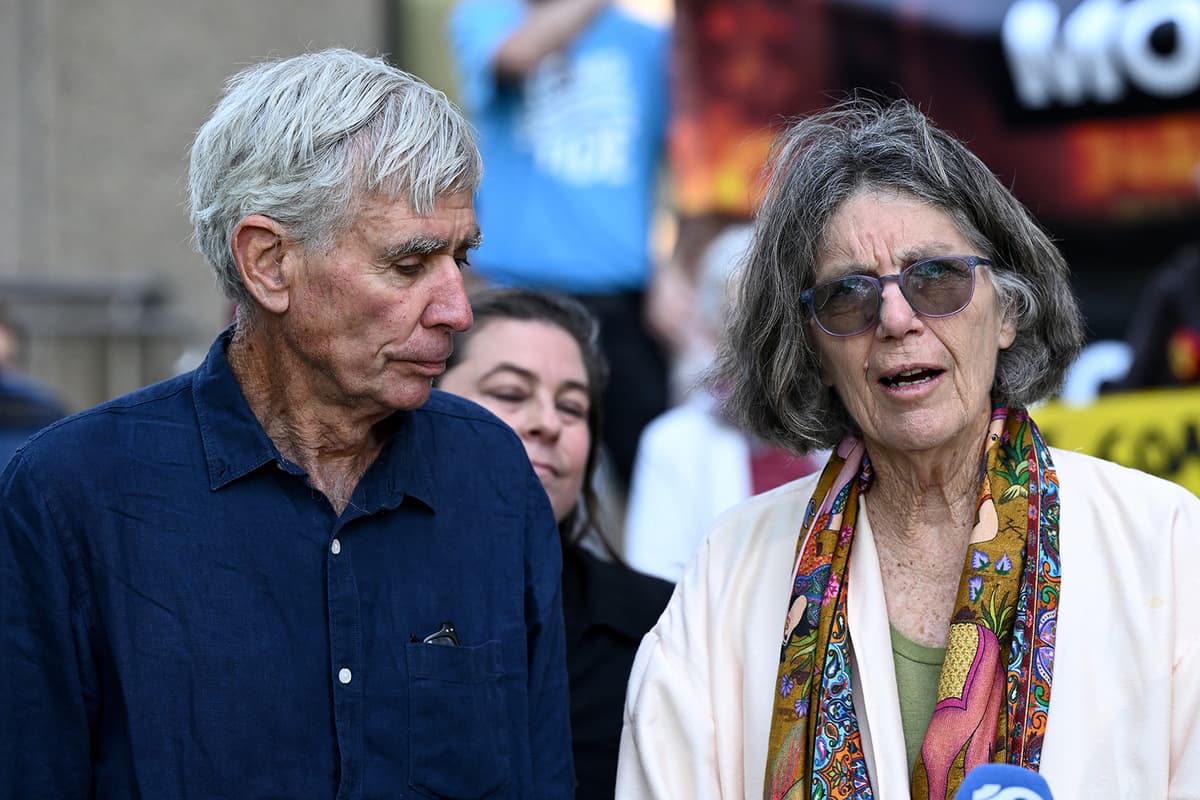
Photo: DAMS HEG (Denman Aberdeen Muswellbrook Scone Healthy Environment Group) Treasurer Tony Lonergan (left) and President Wendy Wales speak to media following their win in the High Court of Australia, in Sydney, Wednesday, October 7, 2026. (AAP Image/Dan Himbrechts)
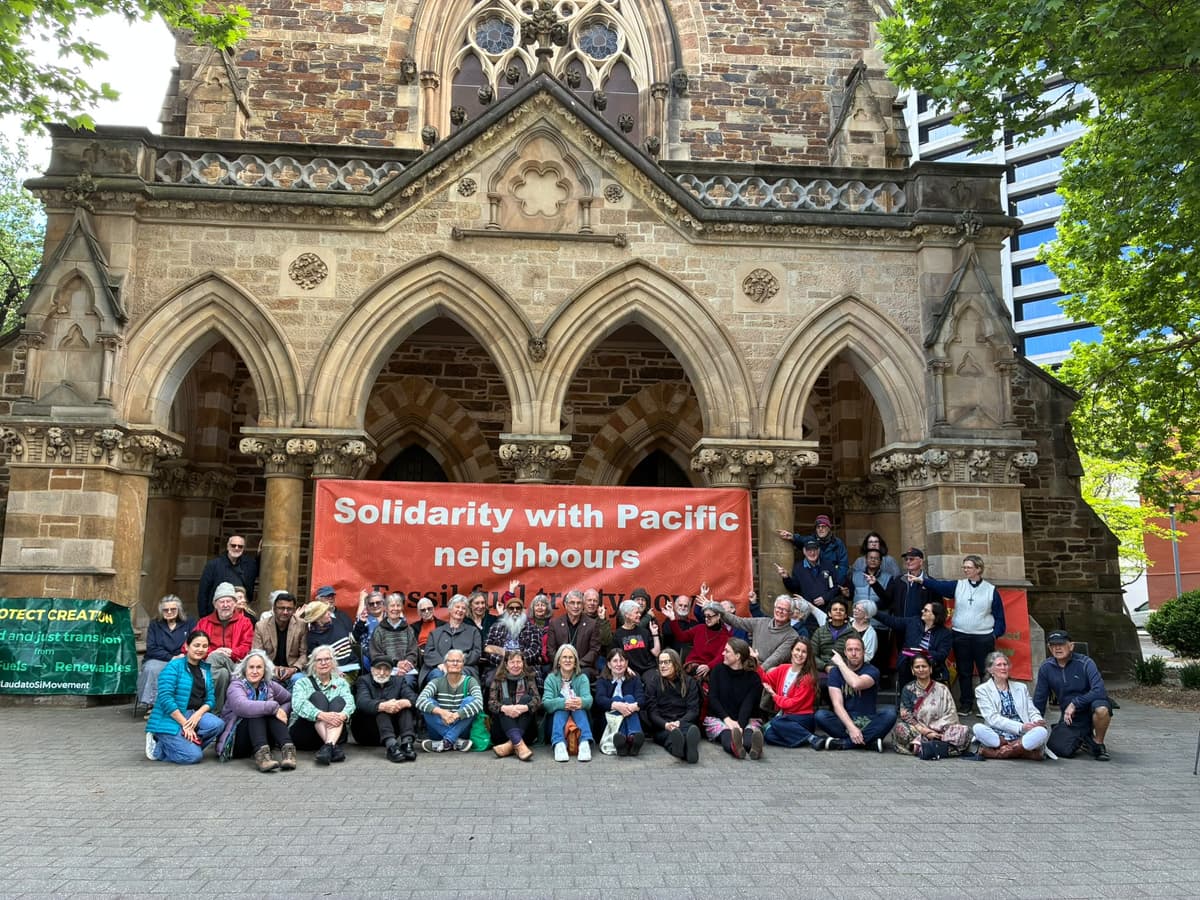
On Wednesday, 14 October, three speeches were given in Canberra at three different venues. The President of Palau spoke at the Australian National University. Tuvalu’s Minister for Climate Change and Environment, Maina Talia, spoke at the Australian Council for International Development (ACFID) conference. Australia’s Minister for Resources, Madeleine King, spoke at the National Press Club. Together, they highlighted the gap between what the Pacific is telling us, and what Australia is saying back.

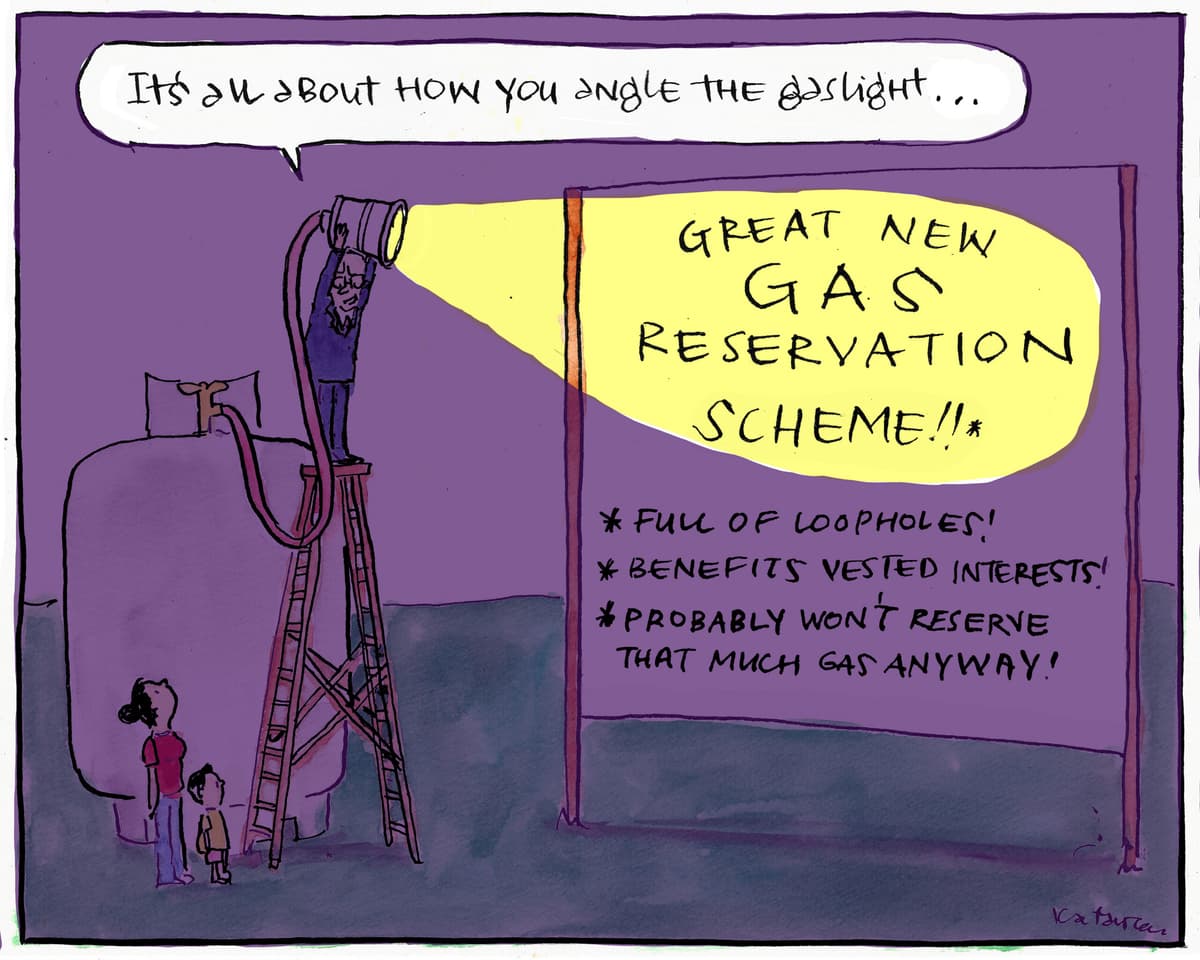
Greens Senator Sarah Hanson-Young said on ABC’s 730 last night that a 25% tax on gas exports would be “bigger and simpler” than Labor’s proposed gas reservation policy. She's right.
We are making progress in the transition to renewable energy at home, while remaining the world’s second-largest exporter of fossil fuels by climate-pollution content. Our neighbours are being asked to live with the consequences while we continue to profit from the cause.
Australia cannot control how much coal other countries burn. But through our laws governing mining approvals and fossil fuel development, Australian governments — and the voters that elect them — definitely have a say in how much coal we dig up and export.
That distinction matters. For too long, the fact that most Australian coal is burned overseas has been used as an excuse to distance our decisions on coal from their consequences for the global climate system.
The recent High Court decision on the Mount Pleasant coal mine in NSW has brought the limits of that argument into sharp focus.
At the centre of the case are Scope 3 emissions — the greenhouse gases released when coal is burned by its end-users, whether in Australia or elsewhere. Because most Australian coal is exported, the overwhelming majority of our emissions occur offshore.
The judgment is specific to NSW planning legislation. As environmental approval laws differ across Australia’s states and territories, some have characterised it as a technical legal decision. Others have celebrated it as a historic victory for climate litigation.
Both can be true.
The High Court was interpreting the requirements of existing NSW law. But its decision confirms something important: considering the climate impacts of a project is not enough. Where the law requires it, planning authorities must also consider whether action should be taken to minimise those impacts.
Delaying difficult decisions does not make their consequences disappear. And it raises a practical question. If we accept that the climate consequences of burning Australian coal overseas are relevant to decisions made here, what should governments and planning authorities do about them?
We are already seeing examples of how approval conditions might address those consequences. In September, the NSW Independent Planning Commission approved the continuation of the Hunter Valley Operations coal mines, requiring the operator to demonstrate how it would limit coal exports to jurisdictions with emissions reduction policies consistent with the goals of the Paris Agreement. The conditions do not eliminate the project’s climate impacts, but they demonstrate that planning authorities can consider ways of responding to emissions that occur beyond Australia’s borders.
This approach also reflects a fundamental reality recognised by the International Court of Justice (ICJ): greenhouse gases have the same impact on the climate system regardless of where they are released. A tonne of carbon dioxide emitted in China from burning Australian coal contributes to the climate crisis just as surely as one emitted in Newcastle.
Last year’s landmark International Court of Justice advisory opinion on states’ climate obligations takes this reasoning further.
The ICJ confirmed that countries have obligations under international law to protect the climate system, including exercising due diligence over activities within their jurisdiction.
Quality research, analysis, explainers and factchecks from experts you can trust.
In simple terms, governments must take appropriate steps, using the powers and resources available to them, to prevent significant harm to the climate.
Importantly, those responsibilities extend to the regulation of fossil fuel activities. The ICJ recognised that a government’s failure to take appropriate action in relation to fossil fuel production, consumption, exploration licences or subsidies may breach international law.
And these obligations are not simply owed to neighbouring countries or those directly affected by a particular activity. The Court recognised that protecting the climate system is a responsibility owed to other state actors.
That matters enormously for Australia. While we cannot control every decision made in another country, Australian parliaments make the laws governing fossil fuel development here, governments establish regulatory policies, and planning authorities exercise the powers those laws confer when considering individual projects.
Neither the High Court decision or the ICJ Advisory Opinion automatically prohibits further fossil fuel development. But read together, we must challenge the assumption that the overseas consequences of Australian coal production can be treated as someone else’s responsibility.
They also raise a more fundamental question: have we spent too long asking how we can continue approving fossil fuel expansion, when we should be asking why?
Why continue approving projects that will produce greenhouse gas emissions for decades to come, knowing what those emissions mean for the global climate and the risks faced by communities here and overseas? These are difficult questions, particularly for Australia’s coal-producing regions. A just transition requires careful planning, investment and genuine support for affected workers and regions, but delaying difficult decisions does not make their consequences disappear.We are already bearing the costs of that delay, and the longer governments put off confronting these questions, the harder a fair transition for communities becomes.
The Mount Pleasant decision is also a powerful reminder of the importance of ordinary people making their voices heard.
Their achievement demonstrates something fundamental about our democracy.
Environmental laws are only as effective as the willingness of governments and statutory authorities to apply them. And the ability of communities to hold those decision-makers accountable when they do not apply the law correctly. At the crux of this decision is a community who held government decision-makers to account when they failed to make it according to law.
At a time when community rights and the rule of law are increasingly contested, that is an important reminder.
Nicole Sommer is the Director of Litigation and Principal Lawyer, Environmental Defenders Office.