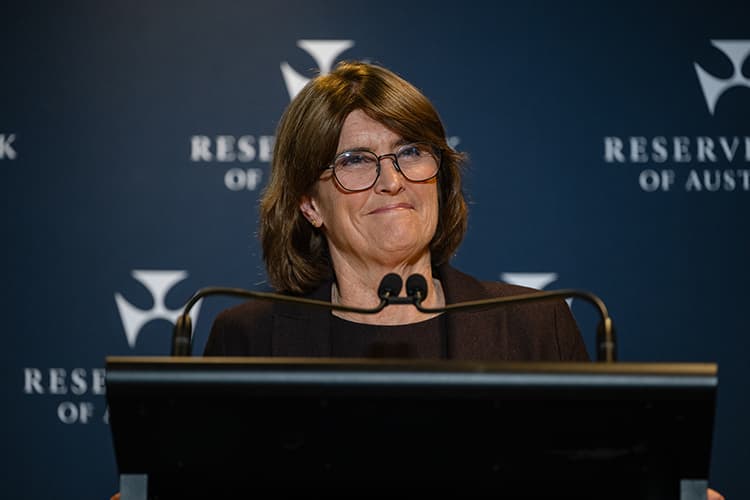
In May when the RBA raised the cash rate for the third time in three consecutive meeting, journalist Michael Pascoe asked the Governor of the RBA, Michele Bullock, a question based on the Reserve Bank’s then-prediction for unemployment to hit 4.7% in June 2028. He asked:
“So if the forecast comes true and unemployment does go up to 4.7 per cent, that would be considered too high?”
Bear in mind that at the time the most recent figures the Bureau of Statistics had released showed unemployment was 4.3%.
Governor Bullock replied “No, I’m not saying it’s too high.”
Well we no longer need to wait until June 2028, because yesterday the ABS revealed that not only was unemployment 4.7% in September, their revised figures show that it hit that level in August. That’s a full 22 months earlier than the RBA predicted.
Now maybe that’s being harsh, because in August the RBA changed its projections and predicted unemployment would reach 4.7% in December next year. But hey they’re still 16 months ahead of schedule. That’s some excellent work. If only everyone else was a so good at reaching their goals.
If you think I’m being mean about the RBA wanting higher unemployment, well let me given you Governor Bullock’s statement in August:
“I wouldn’t like people to think that because we’re seeing a slowing, and a rise in the unemployment rate, that means that we have to reverse course. Actually, we need that.”
Actually. We. Need. That.
Ruminate on those words.
The Reserve Bank does not think rising unemployment is a reason to think about stopping raising rates or (god forbid!) cut them.
The Reserve Bank absolutely believes to the core of its operations that unemployment needs to rise, and the 4.7% is not even too high.
They believe this because they think there are too many people with jobs, which means that not only is there too much money being spent by people (because of all those wages) but also that workers feel too bold to ask for higher wages. This in turn will mean wages go up too fast and business will raise prices to cover the extra costs of paying workers.
They think that raising interest rates will mean mortgage holders (and renters whose rents invariably also rise) will have to spend more repaying their mortgage and so will have less money to spend on other things.
That then means business is slow in the shops and business owners not only don’t feel like they can raise prices too much, they also start cutting back on shifts and no longer employ new people. This not only raises unemployment but it makes workers more worried about asking for a pay rise and instead just feel glad they have a job.