

Rent doesn't come with a youth discount. Why does income support?
There's a strange rule built into our social security system: young adults get $150 less money to live on each fortnight simply because of their age.
For 46 years a little-known tax has drained capital set aside for Aboriginal people in the Northern Territory. Last year, it took $20.8 million from the endowment of the very body Parliament created to put that money under Aboriginal control.

Thu 22 Oct 2026 11.41 AEDT
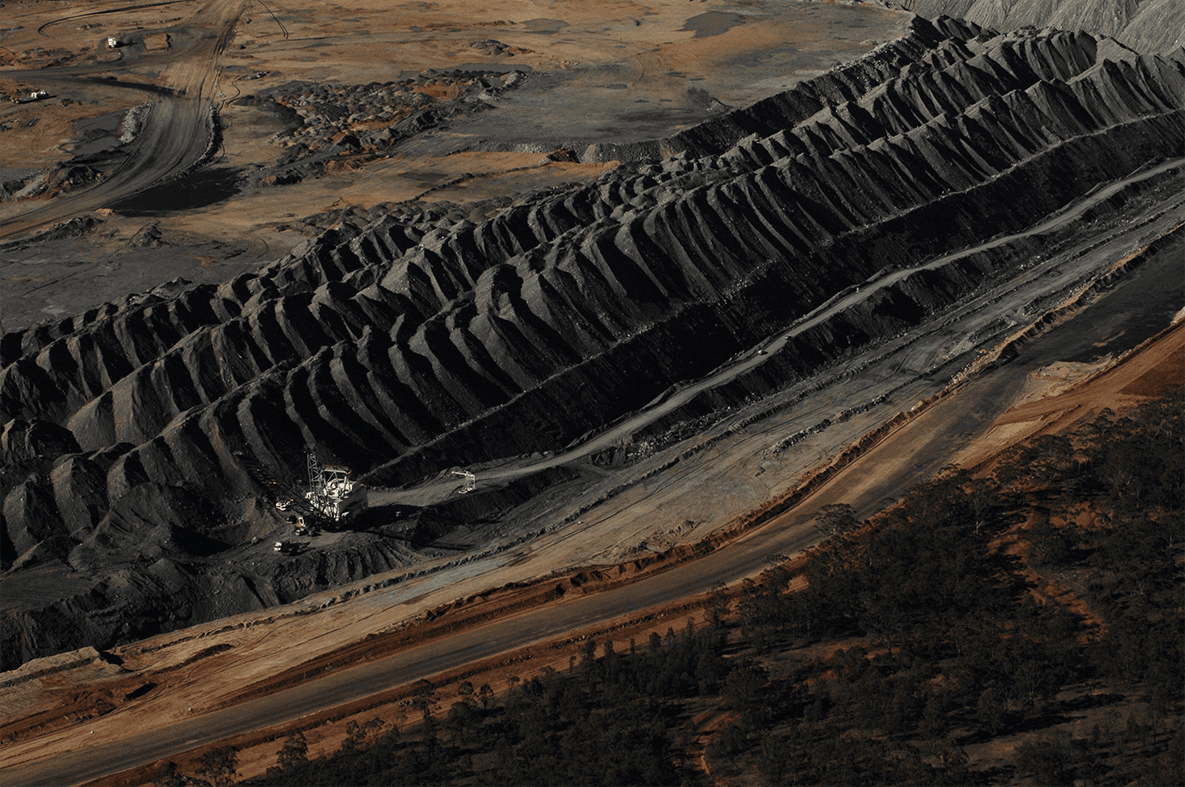
Photo: AAP Image/Dean Lewins
There's a strange rule built into our social security system: young adults get $150 less money to live on each fortnight simply because of their age.
Welfare groups are urging the Albanese government to abandon plans to restart Centrelink payment cancellations, warning unresolved legal concerns and inadequate safeguards could leave vulnerable Australians without money for food or rent.
First, patients were promised meaningful consultation on reforms to the Australian Health Practitioner Regulation Agency (AHPRA). It never happened. Then AHPRA asked the public for five minutes of feedback —and removed the responses they did not want displayed.

On 21 August 2024, the Commonwealth paid $500 million to Aboriginal Investment NT, the corporation Parliament created so that Aboriginal Territorians could control their own capital. It was a landmark transfer. It also cost $520.8 million. The extra $20.8 million went to the Australian Taxation Office (ATO).
That money was not income. It did not go to an individual, a business or anyone with a tax bill. It moved from an account created by the Commonwealth to a body created by the Commonwealth, and the Commonwealth charged 4 per cent along the way.
The charge is the mining withholding tax, and it has been quietly eroding Aboriginal capital since 1979.
When mining takes place on Aboriginal land in the Northern Territory, companies pay royalties to the NT Government or, for uranium, to the Commonwealth, not to Traditional Owners. Under the Aboriginal Land Rights (Northern Territory) Act 1976, the Commonwealth then pays an equivalent amount from its own revenue into the Aboriginals Benefit Account. That money funds the four NT land councils, communities affected by mining, grants for Aboriginal benefit and, since 2021, Aboriginal Investment NT.
The land rights law said nothing about tax. But in 1979 the Fraser Government, with John Howard as Treasurer, amended the income tax law to levy 6.4 per cent on payments out of the Account. The rate was set at one-fifth of the lowest personal income tax rate, on the assumption that the money would end up in individuals’ pockets as income.
It rarely did. The land rights law was designed to stop royalty money being handed out to individuals. The money goes to land councils, Aboriginal organisations, charities and now a Commonwealth investment corporation, none of which would otherwise pay income tax.
Nor do the recipients bear the tax. A land council’s budget is approved by the Minister and paid in full; the tax is added on top and met by the Account. In 2024–25 the Account spent $172.8 million on land council administration, of which $6.9 million went to the ATO. Every dollar of tax is a dollar permanently removed from the capital held for Aboriginal Territorians.
Because the tax falls on money going out rather than coming in, it has accelerated as the Account has been drawn down. Over the seven years to 2024–25, royalty receipts fell by 37 per cent while the tax collected rose by 367 per cent, taking $101.3 million in all. In 2024–25 alone, it took $35.5 million, equal to 13 per cent of that year’s royalty receipts, and two-thirds of it was levied on payments to Aboriginal Investment NT.
The Account’s reserve fell from $1.4 billion to $844 million that year as the new corporation was capitalised. With royalty income forecast to fall over the next decade, that reserve and the capital now held by Aboriginal Investment NT are the main financial buffer for land rights in the Territory. A tax on their drawdown erodes it.
Quality research, analysis, explainers and factchecks from experts you can trust.
The rate was cut in step with income tax rates, reaching 4 per cent in 1994. Then, without any recorded decision, the adjustments stopped. The lowest marginal rate fell to 15 per cent on 1 July 2026, which on the tax’s own formula means a 3 per cent levy. The Commonwealth still charges 4.
It is also out of step with the Commonwealth’s other land regime. Since 2013, with effect back to 2008, native title benefits have been tax-free. A mining payment to a native title holder bears nothing; a functionally identical payment made under land rights law bears 4 per cent.
None of this is new. I first came across the tax as a young researcher in 1982 and recommended it be reviewed. The 1984 review of the Account, which I chaired, recommended its abolition. So did a tax expenditure review submission from the Aboriginal and Torres Strait Islander Commission in 1997, and the Reeves review of the land rights law in 1998. Nothing happened.
A modest rate has made an unprincipled impost easy to overlook. Had it been set at 64 per cent rather than 6.4, it would not have survived four decades.
The fix is simple. A short amendment, first drafted in 1984, would abolish the tax. It should take effect by 1 July 2027 at the latest, and in the meantime, the Commonwealth should at least apply its own 3 per cent formula.
But abolition alone would leave the damage in place. The tax has removed more than $200 million from the Account since 1979. Had that money stayed and just earned the bond yields the Account was permitted to invest in, it would be worth around $365 million today.
That capital should be restored. Not as a tax refund, which the Commonwealth would resist for fear of precedent, but as a parliamentary appropriation, as the $500 million endowment was. It should go to Aboriginal Investment NT’s Future Fund, which is mandated to grow capital over the long term under an Aboriginal-majority board. And abolition should come first, so that the restoration is not itself taxed.
The institutions to carry this case now exist. Aboriginal Investment NT, the four land councils that appoint most of its board, and the Aboriginal Peak Organisations NT can put a common position to the Minister for Indigenous Australians and the Treasurer. The sum is small for the federal budget and large for Aboriginal Territorians.
Four decades of reviews have reached the same conclusion. What has been missing is political will. It is time to stop taxing Aboriginal capital, and to give back what has been taken.
Jon Altman is an emeritus professor at the Australian National University and was founding director of the Centre for Aboriginal Economic Policy Research (1990–2010). This article draws on his POLIS Working Paper No. 7/2026, The Mining Withholding Tax and the Aboriginals Benefit Account.


