For the first time, the corporate regulator is checking whether these companies are telling the truth about what it will cost to remove the wells, pipelines and platforms they have left scattered across Australia’s seafloor. It is the most significant intervention into the sector’s clean-up accounting this country has seen, and it could rewrite the balance sheets of some of our biggest fossil fuel companies.

Wed 4 Nov 2026 10.16 AEDT
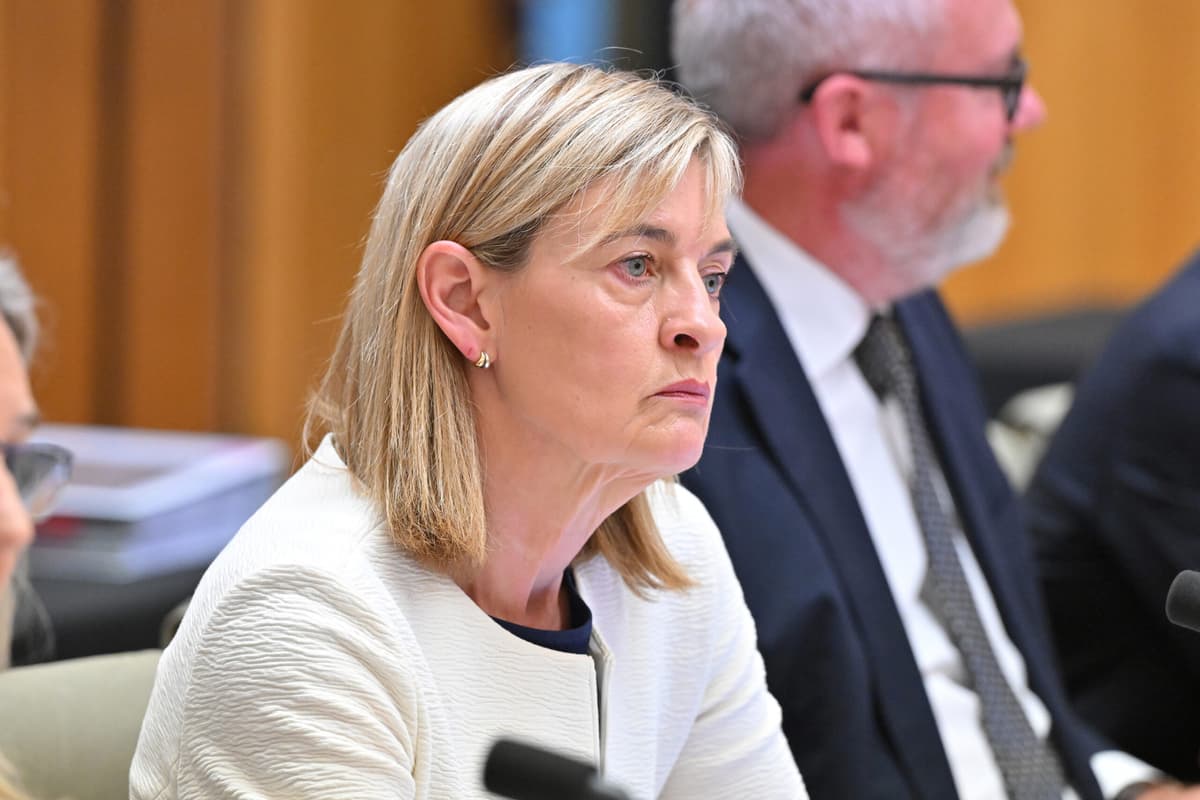
Photo: AAP Image/Mick Tsikas


For decades, Australia’s oil and gas industry has been allowed to mark its own homework on the biggest bill it will ever face: the cost of cleaning up its mess from Australia’s oceans.
That era is ending. Last week in Senate Estimates, Senator Vanessa Bleyer’s questioning revealed that the Australian Securities and Investments Commission (ASIC) is doing a desktop audit of the accounts of eight oil and gas companies. They include Woodside, Santos, Amplitude Energy and Beach Energy.
For the first time, the corporate regulator is checking whether these companies are telling the truth about what it will cost to remove the wells, pipelines and platforms they have left scattered across Australia’s seafloor. It is the most significant intervention into the sector’s clean-up accounting this country has seen, and it could rewrite the balance sheets of some of our biggest fossil fuel companies.
The stakes are huge. The Federal Government’s own analysis puts the cost of decommissioning offshore oil and gas infrastructure at more than $60 billion. That was roughly the combined market value of Woodside and Santos when it was released, and the analysis admits the true cost could be up to double.
Yet investors, superannuation funds and the public have been kept almost entirely in the dark. Carbon Tracker found that Australian oil and gas companies disclose just 19 per cent of the information needed to understand their clean-up liabilities. That is less than half what their counterparts in the UK and Canada disclose.
Even the numbers that are disclosed paint a worrying picture. Amplitude Energy’s reported clean-up bill is now more or less equal to the company’s entire market value. Santos’s reported restoration provision is around a quarter of its market value. These are not rounding errors. They are liabilities big enough to sink companies.
And these figures only ever move in one direction: up. In the UK North Sea, decommissioning costs have blown out by 76% on average. Here at home, Woodside and its partner once put the cost of cleaning up the Northern Endeavour at around $362 million. Then, near the end of the field’s life, Woodside sold the facility to a small, little-known operator. That company went bust, and the government was left to clean up the mess. It has already spent $1.5 billion on the first of three phases. Industry insiders fear the final bill could exceed $2.5 billion, almost seven times the original estimate.
We watched it happen again this year. Pilot Energy and Triangle Energy collapsed, leaving a $200 million clean-up bill for the Cliff Head platform off Western Australia. Months earlier, the books showed a provision of just $37 million.
Quality research, analysis, explainers and factchecks from experts you can trust.
This is why ASIC’s audit matters. Understating clean-up costs isn’t a harmless accounting quirk. It inflates profits, props up share prices and keeps the true risk hidden until it’s too late. When the house of cards falls, taxpayers and the marine environment are left holding the bill.
ASIC’s intervention is no accident. For three years, the Wilderness Society has been digging into how this industry accounts for its clean-up obligations. With our lawyers at Equity Generation Lawyers, we lodged two complaints with ASIC. They exposed significant deficiencies and possible illegalities in how clean-up liabilities are reported across the sector. We stood up at AGMs and made boards answer, on the record, for their numbers.
But an audit is a beginning, not an end. ASIC must be rigorous, question every assumption, and make its findings public, so investors and the community can see exactly what it uncovered. Any company that has understated its liabilities must be made to restate its accounts. Auditors who signed off on those numbers should face consequences too.
And knowing the true size of the bill is not the same as making sure it gets paid. Renters pay a bond. Most miners pay a bond. Oil and gas companies, extraordinarily, do not. The Federal Government has consulted on financial assurance for long enough. It must now legislate mandatory, upfront bonds, so the next Cliff Head never happens.
Australia’s oceans are not a junkyard for rusting fossil fuel infrastructure. The companies that made fortunes drilling them must pay to clean them up.
The regulator has finally started checking. For companies that have been fudging their figures, that should be a very uncomfortable thought.
Amanda Holly is the Manager of Corporate Advocacy and Engagement at The Wilderness Society.

