Who spent big in Canberra’s last election – and how proposed changes would hurt newcomers
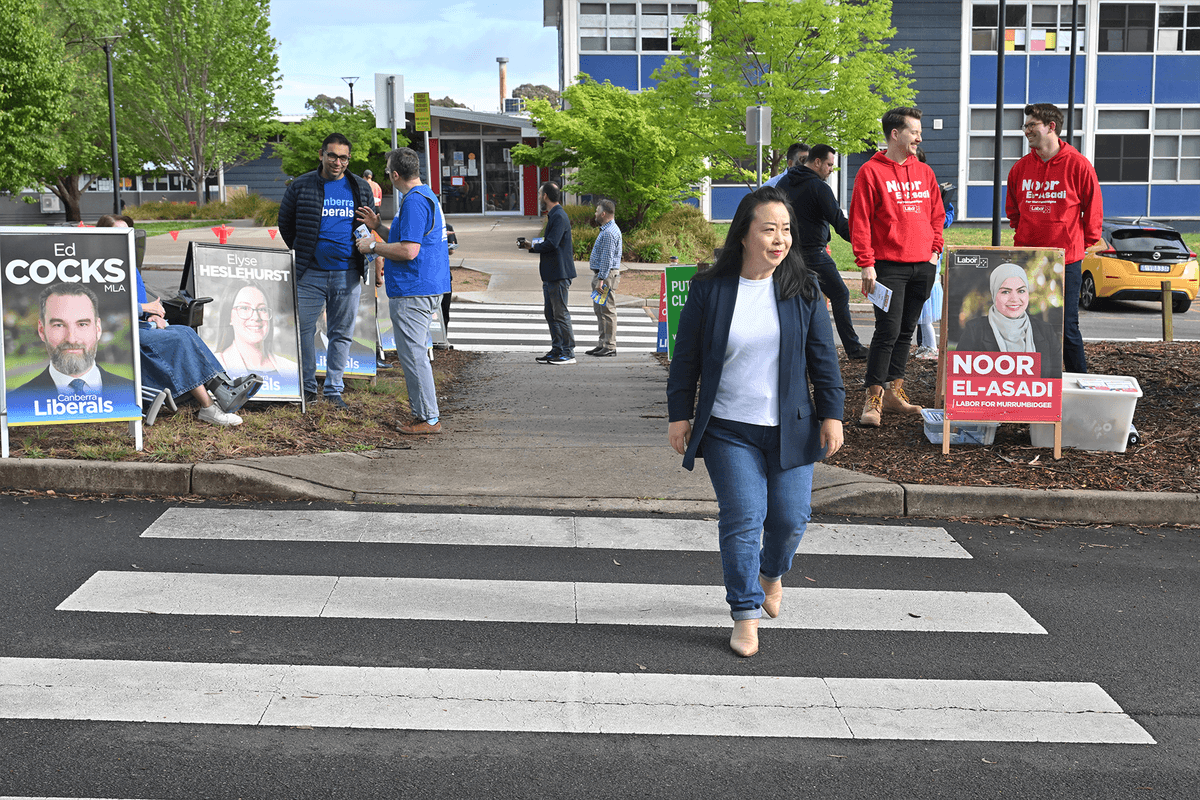
Could big spending explain the success of the independents at the ACT election? New data from the ACT Electoral Commission shows this isn't the case.
Look at how state governments have fiddled with the preferential voting system, only to suffer from the changes they introduced.

Thu 11 Sep 2025 00.00 AEST
Photo: AAP Image/Chris Kidd
I collect examples of political manoeuvres gone awry. There is an element of schadenfreude when a politician is so sharp that they cut themselves. But there is a more serious purpose. By showing that cynicism and selfishness can backfire, I hope to encourage politicians to make principled decisions.
Look at how state governments have fiddled with the preferential voting system, only to suffer from the changes they introduced.
In the 1980s, the Wran Labor Government switched New South Wales from full preferential voting to optional preferential. In optional preferential, when one party runs in a seat it puts similar parties at a disadvantage. That hurt Liberal and National candidates. But the Liberal–National Coalition adapted by running only a Liberal or a National in each seat.
The tables have turned. Today, Labor has more to lose from Green and progressive minor party votes exhausting while the Liberals hold seats they might have lost to independents under full preferential.
In Queensland, Labor governments switched from full to optional preferential, only to miss out on preferences from the rising Green vote, then switched back just in time for preferences from the resurgent One Nation and new United Australia Party to favour the Liberal Nationals.
It is argued that both models have their advantages. The benefit of full preferential voting is that every voter helps decide between the final two candidates in contention. Conversely, optional preferential voting can save incomplete votes from being considered informal.
Full preferential is fairer and better represents the public will. But if you aren’t convinced that the benefits of full preferential outweigh the costs, let us examine the democratic merits of each model. As the back-and-forth in NSW and Queensland shows, choosing between models based on which “side” of politics would benefit is a fool’s errand.
Cynicism can also lead politicians into the traps they had laid for others.
Advertisement

Prime Minister Scott Morrison discovered the rare double-edged “wedge” in 2022, when he tried to play politics with religious discrimination laws. He pulled long-promised anti-corruption legislation to make way for legislation that would protect against religious discrimination but allow for discrimination against transgender kids. According to senior journalist Michelle Grattan, Morrison “thought he could tactically outplay [Opposition Leader] Anthony Albanese, wedging Labor on an electorally sensitive issue.”
Five Liberals crossed the floor to vote with Labor and crossbenchers on amendments that would protect children from discrimination on the basis of sexuality and gender identity. The Morrison Government shelved the whole package, and later ditched the promised anti-corruption body too.
Under pressure on integrity and having wedged themselves, the Liberals lost the subsequent election. Albanese delivered a National Anti-Corruption Commission that, while there is room for much improvement, has powers well beyond what Morrison intended.
Politicians are stereotyped as power-hungry, but some are so wedded to their masterplan that they lose the chance for power and influence.
Consider the agonies of the Tasmanian Labor Party. The party declined a chance to form government when it refused to negotiate after the 2024 election delivered a hung parliament. It had another chance this year when a motion of no confidence brought down Premier Jeremy Rockliff. Labor demurred. It seems the plan was to force the Liberals to replace Rockliff with the less popular Eric Abetz, let the Government muddle on a while longer, and then bring Abetz down and contest the next election from a position of strength.
With Labor declining to form government, the Liberals went to an early election with Rockliff still at the helm. The Liberal vote rose and the Labor primary fell to its lowest ebb in 122 years. Even then, Labor had a path to form government by working with the Greens and progressive independents, but attempts to strongarm them just pushed them closer to the Liberals. Labor lost its own motion of no-confidence 24 to 10.
If Labor had believed its own rhetoric about the horrors of the Rockliff Liberal Government, it could have negotiated. It had three opportunities to do so. But the party was more interested in playing games than governing, it seems.
Tasmanians’ appetite for elections is exhausted, and Labor is no closer to forming government. Former Labor adviser Jody Fassina has now editorialised that only by abolishing proportional representation does Labor have any chance at forming government.
Spending more time trying to change the rules to win the game, rather than working together to represent the will of the people, is fraught with danger and goes some way to explaining why the primary vote for the major parties is at its lowest point in the post-War era.
The future is beyond our power to predict with certainty. Politics is chaotic and dynamic. Schemers end up hoist by their own petard. These ironic reversals of fortune make the case for doing the right thing, not playing at Machiavelli.
Bill Browne is the director of the democracy & accountability program at the Australia Institute.
Advertisement
Could big spending explain the success of the independents at the ACT election? New data from the ACT Electoral Commission shows this isn't the case.
The Australian Electoral Commission (AEC) has been urged to rethink plans that could shut or merge about one third of its divisional offices, with a union warning the loss of local expertise could disrupt future elections.