Collectively, local government is responsible for about one-third of all Australia’s public infrastructure assets. But how do they work? How do they raise money? And what is their future?
Thu 15 Jan 2026 06.00
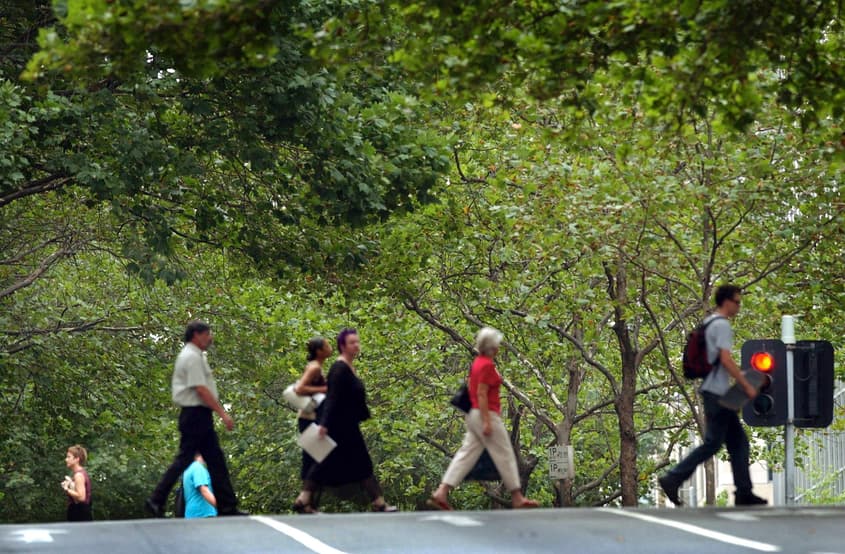
Image: AAP/Joe Castro


When you step outside your door, the amenity of your local area is managed by your local council. Beyond the nature strips, playgrounds and community centres, councils maintain around 75% of the national road network and manage more than $600 billion in public assets. Collectively, local government is responsible for about one-third of all Australia’s public infrastructure assets.
But how do they work? How do they raise money? And what is their future?
There are currently 537 local councils Australia-wide, according to the Australian Local Government Association (ALGA). They raise and spend around $50 billion per annum and employ more than 213,000 people across about 40 different occupations. Around 55% of local governments are located in regional, rural, or remote areas, 25% on the metropolitan fringe and 20% in major urban areas.
Local governments are not mentioned in the Australian constitution, instead they are legally established by statutes under the constitutions of the states and Northern Territory. (The ACT does not have local councils.) This means that councils are accountable not just to their constituents, but also to state governments for the effective discharge of their responsibilities under the relevant legislation. State governments can abolish local governments, change their boundaries, amalgamate them and create new ones.
On average, local councils raise about 80% of their revenue independently, mostly from rates (about 38%), user fees and charges (about 30%), commercial activities and investments. The remaining 20% is largely from state and federal grants.
However, the averages mask deep differences in the financial positions of different councils. In rural and remote areas, grants often make up well over half of local government revenues: many councils could become bankrupt without steadily increasing federal and state support. In particular the annual federal financial assistance grants, which are the largest single pool of funds and the only reliable source of ‘untied’ (as opposed to specific-purpose) support.
Moreover, local governments in general face severe financial constraints and cost pressures, including:
A related concern is the near-certainty – based on previous High Court judgements – that most specific-purpose payments being made directly to councils from Canberra, rather than ‘through’ the states, would be declared unconstitutional if challenged.
Looking internationally, Australia allocates less resources to local government than comparable federated countries such as Austria, Belgium, Canada, Germany and Mexico, according to ALGA research.
Research by the OECD shows that Australia’s local governments rank 30th out of 37 countries examined in terms of revenue per capita. Whilst this calculation reflects in part the limited responsibilities of our local councils compared to their counterparts in many other countries, it is also the case that over recent decades Australian local government revenues have grown significantly more slowly than those of federal and state governments, even though property wealth – the basis for council rates – has increased dramatically.
The problems of slow-growing revenue and rapidly growing costs mean that many councils lack (or are being denied) the capacity to continue raising sufficient revenues to fund their statutory obligations and increasing community needs. This has led to a rash of inquiries into local government’s financial sustainability over recent decades. These include studies by state and federal parliaments and local government associations, the Commonwealth Grants Commission, the Productivity Commission and various independent reviews.
In broad terms, these inquiries indicated that the medium-long term sustainability of many councils across Australia is in doubt. Particularly many rural-remote councils with small, widely dispersed and declining populations, lengthy road networks and a limited revenue base. Urban or urbanizing local governments dealing with rapid population growth and/or complex social, economic and environmental challenges are also at risk.
This has important implications for the capacity of local governments to contribute effectively to Australia’s federal system of governance and overall productivity. A failing local sector necessarily imposes additional pressures on state and Commonwealth governments. It also undermines a key element of Australian democracy.
In 2024, the House of Representatives Standing Committee on Regional Development, Infrastructure and Transport began an Inquiry into Local Government Financial Sustainability. That inquiry never finished because of the 2025 election, but the Committee did produce an Interim Report on what they heard from submitants and public hearings around the country. The Government recently announced that the inquiry will re-commence.
The terms of reference for this ‘second stage’ of the inquiry have been broadened, seeking more specific information about:
The reconvened inquiry will have full access to all the submissions received by the same Committee in the 47th Parliament. Its broadened terms of reference offer an opportunity to take a fresh and carefully considered look at the challenges facing local government, and to establish a long-term national perspective on the sector’s financial sustainability and how it can be secured through consistent and cooperative action by all three levels of government.
In particular, the new Committee can make progress in five critical areas:
Dr Ed Wensing is Associate and Special Adviser, SGS Economics and Planning and Research Fellow, City Futures Research Centre, University of New South Wales.
Adjunct Professor Graham Sansom is an Adjunct Professor Institute for Public Policy and Governance at the University of Technology Sydney.
Advertisement
British economist Gary Stevenson, known as 'the People's Economist' has delivered blunt advice to Australian politicians during his tour of Australia, warning that living standards will continue to deteriorate unless they start taxing the “super-rich elite.”
Advertisement
Today’s announcement by One Nation of its policy to charge the gas industry royalties instead of giving them the gas for free reflects the views of voters across the political spectrum.
Nothing in this world is certain but death, taxes, and the decommissioning of aging oil and gas infrastructure. An accelerated energy transition will accelerate asset retirements, but field decline is occurring regardless.