Support for a 25% tax on gas exports is surging across Australia: uniting politicians, big business, environmental organisations, and voters in an ever-growing coalition.
This rapidly expanding support has created a unique political window, making it easier than ever for the government to act and secure $17 billion annually for essential services like schools and hospitals, and the momentum is only continuing to build.
The past year has seen support grow from niche advocacy to nationwide backing. What began with think tanks and unions has snowballed into endorsements from every corner of the community, crossing ideological lines and established political norms.
Today’s coalition calling for a fairer return on our gas exports includes major banks standing alongside environmentalists, parents, doctors, and artists. Such broad alignment is rare in the polarised politics of modern Australia, positioning the tax as a rare opportunity for a unifying win-win: a broadly popular policy for the government to implement that will yield fair revenue from public resources without burdening everyday Australians.
Diverse Voices Amplify the Surge
The Australian Council of Trade Unions first championed the idea of a 25% flat tax on gas exports, a policy now backed by the Commonwealth Bank, Australian Council of Social Service, and cultural icons like Midnight Oil and Missy Higgins, via a campaign coordinated by Green Music Australia. Environmental groups from the Australian Conservation Foundation to Greenpeace have joined the call, alongside health advocates like Doctors for the Environment.
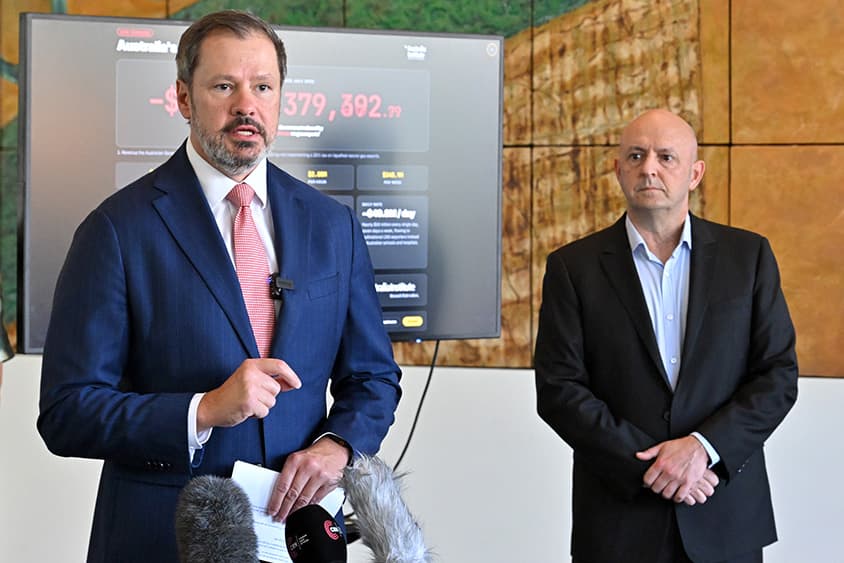
Politically, the spectrum calling for a fairer return on our gas exports spans the Australian Greens, Pauline Hanson’s One Nation, Clive Palmer’s United Australia Party, Labor figures like Ed Husic MP and Senator Michelle Ananda-Rajah, Liberal MP Andrew Hastie, and independents including Senator David Pocock, Zali Steggall MP, and others.
This crossbench and cross-party support provides an easy path for the Albanese Government to pass a fair gas export tax through the fragmented Senate.
Public Opinion Solidifying
Voters themselves are joining the groundswell of support.
A national poll of 1502 voters, conducted in March by YouGov on behalf of the Australia Institute, found more than three in five Australians (61%) support a flat 25% tax on gas exports. That includes 60% of Coalition, 61% of Labor, 73% of Greens and 66% of One Nation voters who are on board with the idea.
In Farrer, a rural seat long considered Coalition territory and now headed for a by-election, 75% of voters are in favour (including 82% of One Nation voters, 80% of Greens voters, and 77% of Labor voters).
These figures reflect a popular mandate that dramatically lowers the political risk for the government when it comes to implementing such a tax. Governments thrive on voter alignment, and here, support for a gas export tax spans demographics, political backgrounds, and regions.
Significant Revenue Potential
Australia Institute modelling underscores the potential high stakes of the current gas tax debate, showing a simple 25% export levy could raise $17 billion a year, dwarfing the current Petroleum Resource Rent Tax’s low returns. Weekly delays now cost $350 million, a stark reminder of lost opportunities for Australian hospitals, schools, and essential services.
As support continues to broaden across politics, business, and the public, the government’s path to implementing a 25% gas export tax has never been clearer.
List of Supporters for a Fairer Gas Tax
Political Parties and Politicians
Organisations
Public support
- 61% of Australians, including:
-
- 61% of Labor voters
- 60% of Coalition voters
- 73% of Greens voters
- 66% of One Nation voters