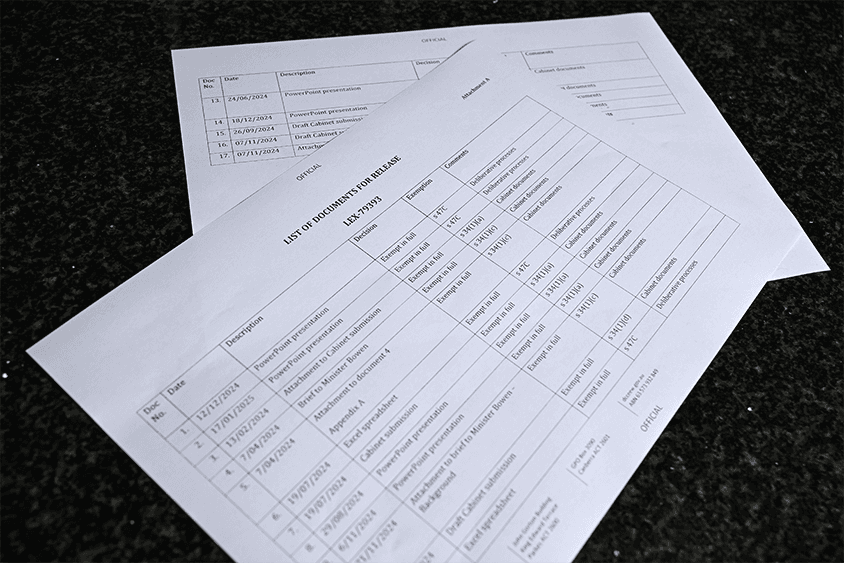
Every Australian has a right to access government information. Requests for access are increasingly delayed, but journalists and members of the public are still using freedom of information law to keep the government on its toes.
Here are eight things we learned thanks to state, territory and federal freedom of information laws, in just the last two months:
1. “The big four accounting firms Deloitte, EY, KPMG and PwC operate in a regulatory grey area with gaps in how the partnerships are policed, and the current oversight of audit quality is inadequate”, the Financial Review reports.
2. The University of Technology Sydney spent $1.5 million on an “executive leadership coach” while simultaneously proposing to axe courses and cut jobs to save money, as revealed in documents obtained under FOI by Four Corners. In 2025, 95% of more than 1,500 UTS staff passed a motion of no confidence in the vice-chancellor’s leadership.
3. Queensland’s Department of Primary Industries decided “not to probe the thirst deaths of more than 100 AACo cattle”. Governments may not be the only ones holding information back. According to the article: “Internal government documents indicate the first bureaucrats heard about the deaths was on Tuesday, March 4, 2025. That was the same day the ABC asked AACo about the January tragedies.”
4. Premier Peter Malinauskas had been warned by Adelaide Festival executive director Julian Hobba that cancelling Randa Abdel-Fatta’s appearance at Adelaide Writers’ Week could spark a boycott.
5. Public servants across several South Australian departments were told to remove “harmful” and “disaster” from algal bloom messaging, according to FOI documents obtained by the South Australian Liberal Party.
6. The Metropolitan Fire Service in South Australia is “underfunded”, “under-resourced”, and “not fit for purpose” according to a report released under the state’s FOI laws. “[Were] it not for the desire of the regional staff to make their communities safe … regional operations would be completely dysfunctional”.
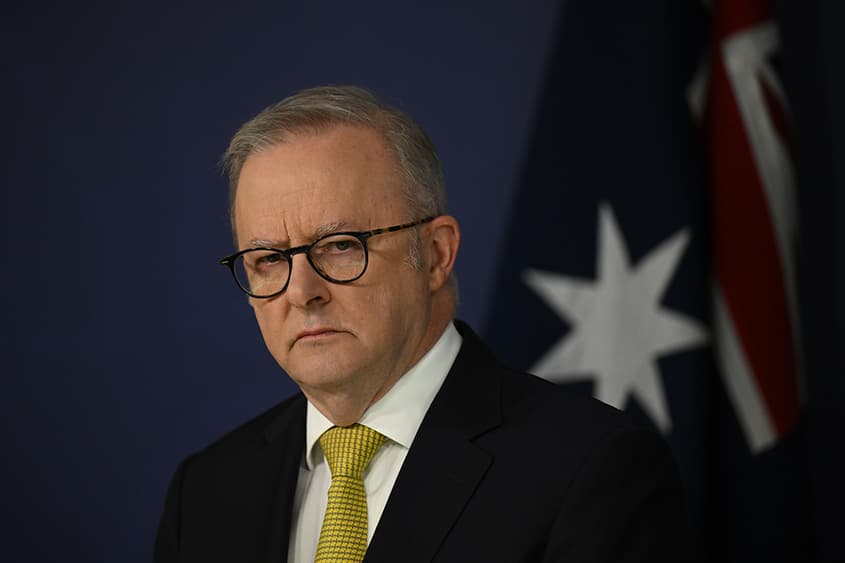
7. FOI documents provided to the ABC “provided a snapshot of the Commonwealth’s process in vetting controversial Northern Territory Administrator David Connolly, completed months before a scandal erupted over his social media history.” In January, Prime Minister Anthony Albanese had commented that he was “worried about whether [Mr Connolly] is able to properly represent the Northern Territory in a way which is appropriate”, and yet the documents show that the federal government had deemed him “appropriately qualified” for the role.
8. Following an 18-month-long FOI battle, Rex Patrick had finally gained access to the report that saw Mike Pezzullo – former Secretary of Home Affairs – sacked for misconduct in public service. Across the four-part story, Patrick revealed Pezzullo’s conflicts of interest, confidentiality breaches, and love for gossip and critique.
These news stories show that FOI plays an important role in Australian democracy, but governments too often drag their feet on releasing information that the public is entitled to. The ABC reported this month that requests for documents from Victoria Police are now slower than at any point in its history, with those seeking access now facing a nine-month wait.
Freedom of information laws work. That may be one reason why governments do not seem to like them very much.