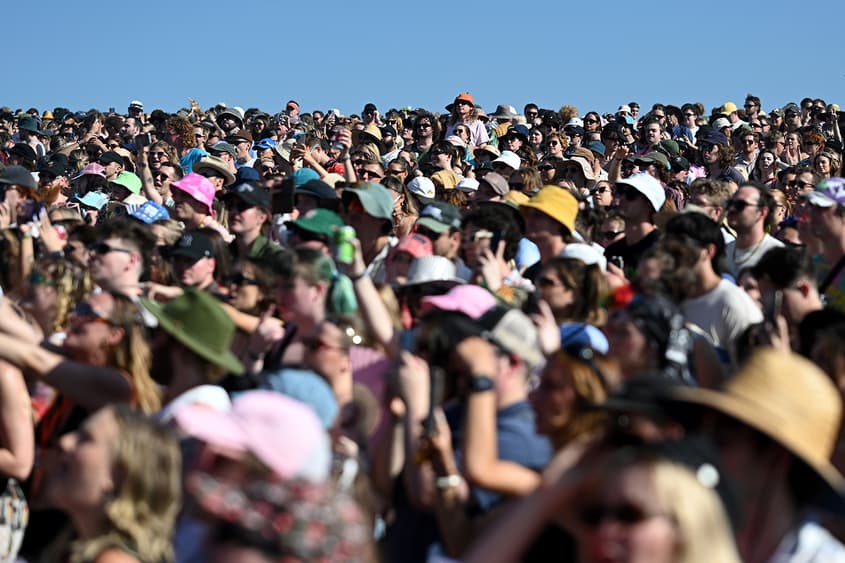
In 1964, when The Beatles visited Adelaide, an estimated 300,000 people showed up outside their hotel room – that was about half the city’s population at the time. In 1985, 1.9 billion people – or 40% of the world’s population – tuned into the broadcast of the Live Aid concerts.
More recently, over 10 million people went to see Taylor Swift on her ‘Eras’ tour. There’s no denying the power of music in bringing people together. What if that power was harnessed for social change?
This is exactly what Planet Reimagined is doing in the United States, and around the world, through Amplify, which partners with artists, venues, and local climate organizers to turn live music moments into opportunities for meaningful civic action.
Amplify has already been successful across major tours and shows in the US, UK, and Europe, with artists including AJR, Billie Eilish, Tame Impala, Tyler Childers, Renee Rapp, and The 1975.
Planet Reimagined’s research results show that, across genres, music fans in the U.S. and U.K. support artists who speak out about climate change. If their favourite artist asks them to, fans are significantly more likely to engage in climate-related actions including protesting, contacting government officials, and signing petitions. This helps move fans away from thinking that the only things they can do about climate change are small, individual actions like recycling, eating less meat, or driving and flying less, and instead gets them involved in collective action that pushes for real systems change.
So, could it happen in Australia?
To find out how something similar to Amplify might play out in Australia, The Australia Institute conducted a national poll to see how likely concert-goers are to take small steps to improve the climate.
At first glance, asking fans to act looks like a tough gig, as most Australians say that they have not participated in any kind of climate action – just 5% in the case of contacting a politician.
Crucially, however, people are much more likely to do these kinds of things if their favourite Australian artist asked them to. To go with the same example, the number of respondents who say they would contact a politician if their favourite artist asked them to is about 30% – that’s about six times more than without the ask.
<iframe title=”Likelihood of taking action on climate change, if prompted by artist” aria-label=”Grouped Bars” id=”datawrapper-chart-HqM6b” src=https://datawrapper.dwcdn.net/HqM6b/4/ scrolling=”no” frameborder=”0″ style=”width: 0; min-width: 100% !important; border: none;” height=”837″ data-external=”1″></iframe><script type=”text/javascript”>(function(){function e(){window.addEventListener(`message`,function(e){if(e.data[`datawrapper-height`]!==void 0){var t=document.querySelectorAll(`iframe`);for(var n in e.data[`datawrapper-height`])for(var r=0,i;i=t[r];r++)if(i.contentWindow===e.source){var a=e.data[`datawrapper-height`][n]+`px`;i.style.height=a}}})}e()})();</script>
The polling also shows that bigger music fans (people who go to concerts four or more times a year) are more likely to have participated in some form of climate action than those who attend concerts less often (one to three times per year). This shows that the Amplify model is working with momentum that, in Australia, is going untapped.
The Amplify model is an encouraging sign that research like this translates into action.
Amplify invites volunteers from local climate organisations to engage with music fans at concerts. Organizers can set up tables on the concourse and talk with fans as they come into the show or buy merch or food. These organisations can encourage fans to take simple, high-impact civic actions right then and there. This can include signing letters or postcards to mayors or MPs, leaving voicemails, or signing public pledges and petitions. Experience has shown that actions work best when they focus on policy issues relevant to their local area. This is because it is easy for fans to understand how a local problem or solution relates to their community. This could include actions to support local public transit, increase public funding for wildfire prevention, or oppose a proposed nearby gas plant that will pollute the air they breathe.
Tour branding is made visible, including on the t-shirts worn by volunteers, so that it is obvious that the ask is coming from the artist that fans have come to see. As a way of reinforcing climate positive messages, Amplify is frequently connected to the tour sustainability organization REVERB, which works with the artist to minimize the carbon pollution from artist and fan transportation and venue electrification. They also help with food and drink considerations like packaging, the provision of plant-based options, and composting. This helps show fans that the artist is working to change the systems across their own industry as well.
The sense of connectedness that comes from being at a live show is a major reason people like going to gigs. This heightened experience of “collective effervescence” makes live events an excellent opportunity for fans, artists, and local organizations to translate a general sense of community into specific positive change.