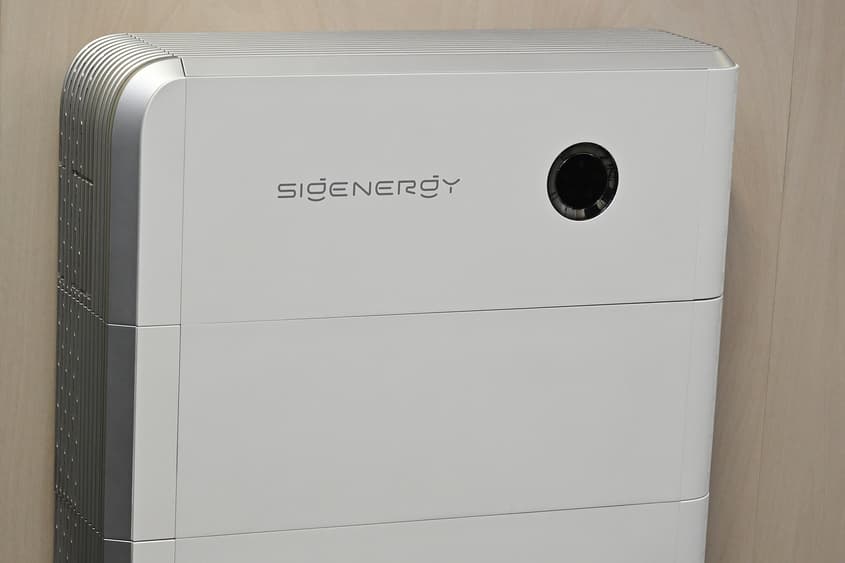
Right now, Australians are being encouraged to buy “virtual power plant capable” (VPP) home batteries that, in practice, they may never fully control.
Despite typically spending well over $10,000 on equipment bolted to their own home, many households are being quietly locked into a single, vendor‑determined and typically vendor‑controlled ecosystem that suits the manufacturer’s commercial interests more than the consumer’s.
The Federal Government’s Cheaper Home Batteries Program currently requires subsidised battery systems to be “VPP capable”. On the surface, that sounds sensible enough and the program is well‑intentioned.
The problem is that the phrase “VPP capable” is presently vague and essentially undefined in the scheme, with manufacturers self‑certifying their compliance to this requirement. “VPP capable” is supposed to mean a battery can participate in a virtual power plant – that is, it can coordinate with other batteries to support the grid and earn extra value for the owner.
But the scheme does not spell out how that capability must be delivered, or who ultimately controls it. In practice, this has led to manufacturers asserting that “VPP capable” is satisfied if their own cloud platform can talk to their own battery, to the exclusion of all others.
That might sound harmless, but it creates a profound imbalance of power between the battery owner and the battery manufacturer. If the only way to control your battery is through the manufacturer’s cloud, the manufacturer effectively owns the keys to your household energy infrastructure. They can decide what functions you’re allowed to access, which virtual power plants you can join, and on what terms.
If you don’t like it, or if the company is sold, goes broke, or simply loses interest, you have no recourse and no alternative way to access the full capabilities of the hardware you bought. And more importantly, it isn’t even true ownership of the expensive device that you just paid for.
If you buy a home battery system, you should be able to decide how it operates to best suit your needs. You should be able to choose who controls it on your behalf, and to change your mind over time.
From a technical perspective, battery systems can be controlled in two ways: through a vendor‑operated cloud portal, and through a direct local interface (an “API”) on the customer’s own network. The second option – vendor‑supported local control – matters enormously, but it is often absent today.
Cloud services are extremely useful. But they should not be the only way that consumers can control equipment they have already purchased. Consumers need freedom of choice to select software control solutions for their hardware that suit their needs, and the freedom to change their minds over time about which solution they use.
We’ve seen this movie before. The technology industry is unfortunately littered with examples of products that stopped functioning properly because the vendor shut down their cloud platform, changed their business model, or simply decided to stop supporting older devices.
Home battery systems are part of what regulators call Consumer Energy Resources (CER). In plain English, this is energy infrastructure installed in people’s homes: solar, batteries, EV chargers, and more. This sort of equipment is not a disposable gadget. It often costs tens of thousands of dollars per household.
Consumers should not wake up one day to discover that their home battery, solar inverter, or EV charger has been rendered functionally useless because a vendor made a unilateral business decision to change, charge for, or shut down a proprietary cloud.
The proposal I have been discussing for some time draws parallels with earlier consumer protection developments such as “Right to Repair” legislation and the right to have motor vehicles serviced outside manufacturer dealer networks. Car owners benefit from the simple right to get their car serviced anywhere they like, not just at the original dealer.
We need an equivalent baseline for home batteries.
This is why I believe the Cheaper Home Batteries Program should require something more than the current “VPP capable” wording. Specifically, any home battery subsidised by taxpayers should be required to support an open, documented, zero‑cost local interface that allows the owner – or any compatible Home Energy Management System (HEMS) they choose – to control and monitor it over the local network, independent of any particular cloud.
In a piece of excellent timing, an Australian standard (AS5438) for interoperability between HEMS and battery systems is now being developed and shows great promise. Once it is finalised, making compliance with that standard a pre-condition of any vendor’s access to the Cheaper Home Batteries Program would be an efficient, and immediate, path to guaranteeing households secure, open control of their batteries, once and for all.
Importantly, if the scheme requires that upgraded firmware for batteries already ‘in the field’ should also be made available, this will unlock interoperability benefits for everyone who has already accessed the scheme as well as future beneficiaries of it.
A requirement that battery systems conform to AS5438 should also be added to the next revision of the Australian Standard AS4777. The AS4777 standard is the requirement set that all battery systems must meet, to be allowed to keep installing new battery deployments in Australia, whether subsidised by the government or not.
None of this means banning clouds or banning manufacturer apps. It simply means that clouds and apps must become optional layers built on top of a durable, local control interface that belongs to the customer. It ensures that if those services change, become more expensive, or disappear, the customer is not left with a very expensive brick on the wall.
This proposal is not anti‑manufacturer. It is pro‑consumer.
If such requirements are built into the Cheaper Home Batteries Program, and also into AS4777, then every subsidised battery will be “VPP capable” in a genuinely open sense. Households will be able to connect their battery to any compatible VPP operator or HEMS they prefer, now and in the future.
Crucially, this would not force any particular technology choice. It would not mandate one vendor or one protocol. It would simply set a floor: if you want public money to support your battery, you must give the customer enduring, local control over it.
Australians are being encouraged to bring the energy transition into their homes and that is a good thing. But we should not let that transition be built on opaque, one‑sided arrangements where control sits somewhere in a distant cloud. If we are serious about empowering households, cutting emissions, and building a resilient energy system, we should start by making sure that when you buy a home battery, you really own it.
Simon Hackett is a tech entrepreneur and early renewables investor. He is the founder of Energy Autopilot, a home energy management system currently in development. His proposal for open local control would apply to all vendors and platforms.